
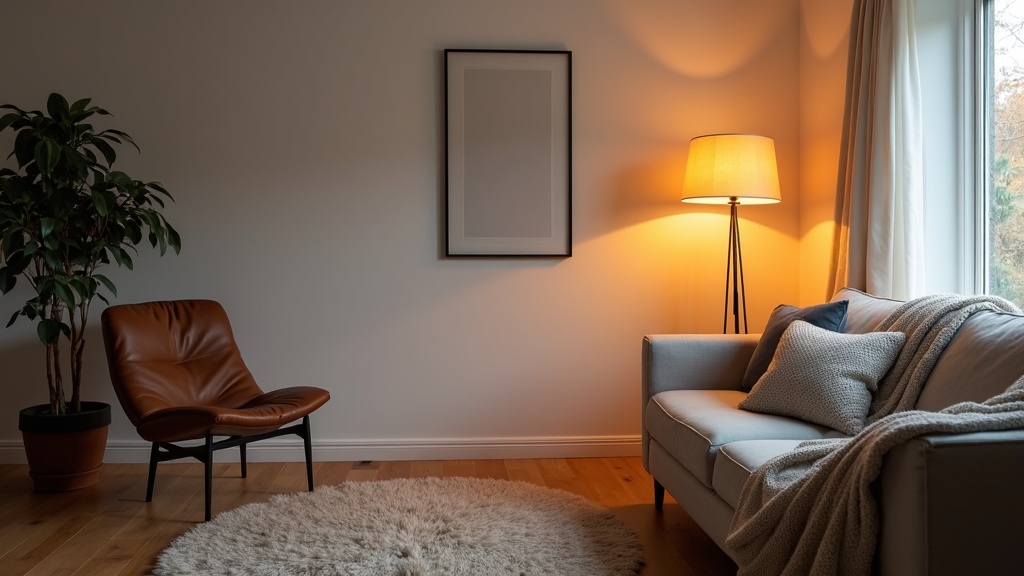
You paint the walls. You add a throw. You rearrange the furniture. And yet the room still feels flat, distant, somehow unwelcoming. The problem is almost never the decor.
It's the light. Specifically, the lighting mistakes that make rooms feel cold are so common they've become invisible. Once you see them, you can't unsee them, and fixing them costs far less than a new sofa.
Key points at a glance
- A single overhead light is the fastest way to make any room feel cold and institutional.
- Bulbs above 3000K push rooms into cool, clinical territory regardless of your decor.
- Unlit corners are the hidden reason rooms feel smaller and less welcoming.
- A dimmer switch is the most affordable mood upgrade in any home.
- Layering ambient, task, and accent light is the designer method, and it works in any budget.
- Light at eye level and below creates warmth. Ceiling-only light rarely does.
What you'll take away
The Real Reason Your Room Feels Cold (It's Rarely the Decor)
Our eyes read light before they read furniture. A room bathed in cool, overhead-only light signals office, hospital, waiting room. The brain responds accordingly.
Warmth in a room is mostly a lighting problem, and a solvable one. How to make a room feel warmer with lighting comes down to three things: color temperature, direction, and variety. Get those right, and the room does the rest.
Mistake 1: Relying on a Single Overhead Light
One ceiling fixture floods a room with uniform light from above. It flattens everything. Shadows disappear, and with them, so does any sense of depth or intimacy.
The fix: treat the overhead as a base layer only. Add a floor lamp in one corner and a table lamp at seated height. Three light sources, even modest ones, transform the feeling of a room entirely.
Mistake 2: Using Bulbs with the Wrong Color Temperature
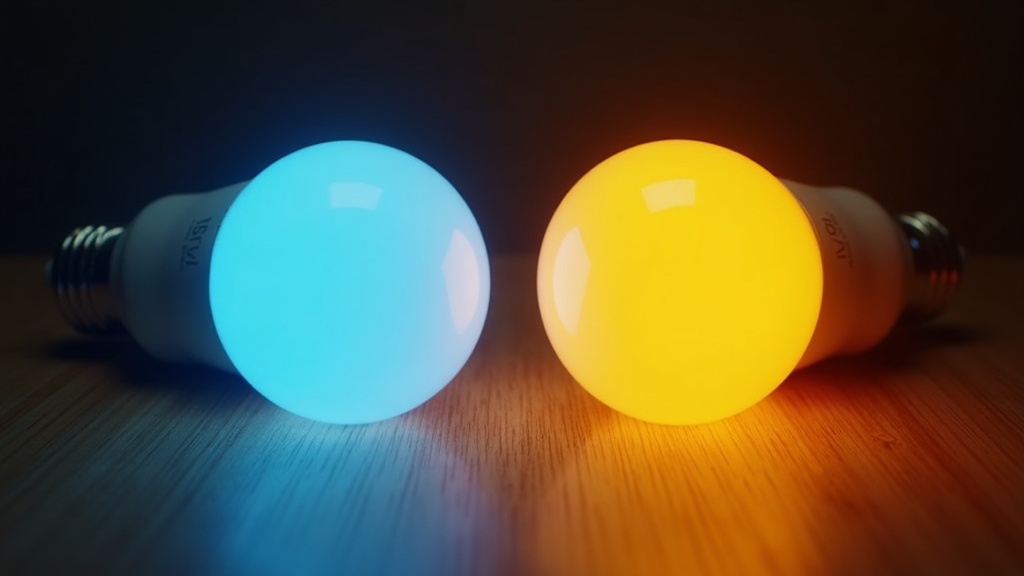
This is the most common, and most overlooked, lighting mistake that makes rooms feel cold. LED color temperature, warm vs cool, is measured in Kelvin. Above 4000K, light reads as cool, even blue. Below 2700K, it reads as candle-like amber.
For living spaces, 2700K to 3000K is the right range. That's the best bulb color temperature for cozy rooms, full stop.
Did you know?
A standard candle burns at approximately 1800K. Traditional incandescent bulbs sit around 2700K. That amber warmth is what our brains associate with rest, safety, and end of day. Cool-white LEDs at 5000K or above mimic midday sunlight, a signal that tells the brain to stay alert.
| Color Temp (K) | Light Quality | Best Use |
|---|---|---|
| 1800, 2200K | Deep amber, candlelight | Bedrooms, accent candles, mood only |
| 2700K | Warm white, classic incandescent | Living rooms, dining rooms, hallways |
| 3000K | Soft warm white | Kitchens, bathrooms, home offices |
| 4000K | Neutral cool white | Garages, utility rooms, studios |
| 5000, 6500K | Cool daylight, blue-white | Workshops, medical spaces, never living rooms |
Mistake 3: Lighting the Center and Forgetting the Corners
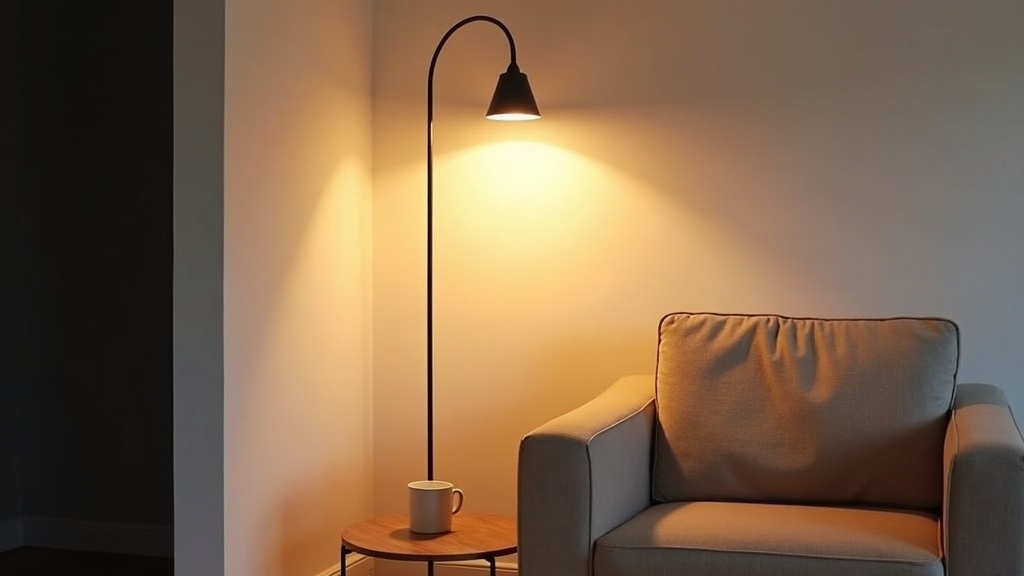
Corners carry the emotional weight of a room. Leave them dark, and the walls seem to close in. The room reads as smaller, starker, less alive.
A floor lamp placed in a dark corner does more for the room than almost any other single change. It pushes the perceived boundary of the space outward and softens every wall around it.
Mistake 4: No Dimmer, No Control Over Mood
Fixed-brightness lighting is like a room with no volume dial. You get one setting, whatever the time of day, whatever the need.
A dimmer switch costs around £15 to £30 and takes twenty minutes to install. It's the single most impactful change you can make for warm lighting in a living room, because it lets the light follow the rhythm of the day rather than fighting it.
Mistake 5: Fixtures That Are the Wrong Scale for the Room
A small pendant in a large room disappears. A massive chandelier in a low-ceilinged space crushes everything beneath it. Scale affects not just how a fixture looks, but how far its light actually reaches.
As a rough guide: a pendant's diameter in inches should roughly equal the room's combined length and width in feet. A 12 x 14 foot room works well with a pendant around 26 inches wide.
Mistake 6: Ignoring Light at Eye Level and Below
Ceiling light points down. It hits the floor and the tops of furniture. It doesn't reach your face when you're sitting, and it doesn't graze walls in a way that creates texture or warmth.
Table lamps, wall sconces, and candles all place light at eye level or below. This is why a room lit entirely by floor and table lamps at 7pm feels genuinely cosy, while the same room under one overhead fixture feels cold.
Did you know?
Research in environmental psychology consistently shows that lower, more diffuse light sources increase feelings of relaxation and social comfort. Overhead-only lighting is associated with higher alertness and, over time, mild stress responses, which is exactly why it makes a home feel less restful.
How to Layer Light Like a Designer (The Lagom Approach)
Lagom: not too much, not too little. The same principle that shapes Scandinavian living applies directly to layered lighting at home.
Designers think in three layers. Not because it's complicated, but because it works.
- Ambient light: the base layer. A ceiling fixture, recessed lighting, or a large pendant. Sets the general brightness. Should almost always be on a dimmer.
- Task light: directed, purposeful. A reading lamp, under-cabinet kitchen light, a desk lamp. Goes exactly where work happens.
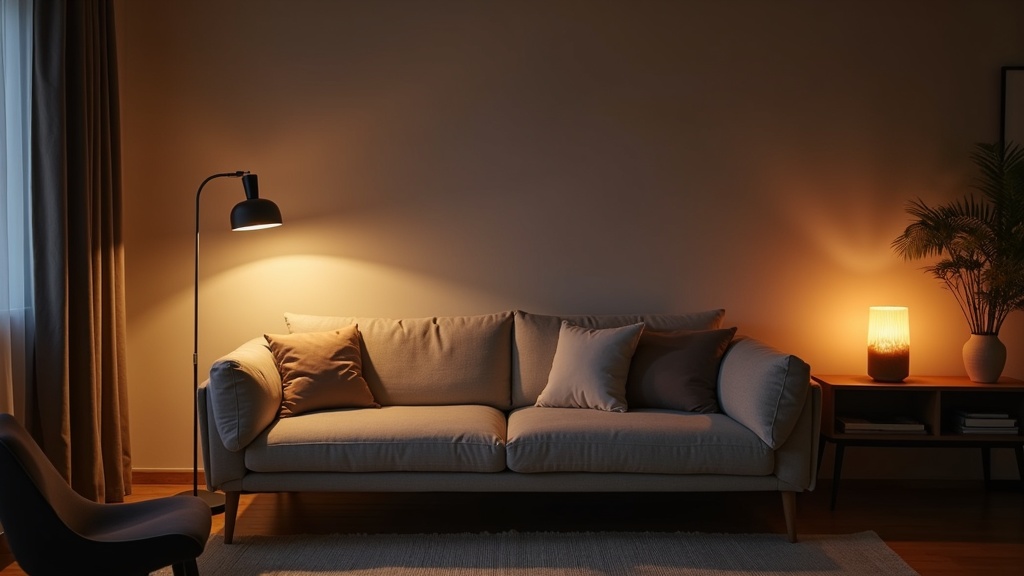
- Accent light: the warmth layer. Wall sconces, candles, a small table lamp tucked behind a plant. Creates shadow and depth. This is what makes a room feel alive after dark.
Good lighting doesn't announce itself. It settles into the room and changes how it feels. When all three layers are present, even a sparsely furnished space reads as intentional and warm.
Quick-Reference: Warm Lighting Fixes That Require No Renovation
Every fix below works in a rented flat, a temporary space, or a room you're not ready to rewire. Start with one. The difference is immediate.
- Replace any bulb above 3000K in your living room with a 2700K equivalent. Same fitting, different feeling.
- Add one floor lamp to the darkest corner of the room. Aim for a shade that diffuses light outward, not a bare exposed bulb.
- Place a table lamp at seated height, ideally at sofa-arm level. Even a small lamp here shifts the entire atmosphere.
- Use a plug-in dimmer adapter (widely available, no wiring needed) if a fixed switch controls your main light.
- Add a string of warm-white LED fairy lights behind a shelf or along a low baseboard. At 2700K, they read as candlelight from across the room.
- Swap a cool-white under-cabinet strip in the kitchen for a warm-white version. It changes how the whole room feels at dinner time.
Light placed right does more for a room than any renovation. These changes cost very little. The return, in how the room feels every evening, is immediate and lasting.


