
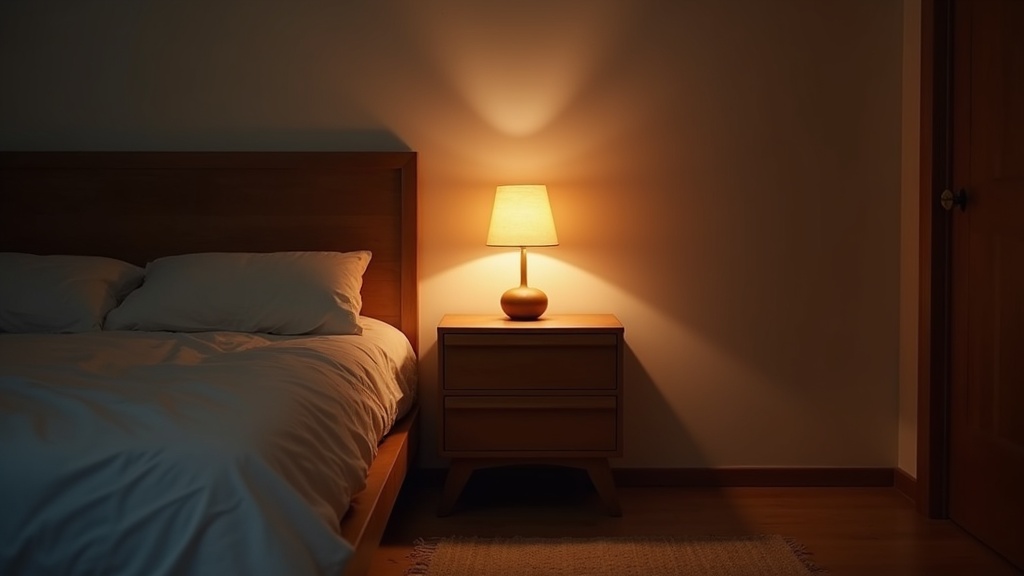
Change the bulb in your bedside lamp and the room changes with it. Not the walls, not the furniture. Just the light. It is one of the smallest swaps you can make, and one of the most felt.
Most people pick a bulb by wattage. But what shapes how a room feels is colour temperature: whether the light pulls warm and amber, or cool and crisp. In a bedroom, that difference matters more than almost anything else.
Key points at a glance
- Light colour temperature, measured in Kelvin, shapes mood as much as brightness does.
- Warm white (2700K, 3000K) signals rest to the brain and supports melatonin production.
- Cool light (4000K and above) boosts alertness, which works against sleep and calm.
- Layering a ceiling light with a warm bedside lamp gives you control over how the room feels at any hour.
- Switching to a warm bulb costs almost nothing and can be done in minutes, no electrician needed.
Why this guide is worth your time
Why Light Temperature Matters More Than Brightness
Brightness tells you how much light fills a space. Colour temperature tells you what kind of light it is, and how it lands on your nervous system.
A very bright warm light can still feel soft and grounding. A low-wattage cool bulb can feel sharp and clinical. The colour of light shapes the emotional register of a room in ways that brightness simply cannot.
Good lighting does not announce itself. It settles into the room and changes how it feels. The bedroom is where this matters most, because the goal there is not to perform or focus. It is to let go.
What the Kelvin Scale Actually Means at Home
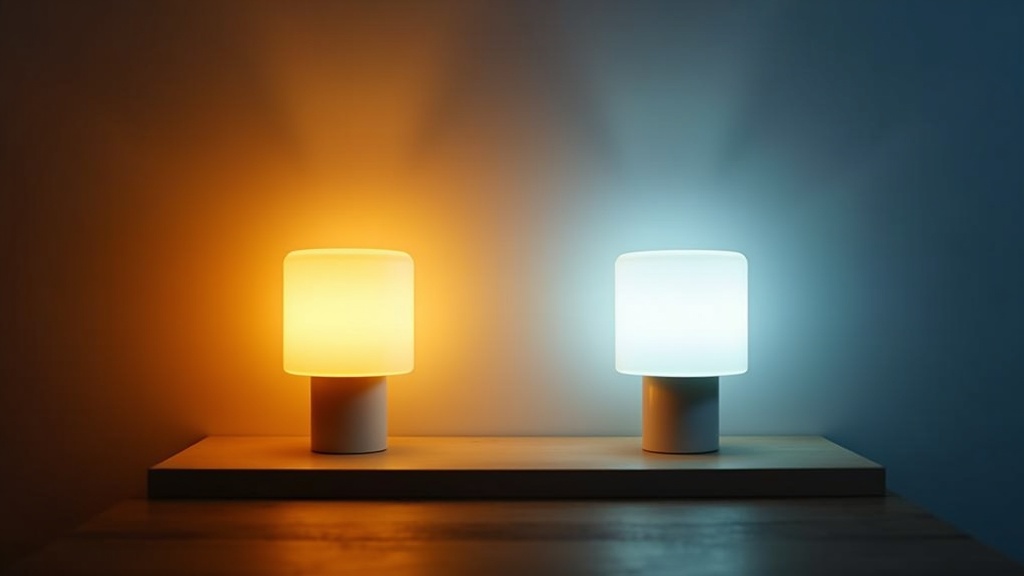
Kelvin (K) measures the colour of light, not its warmth in temperature. Confusingly, lower Kelvin numbers produce warmer, more amber light. Higher numbers move toward blue and white.
Think of it this way: candlelight sits around 1800K. A clear midday sky is closer to 6500K. Most home bulbs fall between 2700K and 5000K.
- 2700K: Deep amber, like a glowing incandescent. Cosy, intimate, relaxing.
- 3000K: Slightly brighter warm white. Still soft, suits most living spaces.
- 4000K: Neutral white. Crisp and clear, common in kitchens and bathrooms.
- 5000K, 6500K: Daylight to cool daylight. Alert-inducing, clinical at its highest end.
Warm Light (2700K, 3000K): What It Does to a Room and Your Body
Warm light mimics the low sun of evening. Your brain reads it as a signal: the day is winding down. Melatonin production gets a quiet nudge in the right direction.
Warm white light also makes materials look richer. Linen reads softer. Wood grain deepens. Wool looks more textured. A bedroom lit at 2700K looks like it was designed with care, even if nothing else changed.
Psychologically, warm light reduces the sense of alertness and performance. You stop scanning the room. You settle.
Did you know?
Research published in the Journal of Biological Rhythms found that exposure to warm-tinted light in the evening caused significantly less melatonin suppression than cool white light at the same brightness level. The colour of light affects sleep hormones independently of how bright the light actually is.
Cool Light (4000K and Above): Where It Works and Where It Doesn't
Cool light has its place. In a home office, a kitchen, or a bathroom where you need clear focus and accurate colour rendering, 4000K works well. It keeps you awake and attentive.
That is precisely why it does not belong in a bedroom. Cool light mimics daytime. It tells your circadian rhythm to stay alert. Used in the evening, it pushes your sleep window back, sometimes without you noticing why you feel wired at midnight.
It also flattens textures. Soft furnishings lose their depth. A room that should feel like a retreat starts to feel like a waiting area.
The Bedroom Case: Why Warm Light Wins for Calm
The bedroom is not a workspace. It is not a showroom. It is the one room where the entire point is to feel at ease.
Warm light at 2700K to 3000K supports that. It works with the body's natural rhythms rather than against them. It makes the room look better. And it requires no justification beyond how it feels to be in it.
| Kelvin range | Light quality | Bedroom suitability | Best use |
|---|---|---|---|
| 2700K | Deep amber, very warm | Excellent | Bedside lamps, reading nooks, evening wind-down |
| 3000K | Soft warm white | Very good | Ceiling fixtures in bedrooms, living areas |
| 4000K | Neutral white, crisp | Poor for evenings | Kitchens, bathrooms, home offices |
| 5000K, 6500K | Cool daylight, blue-white | Not recommended | Task lighting, garages, workshops |
Ceiling Lights, Lamps, and Layers: Getting the Mix Right
A single overhead light, however warm, is not enough on its own. One light source flattens a room. Multiple sources at different heights create depth and make the space feel intentional.
The three-layer approach
- Ambient: A ceiling pendant or flush fitting, ideally on a dimmer, at 2700K, 3000K.
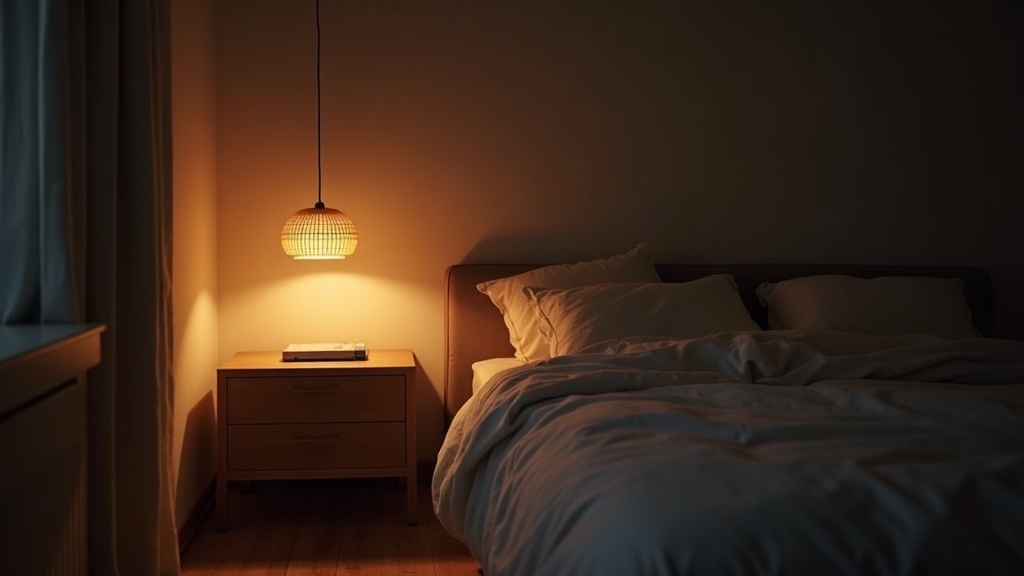
- Task: A bedside lamp for reading. Keep it at 2700K so it does not disrupt your wind-down.
- Accent: A small floor lamp in a corner or an LED strip behind a headboard. Very warm, very low, optional but effective.
The ceiling light handles the room when you need it lit. The bedside lamp takes over when the evening slows. That transition is where the calm actually happens.
Did you know?
The Swedish concept of lagom, meaning just the right amount, maps directly onto good bedroom lighting. Not too bright to feel exposed. Not so dim you strain your eyes. Warm enough to signal rest. That balance, found and kept, is what makes a room genuinely restful.
What to Look for When Buying Bulbs for a Calm Bedroom
The packaging can be confusing. Here is what to actually check.
- Colour temperature: Look for 2700K. Some packs say "warm white", which typically means 2700K, 3000K. Avoid anything labelled "cool white", "natural white", or "daylight".
- CRI (Colour Rendering Index): Aim for 90 or above. Higher CRI means colours and materials in your room look truer and richer.
- Dimmable: If your fitting has a dimmer switch, confirm the bulb is rated for it. Not all LEDs dim smoothly.
- Shape and size: A bulb in a fabric shade needs to fit. Check the cap type (E27 or E14 in most European fittings) and the physical size.

Simple Changes, No Rewiring Required
You do not need a new ceiling rose or a lighting designer. The most effective changes cost under ten euros and take five minutes.
- Replace any bulb in your bedroom with a 2700K equivalent. Start with the one you use most in the evenings.
- Add a plug-in bedside lamp if you only have overhead lighting. Any lamp with a warm shade and a 2700K bulb will do the job.
- Fit a dimmer switch to your ceiling light if you do not already have one. Most are plug-and-play now and need no electrician.
- If your phone or tablet comes into bed with you, turn on the screen's night mode before 9pm. The bulb swap helps, but the screen undoes it.
Light placed right does more for a room than any renovation. Start with the bulb. See how the room changes. Then decide what else, if anything, needs doing.


