
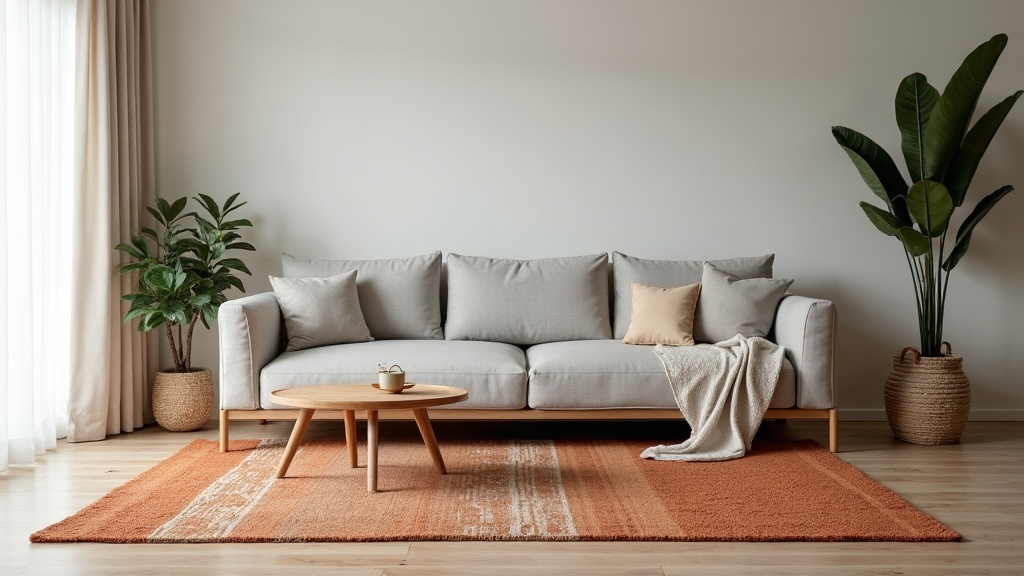
Gray furniture tends to get a bad reputation. People call it cold, noncommittal, hard to dress. But that reading misses something: gray is one of the most cooperative neutrals in the room. It does not fight. It waits.
The real challenge is not the sofa. It is the rug underneath it. Get that color right, and the entire room settles into place. Get it wrong, and no amount of cushions will save you.
Key points at a glance
- Cool gray furniture pairs best with warm rug tones: terracotta, rust, sand, blush, or forest green.
- Warm gray (greige) works well with both earthy neutrals and soft cool blues.
- For dark charcoal sofas, go lighter with the rug to create contrast and lift.
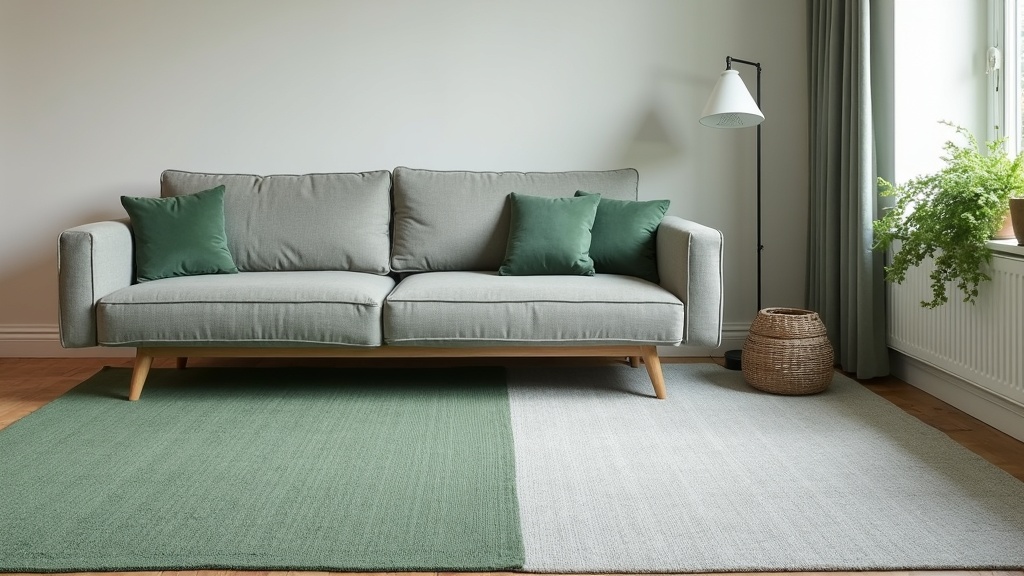
- A green rug with a gray couch is one of the most considered pairings in Scandinavian interiors.
- Texture matters as much as color: a wool or jute rug adds warmth even in a neutral palette.
- Avoid rugs in the same gray family as your sofa unless you are deliberately layering tones.
What this guide gives you
Why Gray Furniture Is Actually a Generous Starting Point
Gray does not have a strong opinion about what surrounds it. That is its strength. It gives your rug room to breathe and speak.
A gray sofa will not argue with a deep rust rug. It will not compete with sage green or pull against warm ivory. It simply holds its place and lets the other elements do their work. That is exactly the kind of quiet confidence a room needs.
Cool Gray vs. Warm Gray: The Distinction That Changes Everything
Before you choose a rug color, look at your furniture in natural daylight. Ask one question: does the gray lean blue, or does it lean beige?
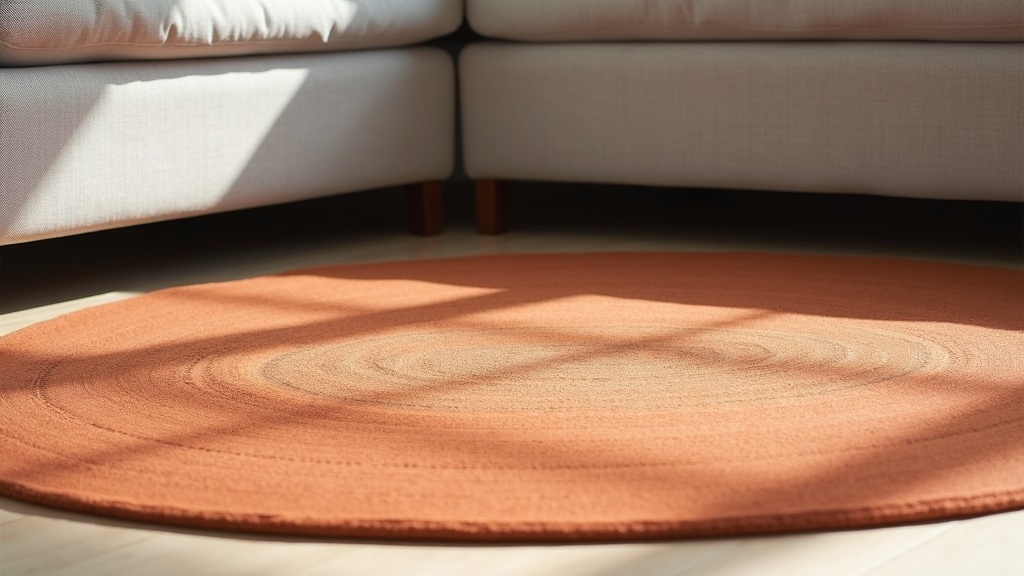
Cool gray has blue or purple undertones. It reads crisp, almost Nordic. Warm gray, sometimes called greige, has brown or yellow undertones. It reads softer, more organic.
These two grays need different rug responses. Getting this distinction right is what separates a room that feels intentional from one that simply feels assembled.
The Colors That Work Best With Gray Furniture
There is no single correct answer, but there are combinations that consistently work well. The logic behind each one is simple: contrast and complement rather than compete and clash.
Warm terracotta and rust
These are the most direct antidote to a cool gray sofa. Terracotta sits on the opposite side of the color temperature spectrum, which is exactly why it works. The tension between the two creates life in the room without noise.
Forest green and sage
A green rug with a gray couch is one of the most satisfying pairings in contemporary interiors. Forest green reads natural and grounded. Sage reads calm and considered. Both bring the outside in without making the room feel themed.
Warm ivory and oatmeal
For rooms with little natural light, a warm ivory or oatmeal rug beneath a gray sofa does something a white rug cannot: it adds warmth without brightness. The room feels like it belongs to someone, not to a catalogue.
Dusty blush and muted pink
Unexpected but effective. A muted rose or dusty pink rug softens a gray sofa without making the room feel precious. The key is choosing a blush that has some gray in it already.
Navy and deep indigo
For living rooms where you want drama rather than warmth, a deep navy rug beneath a medium gray sofa creates a rich, layered look. This works especially well with brass or bronze accents in the space.
Did you know?
In color psychology research from the Scandinavian Color Institute, warm-toned textiles in predominantly cool interiors are consistently rated as making spaces feel more welcoming, even when room temperature and lighting remain identical. The eye reads warmth before the body does.
Should a Rug Be Lighter or Darker Than the Furniture?
This depends on what the room needs. If the space feels heavy or low, go lighter. A pale rug beneath a dark gray sofa lifts the visual floor and opens the room up.
If the room feels ungrounded or too airy, go darker. A deep rug anchors the furniture and gives the seating area a sense of weight and purpose.
Neither approach is more correct. But rooms with low ceilings almost always benefit from a lighter rug, while rooms with high ceilings can absorb a dark one without feeling oppressive.
| Gray Furniture Type | Best Rug Colors | Mood Created |
|---|---|---|
| Cool light gray sofa | Terracotta, rust, dusty rose, forest green | Warm and inviting |
| Warm gray (greige) sofa | Oatmeal, warm ivory, soft teal, dusty blue | Calm and layered |
| Charcoal dark gray sofa | Cream, warm white, blush, sage green | Grounded with light contrast |
| Dark gray velvet sofa | Deep navy, burnt orange, forest green | Rich and dramatic |
| Medium gray linen sofa | Mustard yellow, warm sand, muted rust | Relaxed and textural |
How to Add Warmth to a Gray Sofa Without Repainting the Room
The rug is your most powerful tool, but it works best alongside other warm elements. Think of it as the base layer. Texture does half the work that color does.
A jute or wool rug in even the most neutral tone reads warmer than a flat synthetic one in the exact same color. The fiber catches light differently. It makes the room feel inhabited.
- Layer a wool or jute rug for immediate textural warmth
- Add amber or terracotta cushions on the sofa itself
- Bring in a wood coffee table to anchor the warm palette
- Use warm-toned bulbs, not bright white ones, in floor lamps near the sofa
- A single ceramic vase in rust or blush costs very little and changes the reading of the whole corner
Specific Pairings Worth Knowing (Dark Gray, Light Gray, Charcoal)
What color rug goes with a gray couch (light version)
Light gray sofas are the most flexible. They take warm colors without looking garish and cool colors without looking sterile. A terracotta rug or a muted sage green rug are the two most reliably beautiful options. Both feel current without being trend-dependent.
Rug colors for a dark gray sofa
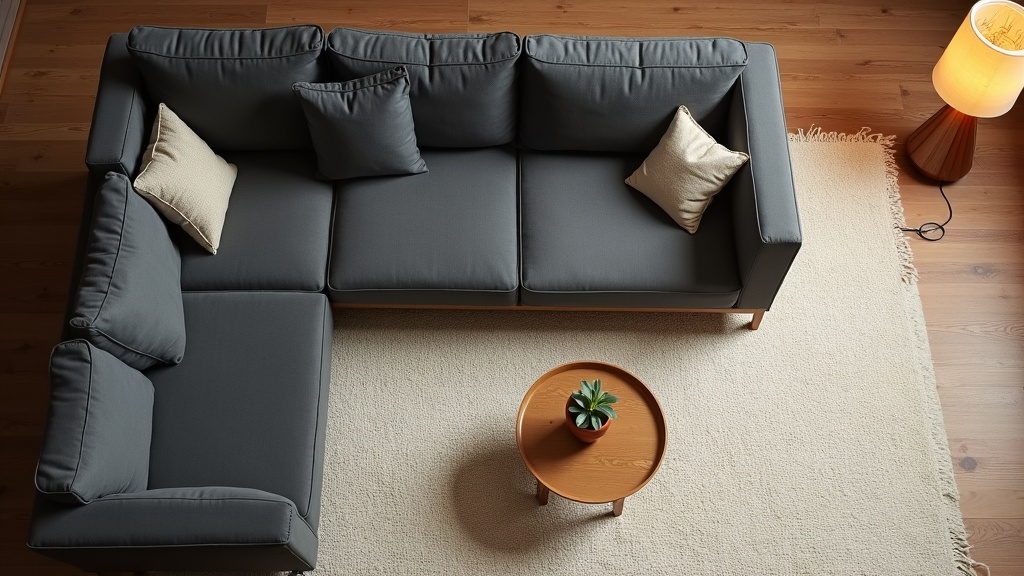
Dark gray furniture needs contrast to avoid reading as gloomy. A cream, warm white, or blush rug creates that contrast cleanly. For a bolder room, a mustard yellow rug with a dark gray sofa reads confident and Scandinavian at once.
Charcoal grey couch rug ideas
Charcoal is the deepest, most saturated end of the gray spectrum. It behaves almost like a dark anchor. Lighter rugs are almost always the right call here. A wool rug in warm oatmeal or dusty ivory grounds the sofa without absorbing more light from the room.
Did you know?
Wool rugs reflect up to 33% more light than synthetic alternatives of the same color, according to the Woolmark Company. In rooms with gray furniture, this difference is visible: the same shade of cream in wool versus polyester reads noticeably warmer and more alive.
What to Avoid, and Why
A few combinations consistently underdeliver, not because they are technically wrong, but because they flatten the room rather than lift it.
- Same-tone gray rug: Matching the rug to the sofa in the same gray family makes the room disappear. Everything blurs. Nothing anchors.
- Bright white rug with cool gray: This combination reads clinical. The contrast is too sharp and too cold at once.
- Heavy pattern with a patterned sofa: If the sofa has texture or subtle pattern, the rug should be solid or very low-contrast. Two patterns compete, and the room loses calm.
- Very dark rug with dark gray furniture in a dim room: This combination absorbs light rather than returning it. The room ends up feeling smaller than it is.
The One Question to Ask Before You Buy
Not: does this color go with gray? That question is too broad to be useful.
The real question is: what does this room need more of? Warmth, contrast, calm, weight, lightness, a sense of the outdoors? Once you know what the room is missing, the rug color chooses itself.
A room that feels cold needs a warm rug. A room that feels floating needs a darker one. A room that feels heavy needs something pale and textural. The sofa is almost incidental once you ask the right question.
That is the lagom approach to color: not the most exciting choice, not the safest one. Just the one the room actually needs. When you get it right, you stop noticing the rug at all. It simply belongs.


