
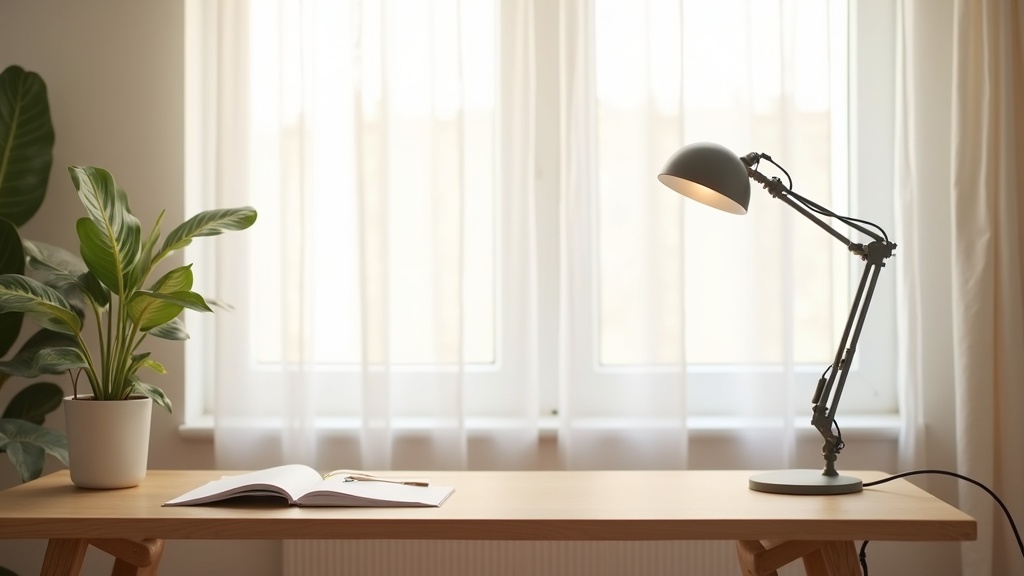
Most people design their home office the same way they pack a suitcase: they stuff things in and hope for the best. The room ends up functional in theory, uncomfortable in practice, and slowly drained of any quality that makes you want to sit down and actually work.
A well-designed home office does not shout. It holds you. It removes friction so quietly you stop noticing the room and start noticing what you are creating. That is the difference between a space that looks good in photos and one that works every single day.
Key points at a glance
- Place your desk to work with natural light, not against it. Side-lit is almost always best.
- Room layout comes before furniture. Measure and map the space before you buy anything.
- Storage should cover what you actually own, with a little room to breathe. No more.
- Calm colors and natural textures reduce cognitive load and help you think more clearly.
- Good lighting is layered: ambient, task, and a warm accent. Each does a different job.
- Small rooms can function beautifully when layout and scale are matched to the space.
What a well-designed home office gives you
Why most home offices fail (and what to do instead)
The most common mistake is treating the home office as an afterthought. A folding table in the corner. A chair pulled in from the dining room. Cables running across the floor because nobody planned where the power would go.
The second mistake is buying furniture before thinking about the room. A beautiful desk that blocks the only natural light. A large bookcase that makes a small room feel like a cupboard. These are fixable problems, but only if you catch them before the delivery arrives.
The fix is simple: design the room first, then shop. Not the other way around.
Start with the room, not the furniture
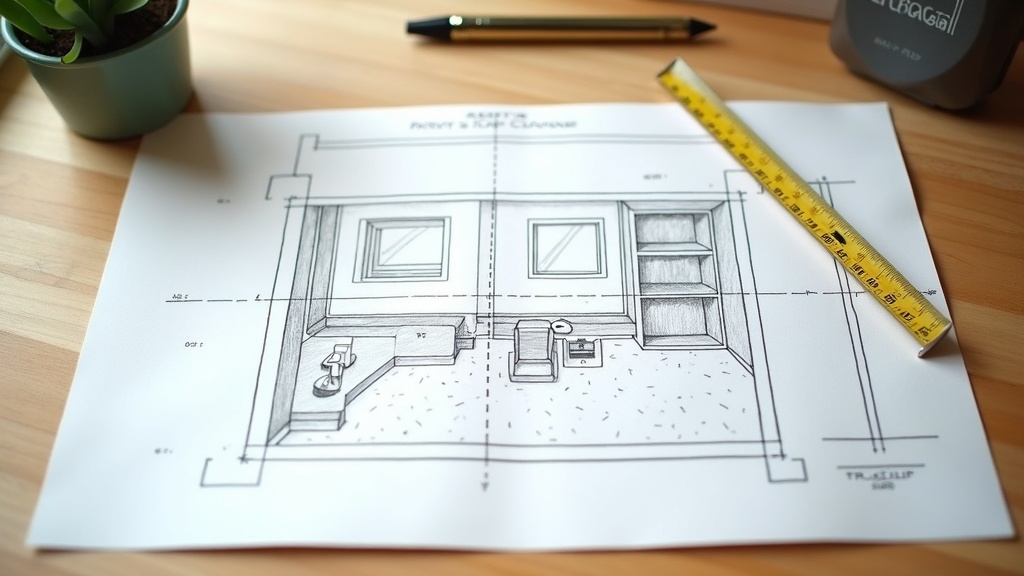
Before anything else, measure. Width, length, ceiling height. Note where the windows are and which direction they face. Mark the doors, the radiators, the power sockets.
Sketch a rough floor plan, even on paper. This single step prevents the most expensive mistakes in any home office layout for productivity. You will immediately see which walls are genuinely usable, where natural light falls at different times of day, and whether the room can actually hold the desk size you had in mind.
The one rule for window and desk placement
Natural light should enter from the side, not from directly in front or behind you. Light from the front creates glare on your screen. Light from behind casts your shadow over your work and, worse, turns you into a silhouette on video calls.
Side light is the ideal home office window placement. It spreads evenly across your desk, reduces eye strain, and connects you to the rhythm of the day without getting in the way of the work.
If your room only has one window and it faces the wrong direction, consider a frosted film to soften direct sun, or position the desk at an angle to reduce the harshest exposure.
Did you know?
Studies from the Swiss Federal Institute of Technology found that workers in offices with natural side lighting reported 15% better sleep quality and significantly higher alertness during afternoon hours, compared to those working under artificial light alone.
Light as a design tool, not an afterthought
Good lighting does not announce itself. It settles into the room and changes how it feels.
A single overhead bulb is not a lighting plan. Layer your light: ambient (general brightness), task (focused light on your work surface), and accent (a warm lamp that softens the room after dark). Each source does a different job.
Home office lighting for focus: a practical breakdown
- Ambient light: Aim for a color temperature of 4000K for clear, neutral daytime light.
- Task light: A well-positioned desk lamp with an adjustable arm. Positioned to the opposite side of your writing hand to avoid shadow.
- Accent light: A warmer bulb (2700K) on a shelf or in a corner lamp. It signals the end of the working day, which matters more than most people expect.
The lagom principle: enough storage, not more
Lagom is a Swedish concept with no precise English translation. Not too much, not too little. Just enough, done well. It applies to storage more than almost anything else in a home office.
Over-stored rooms feel institutional. Under-stored rooms feel chaotic. The goal is to house exactly what you use, with a little breathing room. Open shelving works if you keep it edited. Closed cabinets work if you actually use what is inside them.
Choosing a desk and chair that earn their space
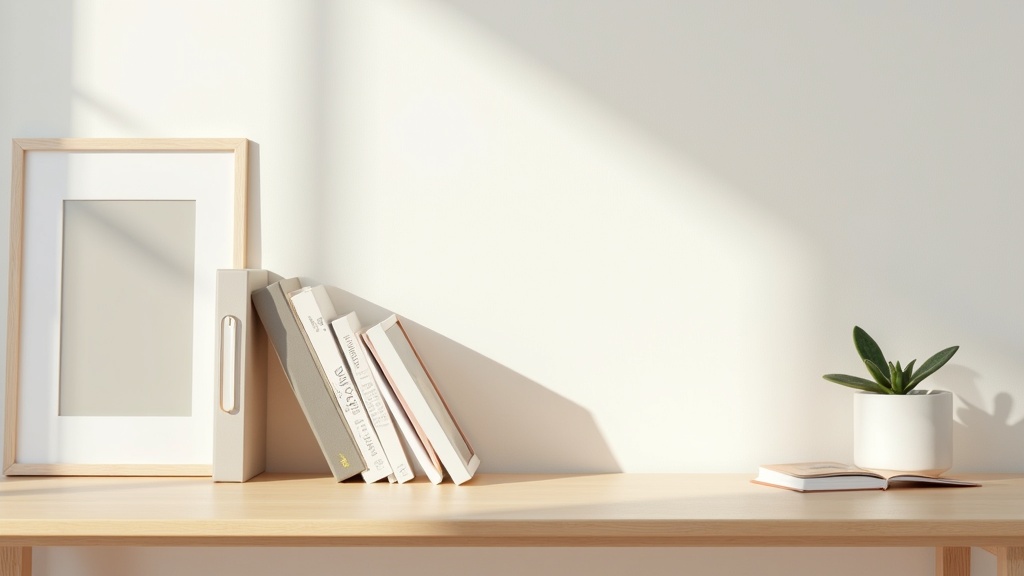
The best home office furniture does not call attention to itself. It simply holds up over years of use and disappears into the room.
The desk
Size matters more than style. A desk that is too small creates constant frustration. A desk that is too large dominates the room and collects clutter. For most people, 120 to 140 cm wide is enough. A depth of at least 60 cm keeps your screen at a healthy distance.
The chair
Buy the best chair your budget allows. Not the most stylish. The most supportive. Lumbar support, adjustable seat height, and armrests that let your shoulders drop. You will spend more time in this chair than almost any other piece of furniture in your home.
| Desk material | Feel and character | Best suited for |
|---|---|---|
| Solid oak | Warm, durable, improves with age | Long-term investment, Scandinavian or natural style |
| Laminate / MDF | Smooth, consistent, budget-friendly | Functional setups, minimalist look on a tighter budget |
| Solid walnut | Rich tone, premium feel, heavier | Creative or executive spaces where warmth matters |
| Tempered glass | Clean, light-reflecting, shows marks easily | Small rooms where visual weight is a concern |
| Bamboo | Sustainable, hard-wearing, light in color | Eco-conscious setups, warm Scandinavian palette |
Color, texture, and why calm rooms help you think
The brain processes visual information constantly. A cluttered, high-contrast room asks more of it. A calm room asks less, which means more is left over for actual thinking.
For a minimalist home office setup, lean toward muted tones: warm whites, soft greiges, pale sage, or the kind of muted clay that reads almost neutral. These are not boring colors. They are quiet ones. There is a difference.
Texture does the work that color alone cannot. A linen desk pad, a wool throw over the chair, a raw ceramic mug. These details make a room feel finished without making it feel decorated.
Did you know?
Research published in the Journal of Environmental Psychology found that people working in rooms painted in low-saturation, cool-to-neutral tones performed measurably better on complex cognitive tasks than those in high-saturation environments. The effect was strongest during tasks requiring sustained attention.
Small space home office layouts that actually function
A small room is not a limitation. It is a constraint, and constraints focus decisions.
For genuine home office design ideas for small spaces, the wall is your best asset. A wall-mounted desk folds away when the day ends. Floating shelves keep the floor clear, which makes the room feel larger. A shallow cabinet, 30 cm deep, can hold a full filing system without eating into circulation space.
Three layouts that work in tight rooms
- The alcove setup: Desk built into or placed inside a recessed wall. Natural boundary, natural focus.
- The corner L-shape: Two surfaces meeting at 90 degrees. More workspace than a single desk, surprisingly compact in the right corner.
- The wall-length shelf desk: A single plank of oak or MDF fixed to the wall at desk height, running the full length of a narrow room. Simple, inexpensive, and scalable.
The finishing details that shape how a room feels
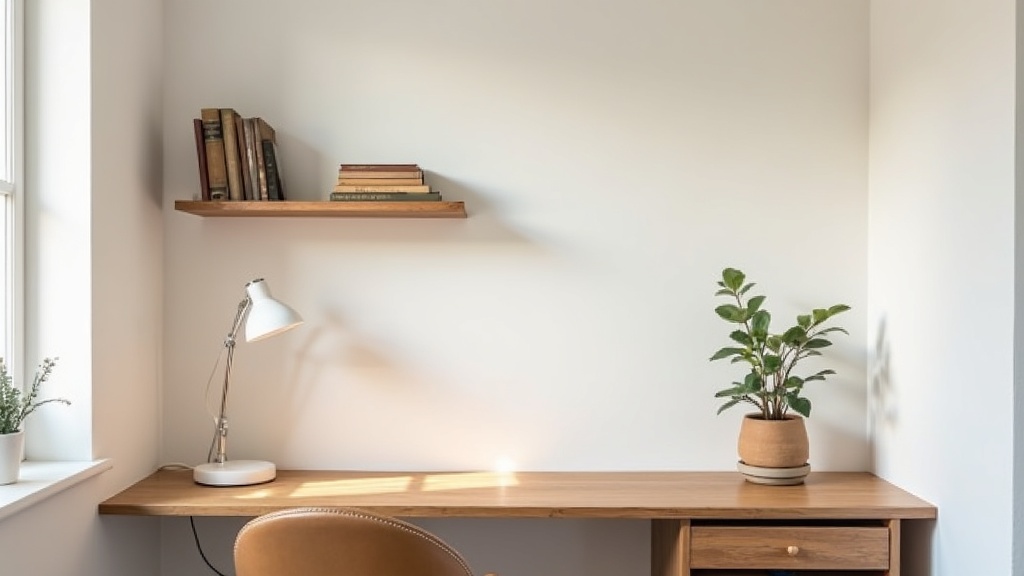
Details are not decoration. They are the difference between a room that feels considered and one that feels assembled.
- Cable management: A single cable channel or a desk with a built-in tray changes how the entire surface feels.
- One plant: Not three. One, well-placed. A pothos on a shelf or a small fig by the window adds life without adding noise.
- A closed door policy: If the room has a door, use it during deep work. The physical signal of closing a door reduces interruptions significantly, even when you live alone.
- A ritual object: A specific mug, a particular candle, a notebook you only open at the desk. These small anchors tell your brain: this is the place where work happens.
Your next steps: make the room work
Start with the room as it is. Measure it. Sit in it at different times of day and notice where the light falls. Then ask what is actually missing, not what would look good on a mood board.
- Map the floor plan before any purchase.
- Position your desk so light enters from the side.
- Layer your lighting: ambient, task, accent.
- Clear the desk to only what you use daily.
- Add one natural element: a plant, a wooden surface, a linen textile.
- Then leave the room alone. A good space needs no constant adjusting.
Light placed right does more for a room than any renovation. The best pieces are the ones you stop noticing, because they simply belong. That is the room you are designing toward.


