
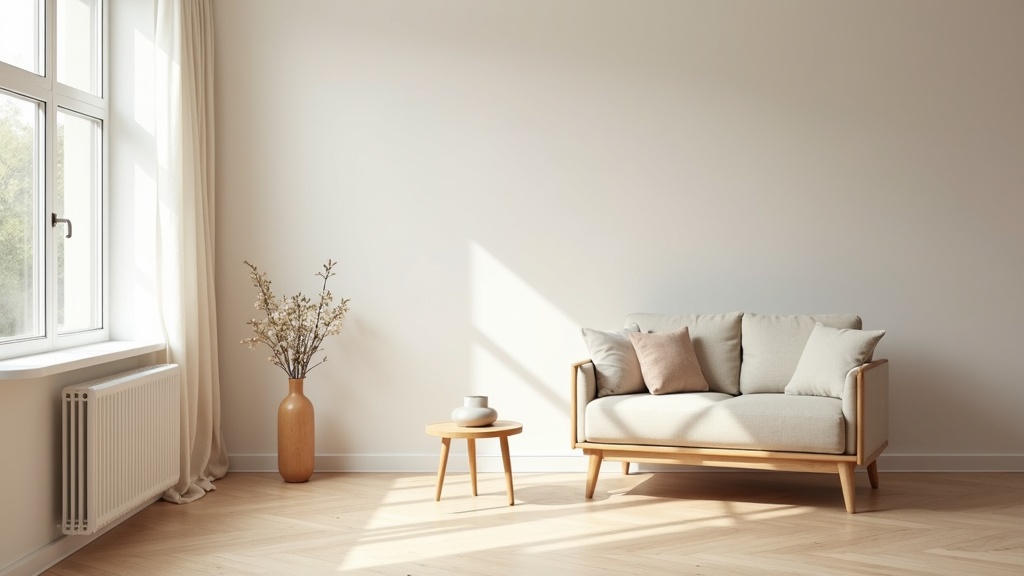
A small room is not a problem to solve. It is a set of constraints that, handled with intention, can produce something far more considered than a larger space ever demands of you.
The difference between a small room that feels cramped and one that feels calm almost always comes down to shape, not square footage. Here is what actually works, and why.
Key points at a glance
- Round and oval shapes reduce visual tension and make tight corners feel less aggressive.
- Low-profile furniture exposes more floor and makes ceilings read as higher than they are.
- Slim legs and open frames let light pass through, which keeps a room feeling airy.
- The 2/3 rule is a useful starting point, but your eye is the final authority.
- Multifunctional pieces earn their space only when the shape itself works for the room.
- A few wrong shapes, even beautiful ones, can make a well-planned room feel instantly smaller.
What good shape-choices give you
Why Shape Matters More Than Size in a Small Room
We tend to focus on measurements. Will it fit? But fit and feel are two different things. A sofa can fit perfectly and still make a room feel airless if its silhouette is wrong.
Shape affects how light moves around an object, how much floor you can see, how easily your eye travels across the room, and whether a piece feels planted or floating. These are the things that determine how a space actually feels to be inside.
Round and Oval Pieces: The Shapes That Open a Space
Sharp corners create visual stopping points. In a small room, too many of them make the eye work harder than it needs to. Round and oval furniture removes that friction.
A circular coffee table in a living room lets people move around it without thinking. An oval dining table seats the same number as a rectangular one but feels less imposing because there are no jutting corners to navigate. The room breathes.
Round pieces also help when a layout has an awkward corner or an off-centre focal point. They do not demand to be placed flush against anything.
Did you know?
Studies in environmental psychology show that curved lines in interior spaces are consistently rated as more welcoming and less stressful than straight-edged ones. The brain processes smooth contours as non-threatening, which directly affects how relaxed we feel in a room.
Low-Profile Furniture and the Power of Visible Floor
The more floor you can see, the larger a room feels. It is almost a rule. Low sofas, low beds, and low storage units keep the upper half of the room open, which draws the eye upward and makes the ceiling feel higher.
This is particularly effective in rooms with good natural light. A low piece lets that light travel across the floor uninterrupted. The result is not just brightness. It is a sense of openness that no amount of white paint can replicate on its own.
Slim Legs, Open Frames, and Visual Breathing Room
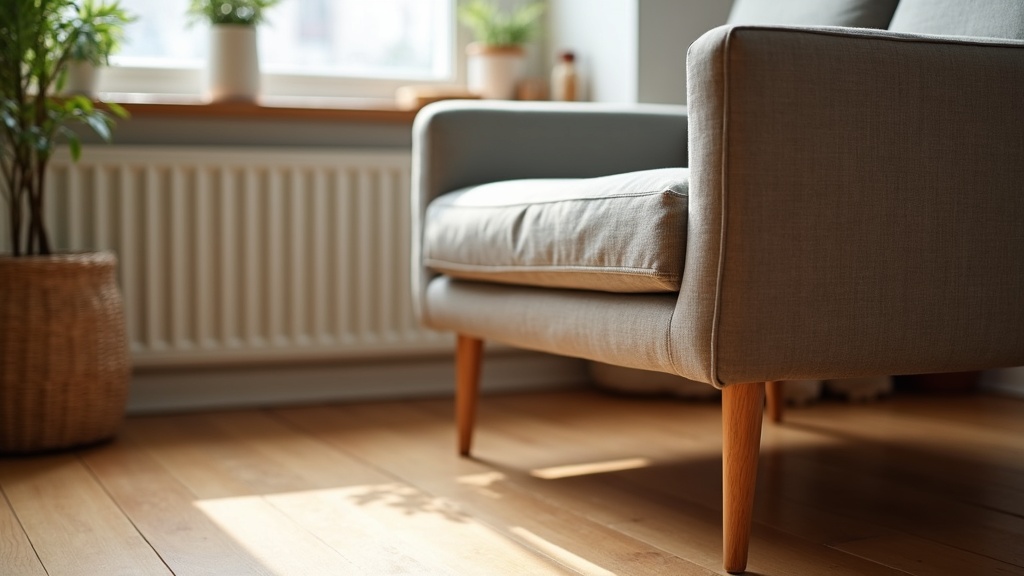
A sofa or armchair that goes straight to the floor is a solid block. It reads as heavy, even if it is not. The same piece on slim tapered legs reads as floating. That gap between the floor and the frame is doing real perceptual work.
The same principle applies to shelving. An open bookshelf, where you can see through to the wall behind, feels far less imposing than a closed cabinet of the same dimensions.
- Look for sofas and chairs with legs at least 15 to 20 cm high
- Choose open shelving over closed cabinetry where possible
- Opt for glass or acrylic side tables rather than solid wood ones in tight spots
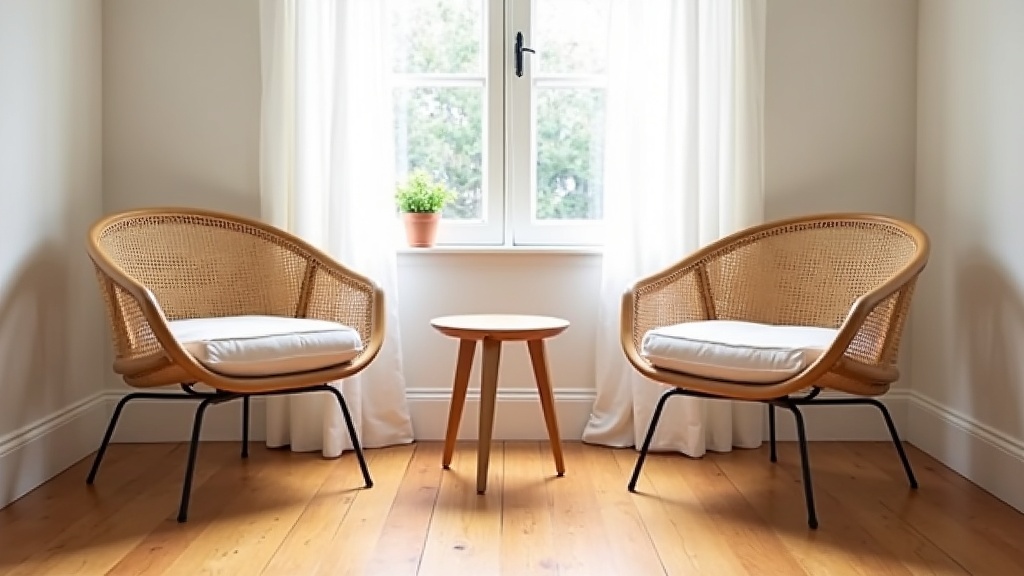
- Wire or cane frames on chairs let light pass through the piece entirely
Multi-Functional Shapes Worth the Investment
Multifunctional furniture for small spaces only earns its keep when the shape itself is right. A storage ottoman that is also a coffee table works. A bulky sofa bed with thick arms that eats half the room does not.
The best multifunctional pieces are the ones you stop noticing, because they simply belong. They do not look like clever furniture. They look like furniture.
- Nesting tables: stack away completely when not needed, round versions work best
- Bench at the foot of a bed: storage inside, seating outside, no extra floor space needed
- Drop-leaf dining table: oval when open, slim when folded against a wall
- Storage ottoman: replaces both a coffee table and a storage unit
The 2/3 Rule (and When to Trust Your Eye Instead)
The 2/3 rule for furniture suggests that your sofa should be roughly two thirds the width of your main wall, and your coffee table roughly two thirds the length of your sofa. It is a useful starting point, not a law.
In very small rooms, a piece that technically follows the rule can still feel too large if its shape is heavy. And a piece that breaks the rule can feel perfectly right if it is low, open, and light on its feet.
Trust the proportion guidelines first. Then stand in the room and trust what you see.
| Shape type | Works well in small spaces? | Why |
|---|---|---|
| Round / oval | Yes, highly | No sharp corners, easier circulation, softer visual weight |
| Low-profile | Yes | Exposes floor, raises perceived ceiling height |
| Slim-legged / open frame | Yes | Light passes through, piece feels lighter than it is |
| Rectangular with thick base | Use with care | Blocks floor and light, reads as heavy |
| L-shaped sofa | Rarely | Dominates small rooms, limits arrangement options |
| Glass / acrylic | Yes, for tables | Visually disappears, maximises perceived space |
Shapes to Use Carefully in Tight Rooms
Some shapes are beautiful in larger spaces and difficult in small ones. This is not about avoiding them entirely. It is about knowing the trade-off before you commit.
- L-shaped sofas: they anchor a corner well but tend to fill a small room completely, leaving nowhere for the eye to rest
- Boxy upholstered pieces with no legs: they sit on the floor and block light travel entirely
- Tall, narrow bookcases: they draw the eye up, which can help, but they can also make a room feel like a corridor if overused
- Oversized armchairs: one generous chair can work; two rarely do in the same small room
Did you know?
Transparent and glass-topped furniture was first used systematically in small Parisian apartments in the 1960s by designers who realised that a piece occupying zero visual weight could still function fully. Today, an acrylic side table or glass coffee table remains one of the most effective tools in a small-space kit.
How to Arrange Furniture in a Small Living Room With a TV
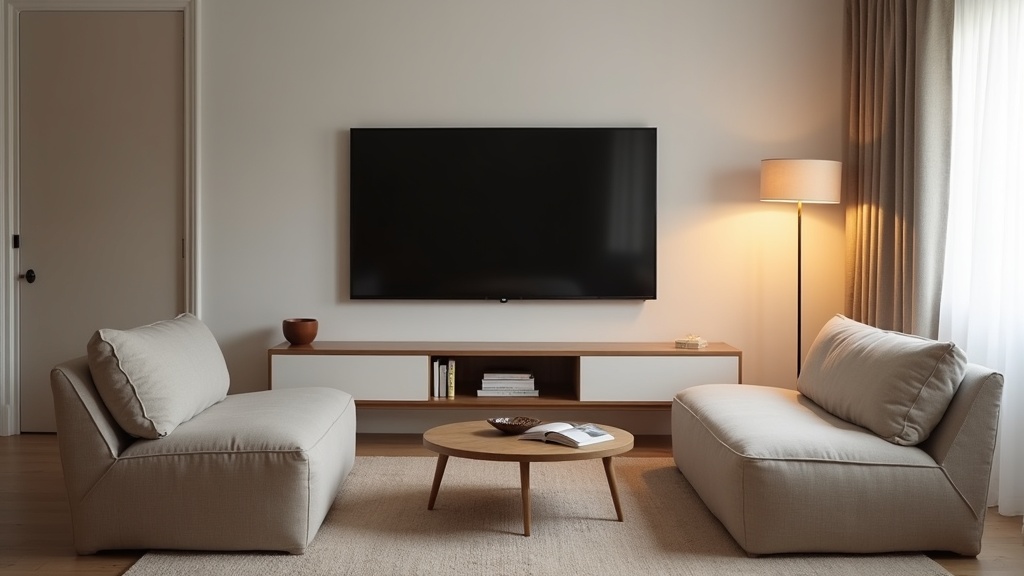
The TV tends to anchor the room whether you plan it that way or not. Work with that, not against it. Place the sofa directly facing it at a comfortable viewing distance, then build around that axis.
Practical arrangement principles
- Keep the main walkway at least 80 cm wide. Tighter than that and the room feels pressured the moment someone moves through it.
- Float the sofa slightly away from the wall rather than pushing it flat against it. Even 5 to 10 cm creates a sense of space behind the piece.
- Use a round coffee table between the sofa and the TV wall. It softens the rectangular dominance of both the screen and the sofa.
- Wall-mount the TV where possible. It removes the need for a large media unit and keeps the floor clear.
- If you need a media unit, choose one that is low and open-framed rather than tall and closed.
A Simple Shape Checklist Before You Buy
Before any new piece enters a small room, run it through this. It takes two minutes and prevents expensive mistakes.
- Does it have legs? If not, does it have another reason to justify the floor it blocks?
- Are the corners soft or sharp? In a tight circulation path, sharp corners cause daily friction.
- Can light pass through or underneath it? Yes is almost always better.
- Is it the lowest viable height for its function? Every unnecessary centimetre of height compresses the room.
- Does it need to do one job or could a multifunctional shape do two?
- When you imagine it in the room, do you see the piece or the space around it? You want to see the space.
Lagom applies here as much as anywhere. Not too much, not too little. The right shape, chosen with care, does more for a small room than any amount of clever storage or fresh paint. Shape is where it starts.


