

A room with a low ceiling doesn't need more height. It needs better thinking. The difference between a room that feels cramped and one that feels calm is rarely structural. It's almost always a decision: where the eye is drawn, what the light does, how the furniture sits.
These are things you can change this weekend. No contractor, no renovation. Just a sharper eye and a few quiet moves that shift how the space reads entirely.
Key points at a glance
- Paint the ceiling a shade lighter than the walls to make it visually recede
- Vertical lines, whether on wallpaper, shelving or fabric, pull the eye upward
- Hang curtains as close to the ceiling as possible, not just above the window frame
- Low-profile furniture keeps visual weight at floor level and opens up the upper half of the room
- Lighting placed low and angled upward creates the illusion of a higher volume
- Avoid heavy horizontal elements: wide crown moulding, boxy ceiling fixtures, and dark paint above the dado line
What this guide gives you
Why Low Ceilings Feel Heavy (And Why They Don't Have To)
A ceiling at 2.4 meters isn't inherently uncomfortable. What makes it feel that way is contrast: too many horizontal lines, furniture that crowds the upper half of the room, or a ceiling painted darker than the walls. The eye reads the room before the brain does.
Visual weight lives at the top of a room. Crown moulding, pendant lights hanging too low, shelves stacked to the ceiling: each one signals where the ceiling starts. Move that signal, and the ceiling moves with it.
The goal isn't to trick anyone. It's to guide attention, gently, toward the parts of the room that breathe. That's a design decision, not a renovation.
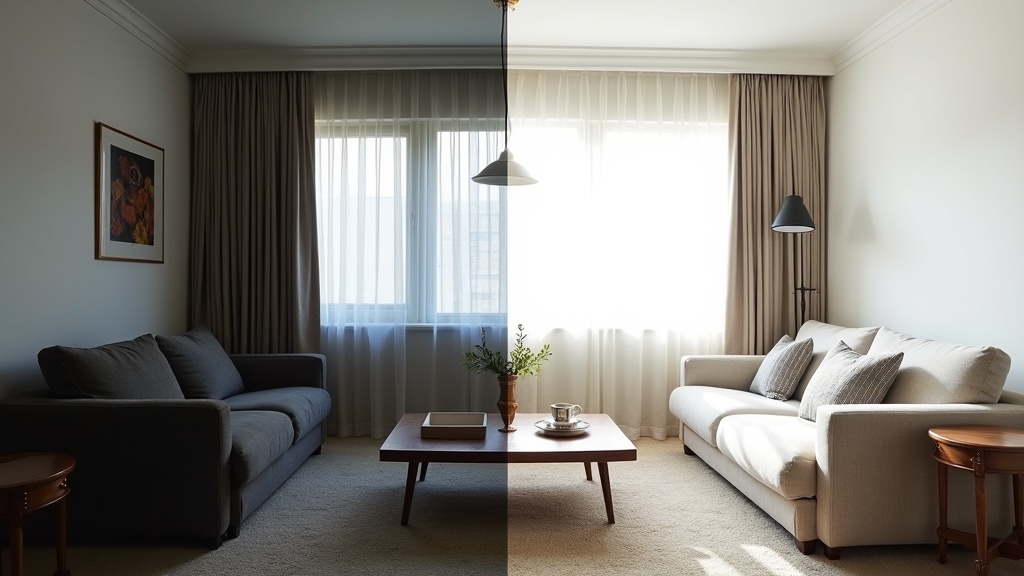
Paint: The Fastest Way to Shift How a Room Feels
Ceiling paint is the most underestimated tool in a low-ceiling room. Most people leave it white. That's fine, but it's not always enough.
Go lighter on the ceiling than the walls
If your walls are warm greige or soft sage, paint the ceiling two shades lighter. The contrast makes the ceiling recede. It reads as farther away than it actually is.
Try the continuous color technique
Paint the walls and ceiling the exact same color. It removes the hard line where the room ends. The space reads as one continuous volume rather than a box with a lid. Works especially well in pale, warm neutrals.
Avoid dark ceilings in low rooms
Dark ceiling paint can work beautifully in rooms with height to spare. At 8 feet, it compresses. The ceiling becomes the first thing you see, not the last.
Did you know?
Matte paint on a ceiling minimizes shadows and uneven textures, making the surface feel smoother and less prominent. A flat or matte finish is nearly always the right choice for a low ceiling, regardless of color.
Vertical Lines Do the Heavy Lifting
The vertical line illusion is one of the oldest tricks in spatial design, and it still works. The eye follows lines. Give it vertical ones and it travels upward, naturally extending its sense of the room's height.
- Vertical stripe wallpaper, even very subtle tone-on-tone, draws the eye from floor to ceiling
- Tall, narrow bookshelves anchored against a wall act like visual columns
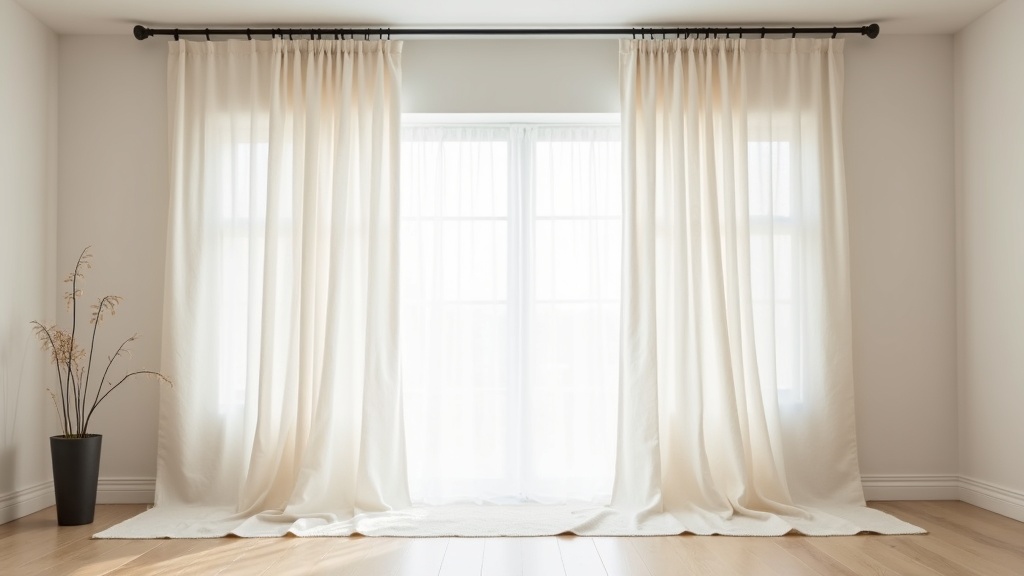
- Floor-length curtains in a single vertical column of fabric are one of the simplest ways to suggest height
- Vertical panelling, shiplap or board-and-batten installed vertically, adds texture without compression
It doesn't take all of these. One or two applied with intention is enough. Lagom: not too much, not too little.
Light Placement Changes Everything
Good lighting doesn't announce itself. It settles into the room and changes how it feels. In a low-ceiling room, where you put the light matters more than how much of it you have.
Uplighting: the quiet secret
Floor lamps that throw light upward create the impression of volume above. The light washes the ceiling and the upper walls, making them seem to push back. This does more for a room than any renovation.
Avoid large flush-mount ceiling fixtures
A wide, flat ceiling fixture draws the eye directly to the ceiling at its lowest point. It says: here is where this room ends. Recessed lighting, wall sconces, or slim pendant lights hung just low enough to clear head height are far better choices.
Use table lamps and indirect light
Layer light from multiple points at different heights. A room lit only from above feels flat. Light placed at eye level and below creates warmth and draws attention away from the ceiling entirely.
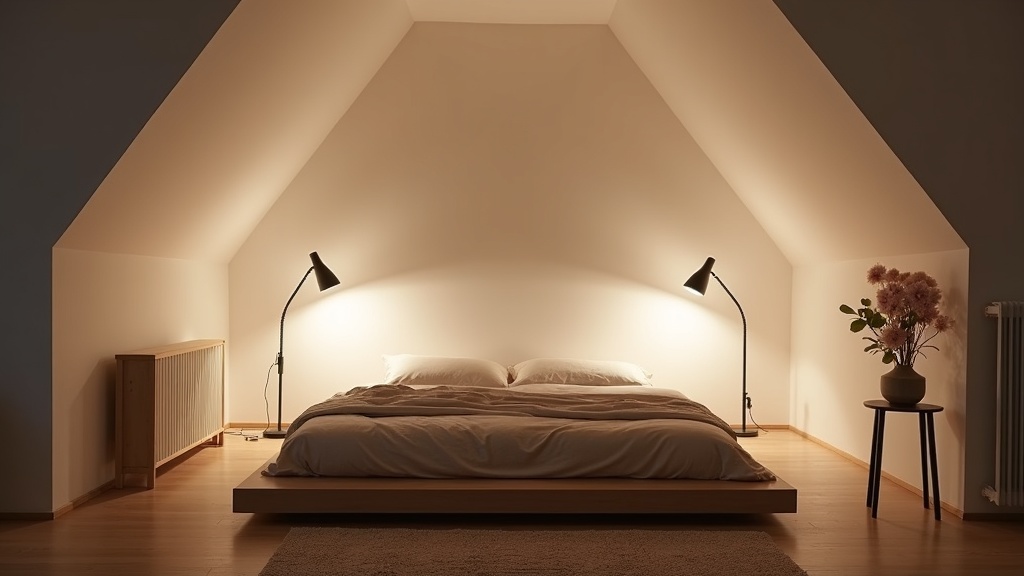
Furniture Scale and the Art of Low-Profile Living
Tall furniture in a low room isn't automatically wrong. But it needs to be intentional. A single tall bookcase used as a vertical line element works. A room full of tall wardrobes, high-backed sofas, and bulky armchairs feels like the walls are closing in.
The principle is simple: keep the mass low, keep the upper half of the room clear.
| Furniture type | Low-ceiling choice | Why it works |
|---|---|---|
| Sofa | Low-profile, seat height 40, 43 cm | Keeps visual weight at floor level, opens the upper room |
| Bed frame | Platform bed or very low base | Maximizes the visible wall above the headboard |
| Storage | Built-in or floor-to-ceiling shelving | Integrated storage doesn't interrupt the wall plane |
| Dining chairs | Slim-legged, open-back designs | See-through silhouettes feel lighter in tight volumes |
| Coffee table | Very low, 35, 38 cm height | Anchors the room at ground level where it belongs |
Curtains, Rods, and the Power of Where You Hang Things
Where you fix the curtain rod matters more than the curtain itself. Most people hang it just above the window frame. That's the wrong call in a low-ceiling room.
Hang the rod as close to the ceiling as possible. Even if the window ends halfway down the wall, the curtain should fall from ceiling to floor. This single change makes the window feel taller and pulls the eye upward in one clean movement.
Fabric choice matters too
Choose curtains in a single, unbroken vertical column. No bold horizontal patterns. No gathered, bulky headings. Linen, voile, or any fabric that hangs straight and light. The best curtain for a low room is the one you stop noticing.
Did you know?
Hanging curtain rods 15 to 20 cm above the window frame, rather than directly above it, can make a standard window appear nearly 30% taller to the eye. The brain reads the curtain's drop, not the window's actual height.
What to Avoid: The Details That Pull a Ceiling Down
Knowing what not to do is at least as useful as knowing what to do. Several common choices actively compress a low room.
- Wide, deep crown moulding: it draws a thick horizontal band around the top of the room, making the ceiling the visual endpoint
- Pendant lights that hang too low: anything that drops more than 20 cm below the ceiling plane in a low room steals height fast
- Ceiling fans with large blades: the horizontal span reads as a ceiling-level element and compresses the volume
- Horizontal wallpaper patterns: stripes or wide repeats that run side to side widen the room while shortening it
- Large artwork hung low and wide: a single tall, narrow piece is better than a wide horizontal canvas at dado height
Room-by-Room Notes: Living Room, Bedroom, Basement
Living room
This is where furniture scale matters most. A low-profile sofa, a slim coffee table, and one tall vertical element (a narrow shelving unit or a tall plant) is the right combination. Keep the upper two-thirds of the wall as clear as possible. Let the light work.
Bedroom
A platform bed is the single most effective change you can make. Pair it with uplighting on either side and curtains hung from ceiling height. The room will feel calm and generous even at 8 feet. Avoid canopy beds or tall headboards that press against the ceiling line.
Basement
Basements need more deliberate work. Paint everything, ceiling included, in the same pale tone. Use recessed lighting where possible. Mirrors placed strategically on walls reflect depth and suggest volume. Keep the palette tight: one or two colors, no contrast. The room should feel like one thing, not many competing elements.
Your Next Steps
Start with one thing. Not all of it at once.
- If you paint this week: go two shades lighter on the ceiling than the walls, or try the same color on both
- If you move the curtain rod this weekend: raise it to within 5 cm of the ceiling, let the fabric fall to the floor
- If you rearrange the furniture: remove the tallest piece from the center of the room, push mass toward the floor
- If you add one light: choose a floor lamp with an upward-facing shade, position it in a corner
Each change compounds. A room that felt heavy in January can feel entirely different by March. Not because it changed structurally. Because the decisions inside it were better. That's the work.


