
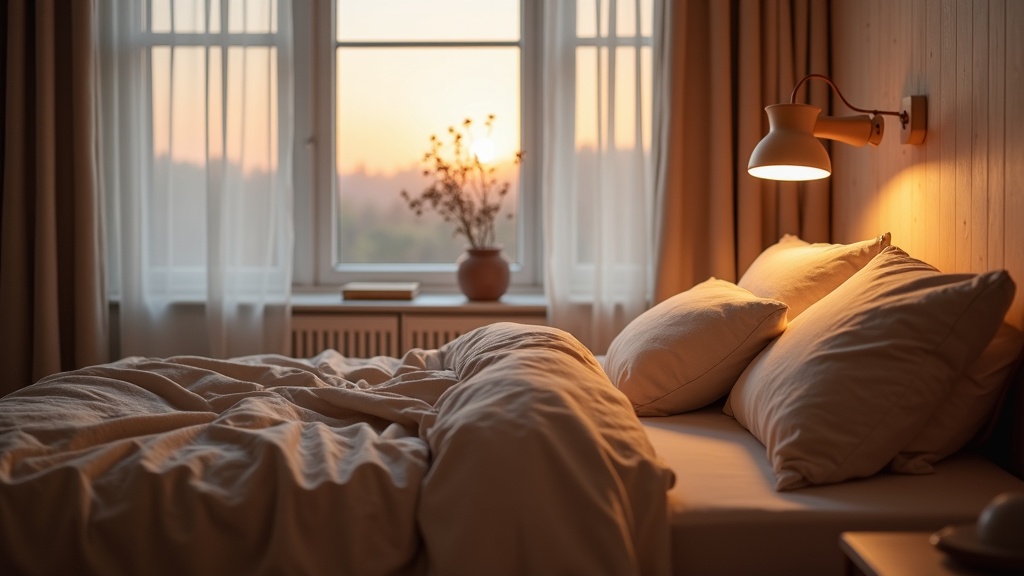
Most bedrooms are designed to be seen, not slept in. The result is spaces that look right in photographs and feel wrong at 11 p.m., when the light is harsh, the air is stale, and the room refuses to settle.
Designing a bedroom for better sleep is a different kind of work. It starts with what a room does to your nervous system, not what it does to your Instagram feed. Small decisions, handled with intention, change everything.
Key points at a glance
- How a room feels matters more than how it looks. Start with atmosphere, not aesthetics.
- Layered, warm lighting signals rest to your brain far more effectively than a single overhead bulb.
- Room temperature around 16 to 19°C (61 to 66°F) is the setting most people miss entirely.
- A spare layout and minimal furniture reduce visual noise and support deeper relaxation.
- Muted tones, natural textures, and a considered scent do quiet, powerful work.
- A short checklist before bed, not a renovation, can shift your sleep quality tonight.
What a well-designed bedroom gives you
Start With What the Room Feels Like, Not Just How It Looks
Walk into your bedroom right now and pause. Before you see anything, you sense it. The air. The stillness. The weight of the light. That first impression is the one that matters most for sleep.
A room that feels busy, even if it looks tidy, keeps the brain alert. Visual clutter sends small stress signals. Unfinished tasks left on a chair, a desk pushed into the corner, a screen facing the bed. None of it is dramatic. All of it adds up.
The Scandinavian design tradition understands this instinctively. A room should feel like a breath out. Not empty, not cold. Just free of unnecessary weight. Lagom: not too much, not too little. Just enough, done well.
Light Is the Most Powerful Tool You Have
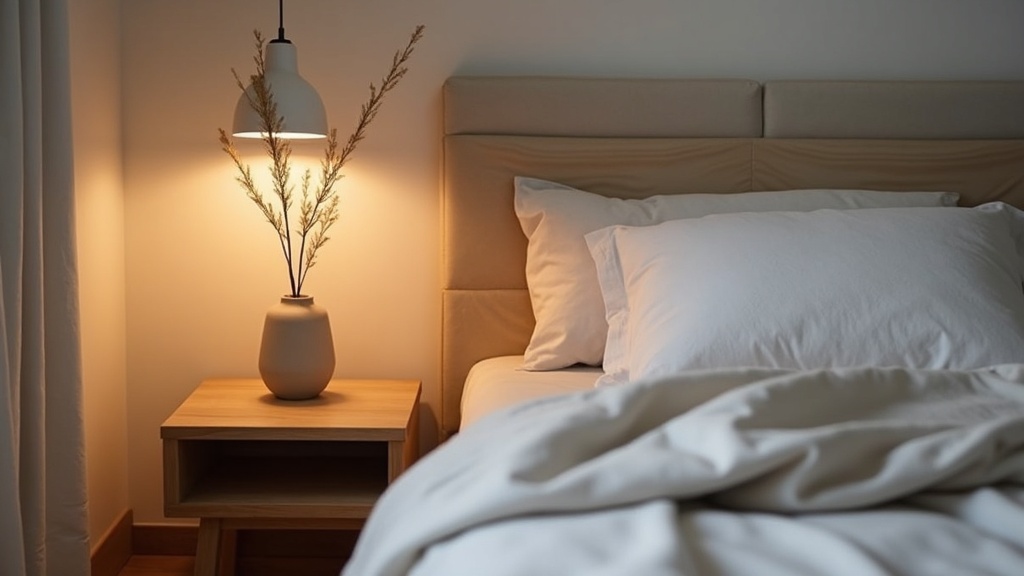
Good lighting doesn't announce itself. It settles into the room and changes how it feels. The wrong light does the opposite: it flattens everything, kills warmth, and tells your body it is still the middle of the afternoon.
Overhead lights are the enemy of sleep. A single ceiling fixture flooding the room from above is the fastest way to keep melatonin from rising. Layer instead.
How to layer bedroom lighting for sleep
- Bedside lamps: low, warm, placed at eye level when lying down
- Floor lamps: positioned in corners to wash light upward softly
- Candles or flame-effect bulbs: for the last hour before sleep
- Bulb temperature: 2200K to 2700K, the amber range. Nothing cool-white after dark.
- Dimmer switches: simple to install, immediately transformative
Blackout curtains or lined linen drapes handle the other side of the equation. Morning light is useful; streetlight at 2 a.m. is not. Block what you don't choose.
Did you know?
Blue-spectrum light (above 4000K) suppresses melatonin production by up to 85%, according to research published in the Journal of Clinical Endocrinology and Metabolism. Switching to a 2400K bulb in the evening is one of the highest-impact, lowest-cost changes you can make to your bedroom environment for better sleep.
Temperature: The Setting Most People Ignore
Most people adjust their pillow, their duvet, their mattress. Very few adjust the room temperature deliberately. That is a significant gap.
Your core body temperature needs to drop slightly for deep sleep to begin. A room that is too warm makes that process harder. The research points consistently to 16 to 19°C (61 to 66°F) as the optimal range for most adults.
If you run warm, go toward the lower end. If you share a bed with someone who runs cold, find the middle and let layered bedding do the rest. A lighter duvet with an extra blanket within reach is more versatile than one heavy one.
Keep the Layout Generous and the Furniture Spare
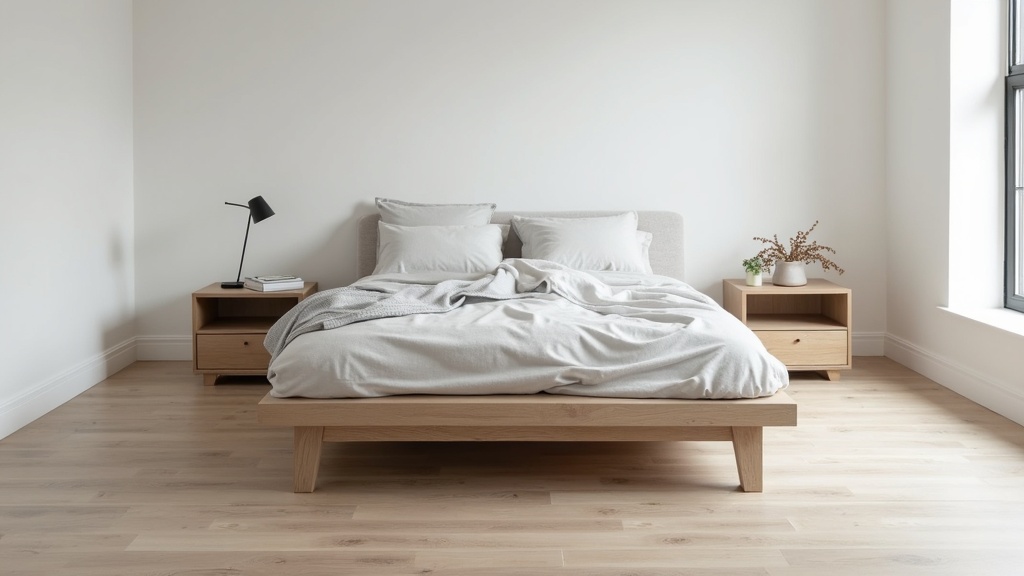
A minimalist bedroom for better sleep is not about owning less for its own sake. It is about giving the eye somewhere to rest and the body room to exist without friction.
The bed should sit with clear space on at least two sides. If you are climbing over a partner every morning, the layout is already working against you. Keep furniture low, so the ceiling reads higher and the room breathes. Avoid storing anything under the bed if you can. Out of sight rarely means out of mind.
Color and Texture Do More Than Decorate
Color affects mood at a physiological level. Warm neutrals, soft greiges, dusty sage, and undyed linen tones keep the nervous system calm. Bright whites can feel clinical. Deep, saturated colors can energize when you least want it.
Texture is the softer voice in the room. Rough linen, smooth stone, raw wood, a woven blanket. These materials register as warmth. They signal nature. And nature, to the brain, tends to mean safety.
| Material | Sleep benefit | Best used for |
|---|---|---|
| Washed linen | Breathable, temperature-regulating | Bedding, curtains, cushion covers |
| Untreated oak or pine | Warm tone, no off-gassing, low visual noise | Bed frames, nightstands, flooring |
| Merino wool | Regulates moisture and body temperature | Blankets, mattress toppers |
| Unglazed ceramic | Matte, grounding, no reflection | Lamp bases, small objects, vessels |
| Cotton percale | Cool, crisp, durable | Sheets, pillowcases |
Scent, Sound, and the Quiet Details That Signal Rest
The senses that get least attention in bedroom design are often the ones that work hardest on the subconscious.
Scent is processed differently from other sensory information: it bypasses the thalamus and connects directly to the limbic system, the part of the brain that handles emotion and memory. Lavender, cedarwood, and vetiver have consistent, documented calming effects. A diffuser on a timer, or a linen spray on the pillow, is enough.
Sound is about control. If you live somewhere noisy, pink noise or low-frequency white noise can mask disturbances without adding stimulation. If you live somewhere quiet, protect that quiet aggressively. Heavy curtains and a draught-sealed door do more than most people realize.
Did you know?
A 2015 study from Wesleyan University found that participants who inhaled lavender essential oil before bed spent more time in slow-wave sleep and reported higher morning energy levels compared to a placebo group. The effect was consistent across multiple nights.
The Bed Itself: Where Comfort Meets Considered Design
The bed is the only piece of furniture in the room you actually use for its intended purpose for seven or eight hours every night. It deserves the most thought.
The frame should be solid, low-profile if possible, and free of sharp or reflective surfaces. The mattress should match how you sleep: side sleepers generally do better with softer pressure relief at the shoulder, back sleepers with more even support throughout.
Pillows matter more than most people admit. One good pillow matched to your sleep position outperforms three decorative ones that end up on the floor. Keep the bed simple. The best setup is the one you actually sleep in, not the one that photographs well.

A Simple Sleep Environment Checklist You Can Use Tonight
You don't need to redesign the room to start sleeping better in it. A few deliberate changes, done consistently, shift the baseline quickly.
- Switch off the overhead light an hour before bed. Use a bedside lamp at 2700K or lower.
- Set the thermostat or open a window to bring the room below 19°C (66°F).
- Remove one item from the nightstand that doesn't belong there.
- Put your phone on the other side of the room, face down, on silent.
- Add one textile with natural texture: a linen throw, a wool blanket.
- Apply two sprays of a lavender or cedarwood linen mist to your pillow.
- Draw the curtains fully and check for any light gaps at the edges.
These are not dramatic interventions. They are the kind of quiet, intentional choices that a well-designed bedroom makes automatic. The room does the work, and you just sleep.


