
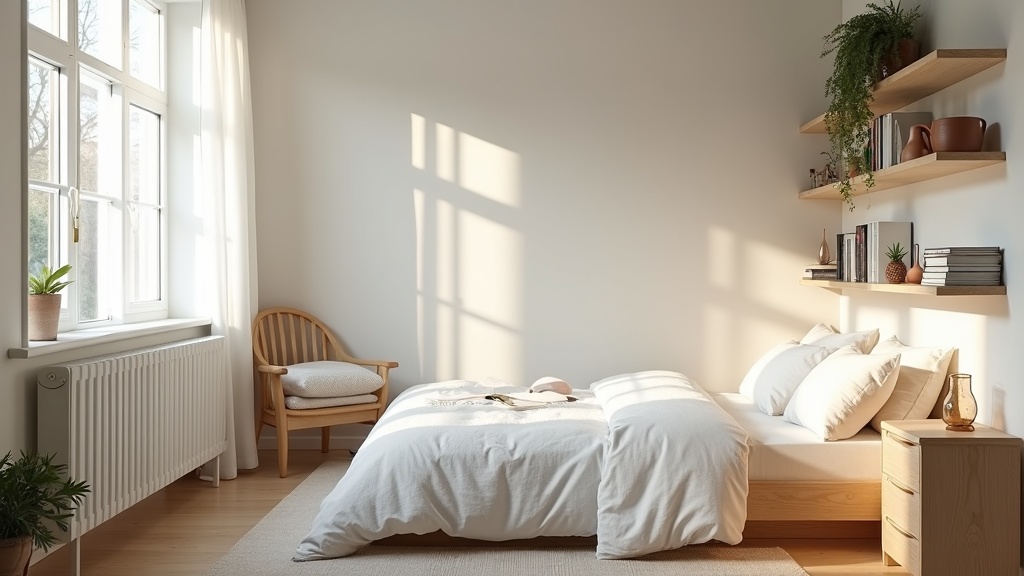
A small bedroom doesn't have to feel like a compromise. The rooms that feel genuinely calm are rarely the biggest ones. They're the most considered ones.
What follows isn't a list of hacks. It's a way of thinking about the space you already have, and getting more from it without making it feel crowded or contrived.
Key points at a glance
- Audit what you actually need before buying a single storage piece.
- Walls and vertical space are the most underused resource in small rooms.
- Under-bed storage, done right, can replace an entire chest of drawers.
- Furniture that does two jobs earns its floor space. Single-use pieces rarely do.
- Visual calm matters as much as physical storage. Hidden storage beats open clutter.
- Meaningful changes cost less than you think, and never require a renovation.
What good storage actually gives you
Start With What the Room Actually Needs
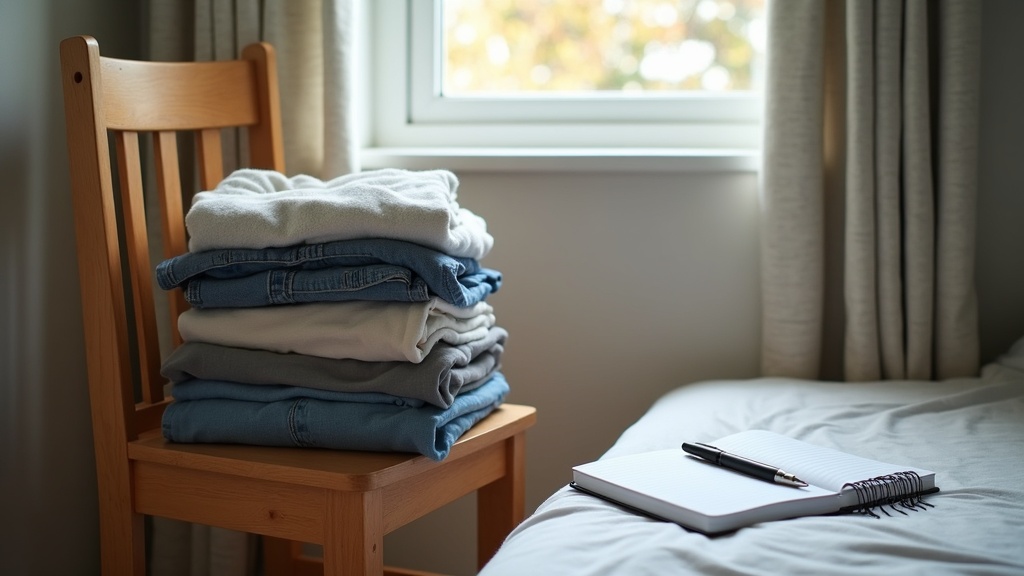
Before moving anything, spend ten minutes writing down what you actually store in this room. Clothes, yes. But what else? Books? Equipment? Things that crept in from other rooms?
Most small bedrooms suffer from storage that was never designed for them. Furniture chosen at different times, for different reasons, now competing for the same floor space.
The first edit is always the most powerful
Remove what doesn't belong. Anything that could live in a hallway cupboard, a wardrobe in another room, or a box under the stairs is borrowing space it shouldn't have.
What remains is your real storage problem. And it's almost always smaller than you thought.
Go Vertical: Walls Are Your Most Underused Asset
Floor space in a small room is rationed. Wall space is almost always wasted. Shelving that runs from chest height to ceiling can hold as much as a full wardrobe, while freeing the floor entirely.
Open shelves work when they're curated. A few books, one plant, a small lamp. The moment they become a dumping ground, they add visual noise instead of solving it.
Closed wall storage is quieter
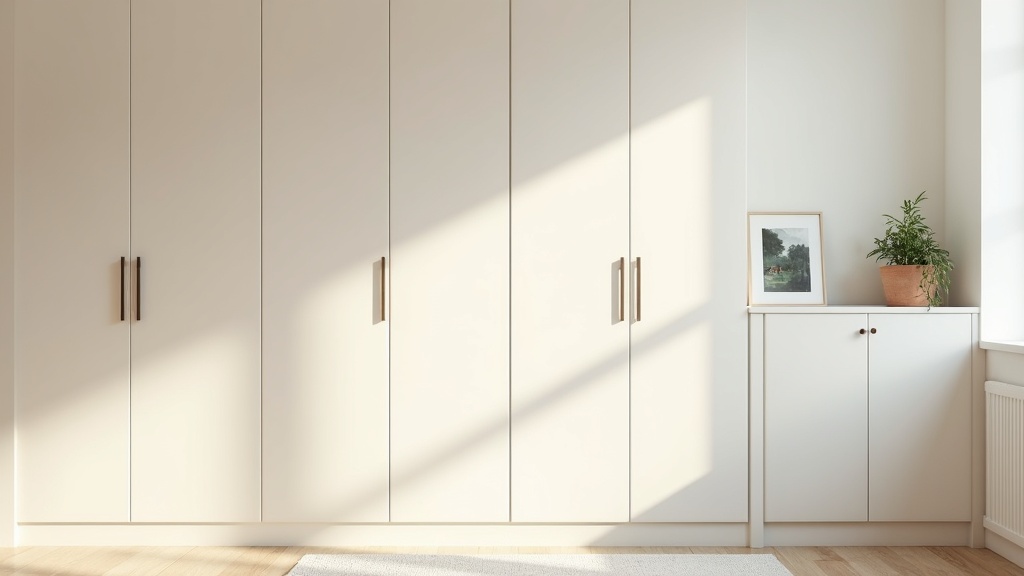
Wall-mounted cabinets with solid doors give you the same vertical capacity with none of the visual work. In a room where you're trying to sleep, that matters.
- Fix shelves high enough to clear the sightline from the bed.
- Use uniform containers or baskets on open shelves to reduce visual clutter.
- A single tall, narrow bookshelf takes up less than 40 cm of floor space and stores a surprising amount.
Did you know?
The average bedroom wall between the top of a wardrobe and the ceiling holds roughly 0.6 cubic metres of unused space. That's equivalent to two full laundry baskets of storage, sitting idle at eye level.
Under the Bed Is Not Dead Space
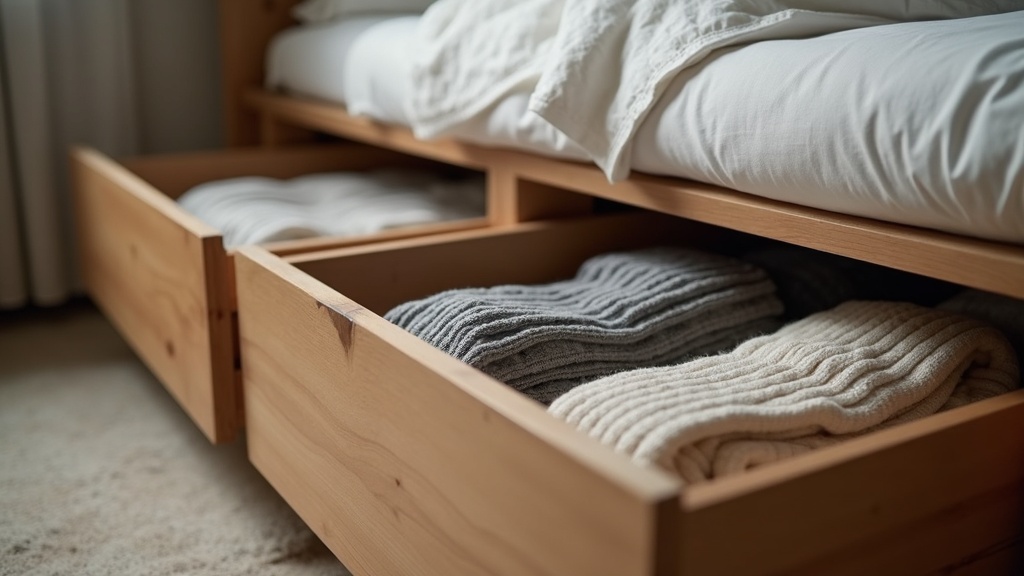
The space beneath a bed is one of the most consistent storage opportunities in any small room. A standard double bed frame sits over roughly 1.5 square metres of floor area. That's not nothing.
The key is making it accessible. Beds with built-in drawers do this well. Low-profile rolling boxes work nearly as well, and cost a fraction of the price.
What works best under a bed
- Off-season clothing in flat zip bags (vacuum-seal bags halve the volume).
- Extra bedding and spare pillows.
- Shoes stored in clear stackable boxes, labels facing out.
- Items used occasionally but not daily, so access frequency stays low.
Avoid storing anything that needs to breathe in sealed plastic long-term. Natural fibres need air circulation.
Choose Furniture That Does Two Jobs
Every piece of furniture in a small bedroom occupies floor area. The question is whether it earns that space. A single-purpose bedside table that only holds a lamp is a poor investment of floor space. A small cabinet with two drawers and a surface earns it.
Pieces worth considering
- Storage ottomans at the foot of the bed: seating, surface, and interior storage in one.
- Bedside tables with drawers or shelves underneath, rather than open legs.
- A bench with internal storage instead of a chair that collects clothes.
- A headboard with integrated shelving, replacing the need for a nightstand on one side.
| Furniture piece | Single-use version | Dual-purpose upgrade |
|---|---|---|
| Bedside table | Open-leg table with surface only | Two-drawer cabinet with shelf |
| Foot-of-bed seating | Decorative bench, no storage | Upholstered ottoman with lid |
| Wardrobe | Hanging rail only | Hanging rail + internal shelves + top storage |
| Desk | Flat surface, no storage | Surface with drawers and wall-mounted shelf above |
| Headboard | Padded panel, decorative only | Integrated shelf with reading light niche |
Corners, Doorways, and the Gaps You Walk Past
Corners are awkward. They're also almost always empty. A corner shelf unit or a tall angled plant stand with a shelf beneath it turns dead geometry into usable space without visually blocking the room.
The back of a door is another overlooked surface. Over-door organisers, a row of hooks, or a slim hanging pocket for accessories can hold a surprising amount without taking a centimetre of floor space.
The gap beside a wardrobe, often just 15 to 20 cm, fits a slim pull-out rack for shoes, scarves, or rolled items. If you walk past it every day, it's working.
Keep It Calm: Organization Without Visual Noise
Storage that creates visual noise defeats the point. A bedroom is where you decompress. The eye needs somewhere to rest.
Closed storage is almost always the right call in a small room. What you can see should be deliberate: one piece of art, one plant, a lamp with a considered shade. Not five things competing for attention.
The lagom principle applied here
Not too full, not too bare. Shelves that are 70% used look curated. Shelves at 100% look overwhelmed. Leave the last row of books unread for now. The room will thank you.
Budget-Friendly Moves That Still Look Considered
Spending more doesn't automatically mean storing more. Some of the most effective changes cost very little and need no tools.
- Vacuum storage bags for duvets and bulky knitwear: reduce volume by up to 75%.
- Uniform hangers in the wardrobe: slim velvet styles recover 30 to 40% of rail space versus standard plastic.
- Floating shelves from a hardware store, cut to fit a specific alcove: cost under £20 and look entirely intentional.
- Tension rods inside wardrobe drawers to divide and stack items upright, so nothing gets buried.
- Second-hand furniture with good bones: a solid wood dresser from a charity shop, repainted, holds as much as a new flatpack piece at a third of the cost.
Did you know?
Switching from standard plastic hangers to slim velvet ones can free up 30 to 40% of wardrobe rail space, the equivalent of gaining an extra section of rail without touching a wall or buying new furniture.
A Few Things Worth Avoiding
Not every storage idea earns its place. Some things that look good in a showroom create more problems in an actual small room.
- Open pegboards with 20 items hanging from them. Useful in a kitchen. In a bedroom, they read as noise.
- Furniture that's too tall for the room. A wardrobe that grazes the ceiling looks proportional. One that stops 40 cm short creates an awkward gap that collects dust and visual weight.
- Too many different storage systems at once. Baskets, clear boxes, fabric bins and wooden crates in the same room compete with each other. Choose one material and repeat it.
- Mirrors used without thought. A well-placed mirror opens a room. A poorly placed one reflects the most cluttered corner and doubles it.
Your Starting Point: Three Things to Do This Week
Change doesn't need to happen all at once. Start with what's most likely to shift how the room feels.
First: Remove everything from the room that doesn't belong there. Give it one hour. The room will look different before you've bought a single thing.
Second: Look at the wall above your current furniture. Measure the gap. In most bedrooms, there's room for at least one more shelf per wall that nobody has thought to use.
Third: Check what's under the bed. If it's random and inaccessible, invest in two flat rolling boxes. Label them. That alone often replaces the need for a second chest of drawers.
The room you have is probably enough. It just needs to be used with more intention than it has been so far.


