
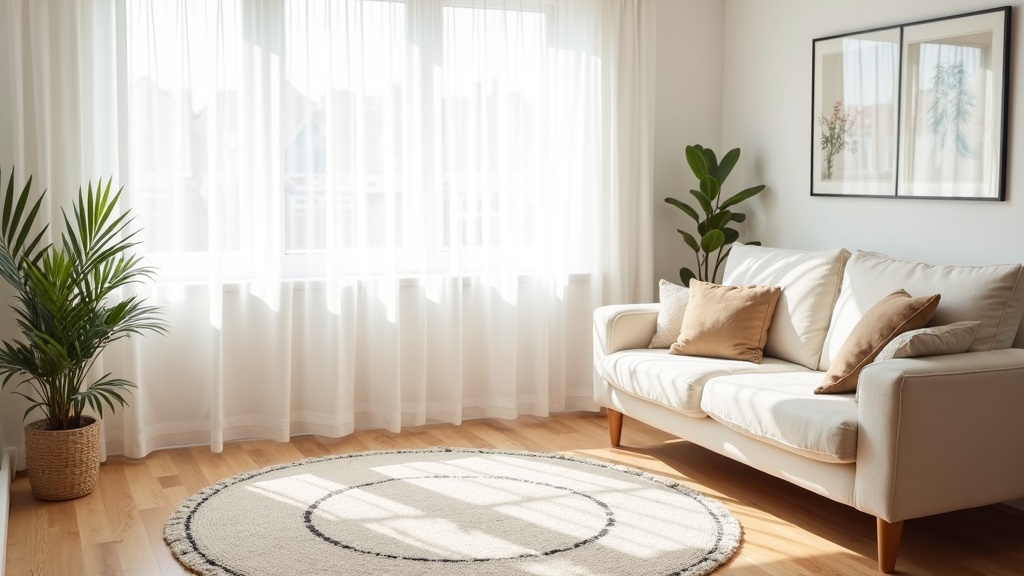
Most rental apartments hand you four white walls and ask you to live with them. The instinct is to paint, to fix the room's blankness as quickly as possible. But paint is rarely allowed, and chasing permission takes the energy you should be spending on making the space feel like yours.
There is another way. A room can feel warm, considered, and genuinely lived-in without a single brushstroke. It comes down to light, texture, and a few deliberate choices. Here is how to get there.
Key points at a glance
- Warm-toned light changes a room more than any wall color can.
- Rugs define zones and bring texture the floor cannot provide on its own.
- Peel-and-stick wallpaper works, but surface prep and panel alignment matter.
- Curtains hung high and wide make ceilings feel taller and rooms feel calmer.
- The 3-5-7 rule keeps decorating from tipping into clutter.
- Temporary solutions done well are indistinguishable from permanent ones.
What this guide gives you
Start with Light, Not Color
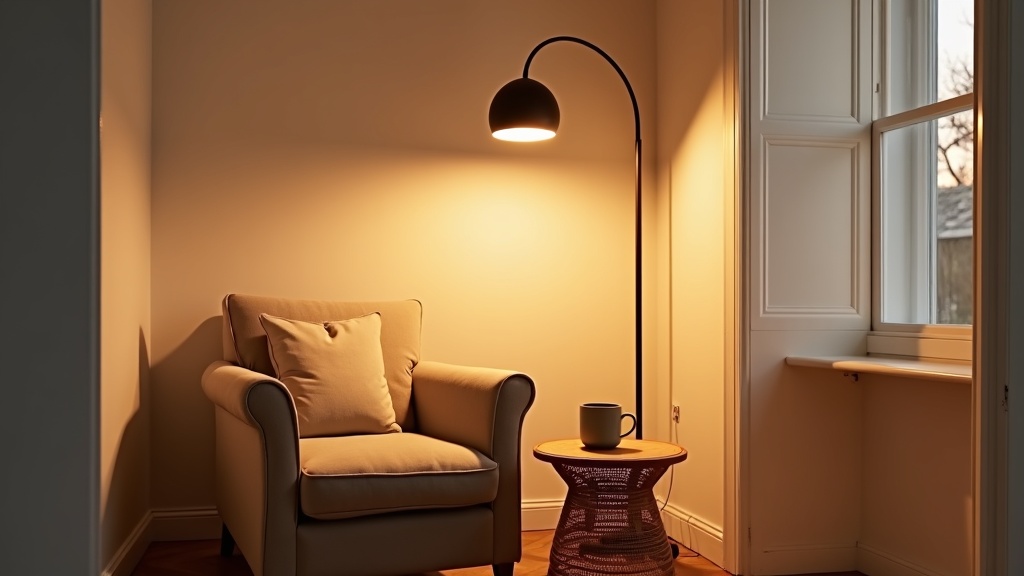
Good lighting does not announce itself. It settles into a room and changes how it feels. Swap any harsh overhead bulbs for warm-white LEDs, ideally around 2700K, and the room softens immediately.
Add one or two floor lamps placed low in corners. Corner light lifts the walls visually and creates a sense of depth that no coat of paint can replicate. A room lit from three different heights always feels more considered than one lit from a single ceiling fixture.
Use Rugs to Anchor Every Room
A rug is not decoration. It is architecture you can roll up. It tells you where a room begins and ends, and it brings warmth that bare floors simply cannot provide.
Size matters more than pattern. A rug that is too small floats in the middle of the room and makes the space feel smaller. Aim for front legs of sofas and chairs to sit on the rug, not beside it.
- In a living room: go as large as the seating area can accommodate, ideally 200x300cm or bigger.
- In a bedroom: run the rug under the lower two-thirds of the bed so it frames it on three sides.
- In a hallway: a long runner instantly makes the passage feel intentional rather than forgotten.
Did you know?
Studies on interior acoustics show that soft furnishings like rugs and curtains can reduce echo and mid-frequency noise in a room by up to 30%. A quieter room simply feels more comfortable to be in, even if you never consciously notice the difference.
What to Do with Blank Walls (Without a Single Nail)
White walls are not the enemy. Emptiness is. The good news is you have more options than you might think, even without a drill.
Adhesive strips and hooks
Brands like 3M Command make strips rated for frames up to 3-4kg. Use them in multiples for heavier pieces and follow the weight guidance precisely. They come off cleanly from most painted surfaces when removed correctly.
Leaning works
A large mirror or framed print leaned against the wall reads as deliberate, not lazy. Layer a smaller frame in front of it. The result is a considered arrangement that took ten minutes.
Washi tape and paper
Washi tape can create geometric patterns or frame a section of wall without damaging the surface. Use it to outline a grid, then fill the squares with postcards, pressed botanicals, or simple prints. It peels off without residue.
Peel-and-Stick Wallpaper: What Actually Works
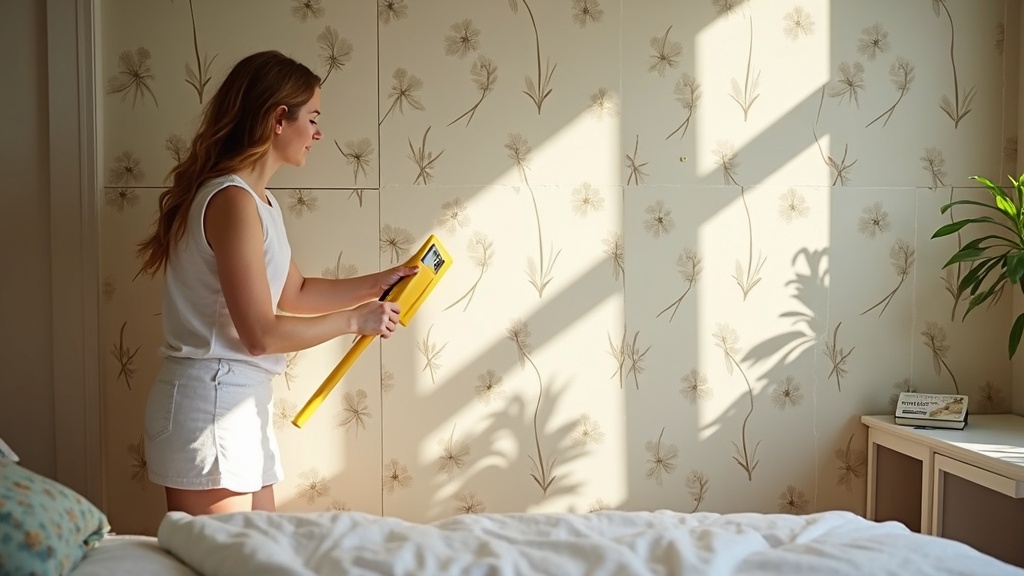
Peel-and-stick wallpaper has improved significantly. The better brands adhere well, look convincing, and remove without damage to standard painted drywall. The key is preparation, not the product itself.
Clean the wall thoroughly with a dry microfibre cloth before applying. Any dust or grease breaks the adhesion. Work slowly from the top down, using a credit card to smooth out bubbles as you go. Misaligned panels are the most common mistake: measure and mark a straight vertical line first.
Use it on one wall only. A full room of peel-and-stick wallpaper can feel heavy. A single feature wall behind a bed or sofa is enough to shift the character of the entire room.
Curtains Do More Than Block Light
Hang curtains as high as you can, ideally at ceiling height, and wider than the window frame. This is one of the most effective things you can do for a rental interior. It makes ceilings feel taller and windows feel larger, neither of which cost you anything in deposit.
Avoid polyester. Linen and cotton voile let light pass through while softening it. The fabric moves, and that movement makes a room feel alive rather than static. A room with good curtains does not need much else on its walls.
Furniture Placement as a Design Tool
Most renters push furniture against walls. It feels safe but it rarely looks right. Pull pieces away from the walls, even by twenty centimetres, and the room immediately gains a sense of intention.
Float the sofa with its back to a walkway if space allows. Place a console table behind it. This creates two zones from one room and makes a small apartment feel more complex and interesting than it actually is.
| Temporary Wall Solution | Best Use | Renter Risk |
|---|---|---|
| Peel-and-stick wallpaper | Feature wall, one surface only | Low on clean drywall, prep well |
| Adhesive strip frames | Gallery walls, small to mid prints | Very low if weight limit respected |
| Washi tape grid | Graphic pattern, postcard display | Minimal, removes without residue |
| Fabric wall hanging | Texture and warmth above a sofa | Zero, hung with a dowel and hooks |
| Leaned large mirror | Light, depth, and visual height | Zero, no fixings needed |
Layer Texture Instead of Paint
Color on walls is one design tool. Texture is a quieter one, and often more effective. When a room has multiple surfaces with different textures, the eye moves around it naturally. It feels rich without being loud.
Think in layers: a jute rug under a wool throw under linen cushions. A ceramic lamp base next to a timber shelf. A linen curtain beside a painted white bookshelf. None of these require permission. Together, they give a rental the density and warmth that paint alone rarely achieves.

The 3-5-7 Rule and Why Renters Should Know It
The 3-5-7 rule is an interior styling principle: group objects in odd numbers, three, five, or seven. Odd groupings feel organic. Even groupings feel formal and symmetrical, which can read as stiff in a home setting.
Apply it to shelves, surfaces, and wall arrangements. Three objects of different heights on a shelf will always look more resolved than two. Five items in a gallery wall arrangement will feel less deliberate than six. The rule does not explain itself in a room. It just makes things look right.
Did you know?
The Swedish concept of lagom, meaning not too much and not too little, is a guiding principle in Scandinavian interior design. Research on environmental psychology suggests that visually balanced, uncluttered spaces measurably reduce cortisol levels and support a sense of calm. Restraint is not minimalism. It is intention.
A Few Things Worth Skipping
Not every renter-friendly trend is worth your time or money. Some things look appealing in photographs and feel hollow in real life.
- Removable tile stickers: edges lift quickly in humid kitchens and bathrooms, and the result ages badly.
- Fake plants as a shortcut: one or two convincing ones are fine. A room full of them reads as avoidance rather than design.
- Too many prints on every wall: it is the visual equivalent of speaking too loudly. One well-chosen, well-placed piece lands harder than a wall covered in ten.
- Matching everything: a sofa, cushions, rug, and curtains all in the same tone flatten a room. Variation within a palette is what makes it feel alive.
Lagom applies here too. Not too much, not too little. The best rooms feel considered, not curated. There is a difference, and you feel it the moment you walk in.
Start here this weekend
If you want to begin, pick one room and work through this order. First, change the light. Then place a rug if you do not already have one sized correctly. Then address the walls with one solution: a leaned mirror, an adhesive-strip gallery, or a single panel of peel-and-stick wallpaper behind the bed or sofa. Add one textile layer you do not already own. Stop there and live with it for a week before adding anything else.
That restraint is the whole approach. A room settled into thoughtfully over time always feels more like home than one decorated all at once.


