Scale
A sconce should be roughly one-third the height of the wall surface it sits on. Too small and it disappears. Too large and it crowds the room. If you're flanking a sofa or bed, the pair should feel balanced with the furniture below, not competing with it.
Finish
Brass and brushed gold read warm. Matte black is graphic and modern. Nickel and chrome stay neutral. The finish doesn't need to match every other metal in the room, but it should echo at least one: a door handle, a mirror frame, a tap. That repetition is what makes a room feel deliberate.
Color temperature
This matters more than most people expect. Measured in Kelvin, lower numbers are warmer (2700K to 3000K), higher numbers are cooler and bluer (4000K and above). For living rooms and bedrooms, stay at 2700K to 3000K. For bathrooms and kitchens where you need clarity, 3000K to 3500K works better. Cool white above 4000K is rarely flattering in a home setting.
Quick guide to color temperature
- 2700K: Warm white. Best for bedrooms, living rooms, dining areas.
- 3000K: Soft white. Versatile, works well in bathrooms and kitchens too.
- 3500K to 4000K: Neutral to cool. Good for task-heavy spaces.
- 4000K and above: Daylight. Rarely comfortable in residential settings.
Installing a Plug-In Wall Sconce Without an Electrician
Plug-in sconces are straightforward. The fixture mounts to the wall with two or three screws, and the cord runs to a standard socket. The part most people get wrong is the cord.
A fabric-covered cord left to hang looks unfinished. A few options that keep it clean:
- Cord covers: Plastic or fabric channels that clip to the wall and paint over. From a few feet away, they disappear entirely.
- Cable clips: Small adhesive clips that route the cord along a skirting board or around a door frame.
- Behind furniture: If the sconce sits above a headboard or sideboard, the cord can drop behind the furniture and stay invisible without any hardware at all.
Use a dimmer plug between the cord and the socket to add dimming capability without any wiring. Most LED wall lights are compatible with standard dimmer plugs, though it's worth checking the bulb spec before buying.
Battery-Operated Wall Sconces: What the Latest Models Actually Offer
Early battery wall lights were dim and short-lived. That has changed considerably. Current rechargeable models from brands like Golvery, Mr Beams, and several Scandinavian lighting labels now offer:
- Lithium battery life of 30 to 90 days per charge on standard use
- USB-C or wireless charging (some mount plates double as charging pads)
- Motion sensors with adjustable sensitivity and timeout
- Remote controls or app control via Bluetooth
- Lumen outputs comparable to a 40W bulb, more than enough for accent and ambient use
They're particularly useful in stairwells, rental properties, garden rooms, and any spot where running a cord isn't viable. The limitation remains brightness: for reading or task lighting, a hardwired or plug-in sconce will give you more output.
Outdoor Wall Lights: Continuity From Inside to Out
Outdoor wall lights serve practical purposes, but they also shape how your home reads from the street and how your outdoor spaces feel after dark.
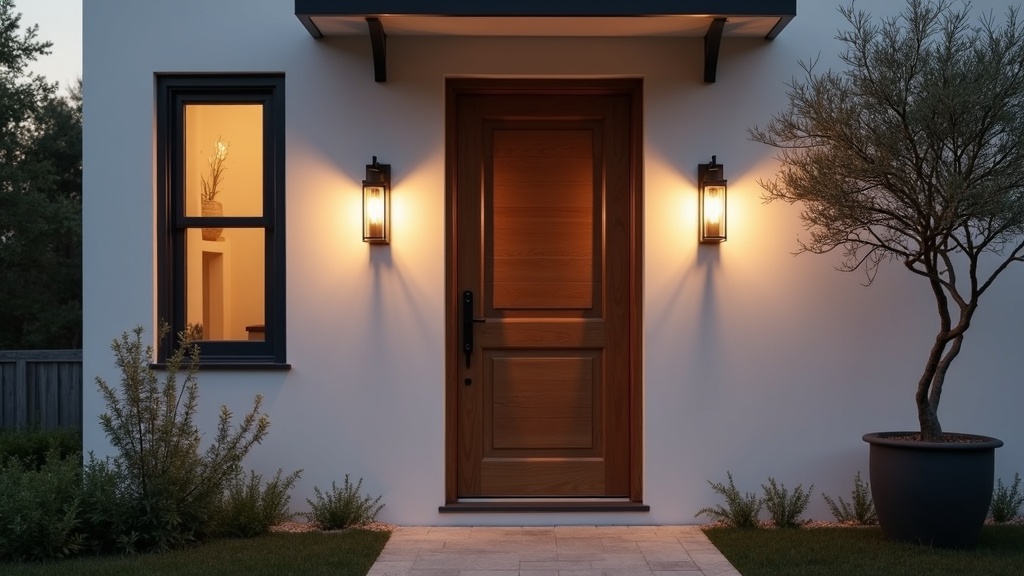
At the front door, a pair of wall lanterns is more welcoming than a single central porch light. Flanking both sides creates balance and enough light to be genuinely functional. Around a terrace or along a garden wall, low-output sconces create atmosphere without the glare of a floodlight.
For any outdoor fitting, check the IP (Ingress Protection) rating. IP44 covers splashing water and is the minimum for sheltered outdoor positions. IP65 is fully weatherproof and suitable for exposed locations.
Matching the finish of your outdoor wall lights to your indoor sconces, even approximately, creates a visual thread that makes a home feel considered rather than assembled.
IP ratings explained simply
IP44: Protected against splashing water. Good for covered porches and sheltered outdoor spots. IP65: Dust-tight and protected against water jets. Fine for exposed walls and garden use. When in doubt, go IP65 outdoors.
LED Wall Lights: Why They've Become the Default
LED technology is now mature enough that there's little reason to choose anything else for wall lighting. The practical advantages are significant:
- Lifespan: Quality LED bulbs last 15,000 to 25,000 hours. That's over a decade of daily use before replacement.
- Running cost: An LED equivalent to a 40W bulb uses around 5W. Over a year, the saving per fixture is modest but real, especially across multiple sconces.
- Heat output: LEDs run cool, which matters in wall sconces where the bulb sits close to a shade or housing.
- Dimming: Most modern LED wall lights are dimmable, either via the fixture itself or a compatible dimmer. Always check compatibility before buying a dimmer switch or plug.
Integrated LED wall lights (where the LED is built into the fixture rather than replaceable) offer the cleanest look but do mean replacing the whole fitting when the LED eventually fails. For most residential uses, a fitting with a standard E27 or GU10 socket gives you more long-term flexibility.
Common Mistakes and How to Avoid Them
Mounting too high
Wall lights mounted near the ceiling behave like ceiling lights: they push light down and lose the eye-level warmth that makes sconces worth having. For most rooms, 150 to 170 cm from the floor is the right range. In hallways, slightly lower works well to keep the light within the human field of view.
Buying one when you need two
A single sconce on one side of a sofa or bed creates visual imbalance. Pairs anchor furniture symmetrically and look intentional. If budget is a constraint, buying two smaller fixtures almost always works better than one larger one.
Choosing the wrong color temperature
A 4000K bulb in a bedroom sconce will feel clinical and unpleasant. Warm white (2700K to 3000K) is the right choice for most living and sleeping spaces. Check the bulb's Kelvin rating before purchasing, not just the wattage equivalent.
Ignoring the cord on plug-in sconces
An exposed cord drops the perceived quality of even a good-looking fixture. Spend the extra ten minutes with a cord cover or cable clips. The difference is significant.
A Simple Layered Lighting Plan for Any Room
If you're starting from scratch or rethinking a room, this sequence works consistently well:
- Start with ambient light. Your ceiling fixture or recessed lights handle the base level of illumination. Dimming this down in the evening is the first step.
- Add wall sconces for warmth. One pair flanking the main piece of furniture in the room, at 150 to 170 cm height. These become the primary light source in the evening.
- Add task light where needed. A swing-arm sconce beside a reading chair or bed. A focused lamp over a desk.
- Consider accent lighting last. A picture light, an LED strip behind a shelf, a small table lamp in a corner. These add depth without contributing much raw light.
The result is a room that works at multiple intensities: fully lit for practical tasks, softened for evenings, and atmospheric when you want it to be. Wall sconces make all three possible without touching the main ceiling circuit.
Before you buy: a practical checklist
- Do you need hardwired, plug-in, or battery? Be honest about your socket situation.
- What height will the fixture sit at? Mark it with tape before you commit.
- Is the scale right for the wall? Photograph the wall with a placeholder to check proportions.
- What finish echoes other metals in the room?
- What color temperature do you need? Warm white for living and sleeping spaces.
- For bathrooms and outdoor use: check the IP rating.
- For plug-in: how will you handle the cord?
Frequently Asked Questions
Can I install wall lights without an electrician?
Yes, if you choose plug-in or battery-operated models. Hardwired wall lights require a qualified electrician in most countries. Plug-in sconces require only a nearby socket and a couple of wall screws for the mounting bracket.
How high should wall lights be mounted?
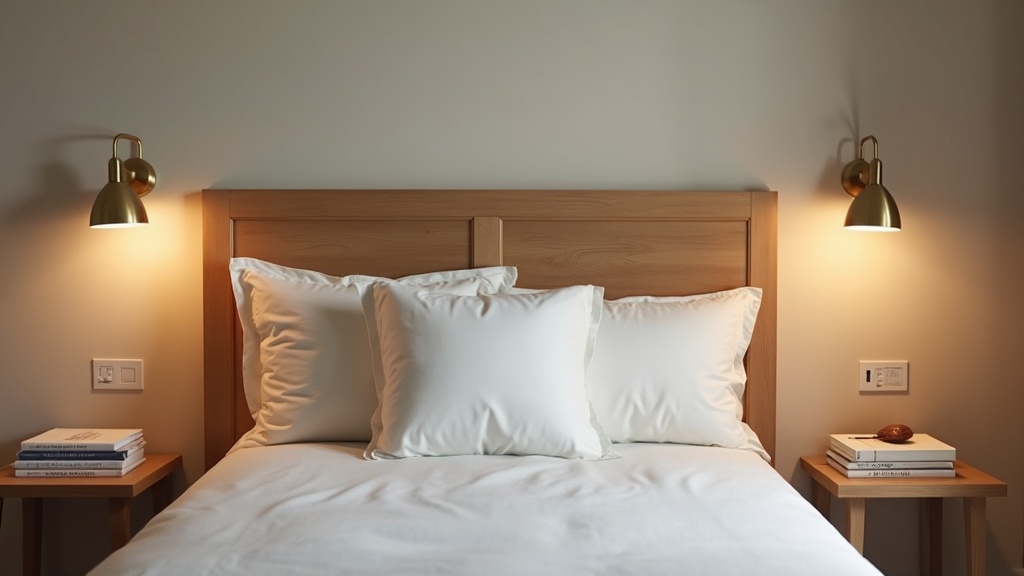
150 to 170 cm from the floor is the standard for living rooms and general use. For bedside sconces, 120 to 140 cm from the floor, or approximately 30 cm above mattress height, works better. In hallways, slightly lower keeps the light within the natural field of view.
What is the best type of bulb for wall sconces?
LED bulbs at 2700K to 3000K for most rooms. They last longer, run cooler, and use significantly less energy than halogen or incandescent alternatives. Check that the bulb is dimmable if you plan to use a dimmer switch or plug.
Are battery wall lights bright enough to be useful?
For ambient and accent use, yes. Current rechargeable models reach outputs equivalent to a 25W to 40W bulb, which is adequate for creating atmosphere and navigating a room. For reading or task lighting, a plug-in or hardwired sconce gives more consistent output.
Can wall lights be used outdoors?
Yes, provided they carry the appropriate IP rating. IP44 for sheltered outdoor positions, IP65 for exposed walls and garden use. Standard indoor wall lights are not rated for outdoor use and will fail in damp or rain.
A room can be beautiful in photographs and still feel wrong to live in. Most of the time, the problem is a single ceiling light doing all the work.
Wall lights change that. They bring light down to eye level, soften shadows, and give a room the kind of warmth that a central fixture never quite reaches. And today, you can achieve it without rewiring a single wall.
Key points at a glance
- Wall lights layer depth and mood into a room in a way ceiling lights cannot.
- Plug-in and battery-operated wall sconces require no electrician and no rewiring.
- Placement height, scale, and color temperature matter more than fixture style.
- LED wall lights are the most practical choice for longevity and running costs.
- Matching indoor and outdoor finishes creates visual continuity across your home.
What wall lights give you
Why Wall Lights Change How a Room Feels (Not Just How It Looks)
Good lighting doesn't announce itself. It settles into the room and changes how it feels. A ceiling light illuminates. A wall light inhabits.
When light comes from multiple levels, a room reads as complete. Your eye moves naturally. Shadows soften at the edges. The space feels lived in rather than staged.
This is the principle behind layered lighting: ambient, task, and accent working together. Wall sconces are the layer most people miss, and the one that makes the biggest perceptible difference.
The Main Types of Wall Lights and What Each One Does
Not all wall lights serve the same purpose. Knowing the difference saves you from buying the wrong thing twice.
Up-down sconces
These cast light both above and below the fixture. They add drama and architectural interest, and work especially well in hallways or on either side of a bed.
Directional and swing-arm sconces
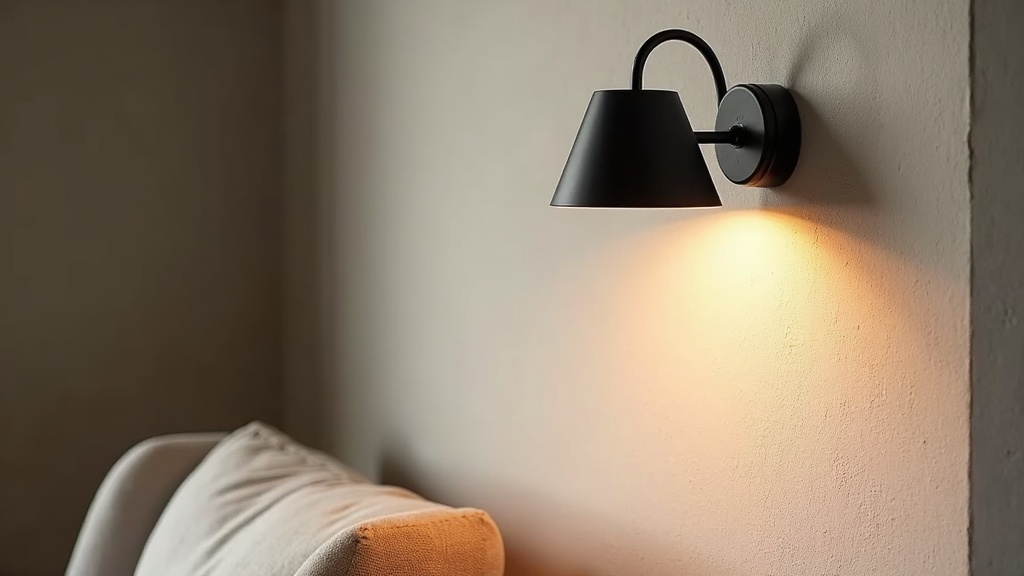
Adjustable and practical. Ideal as reading lights beside a bed or armchair, where you need focused light without a table lamp taking up surface space.
Flush and half-moon wall lights
Low-profile and unobtrusive. A good choice for tight spaces like stairwells, entryways, or narrow corridors where a protruding fixture would feel clunky.
Decorative and lantern styles
Often used outdoors but increasingly popular inside. They add character without needing a large footprint. Modern wall lights in brass or aged iron bring warmth to otherwise minimal rooms.
Did you know?
The human eye perceives light coming from below or at eye level as warmer and more relaxing than overhead light. This is because natural firelight and candles historically came from low sources. Wall-mounted sconces tap directly into that instinct.
Hardwired vs Plug-In vs Battery: Which Is Right for You
Hardwired wall lights are permanent, clean, and powerful. They require an electrician and work best when planned during a renovation. Once in place, they're invisible: no cord, no bracket, just light.
Plug-in wall sconces run a cord down the wall to a standard socket. A cord cover painted to match the wall makes them nearly invisible. They're the most practical choice for renters or anyone not ready to commit to a permanent fitting.
Battery-operated wall sconces go anywhere. No cord, no socket needed. Newer models with rechargeable lithium cells last weeks on a single charge and often include motion sensors or remote controls. They're ideal for spots where running a cord isn't realistic.
| Type | Best for | Installation | Flexibility |
|---|---|---|---|
| Hardwired | Renovations, permanent setups | Electrician required | Fixed position |
| Plug-in wall sconces | Renters, quick upgrades | DIY, socket needed nearby | Moveable |
| Battery-operated wall sconces | Alcoves, stairs, sheds, rentals | No wiring, no socket | Fully portable |
| LED wall lights (any type) | All-day use, low energy | Depends on base type | Long lifespan, low heat |
Where to Place Wall Lights in Each Room
Placement is everything. The same fixture in the wrong spot does nothing. The right spot makes the room.
Wall lights in the living room
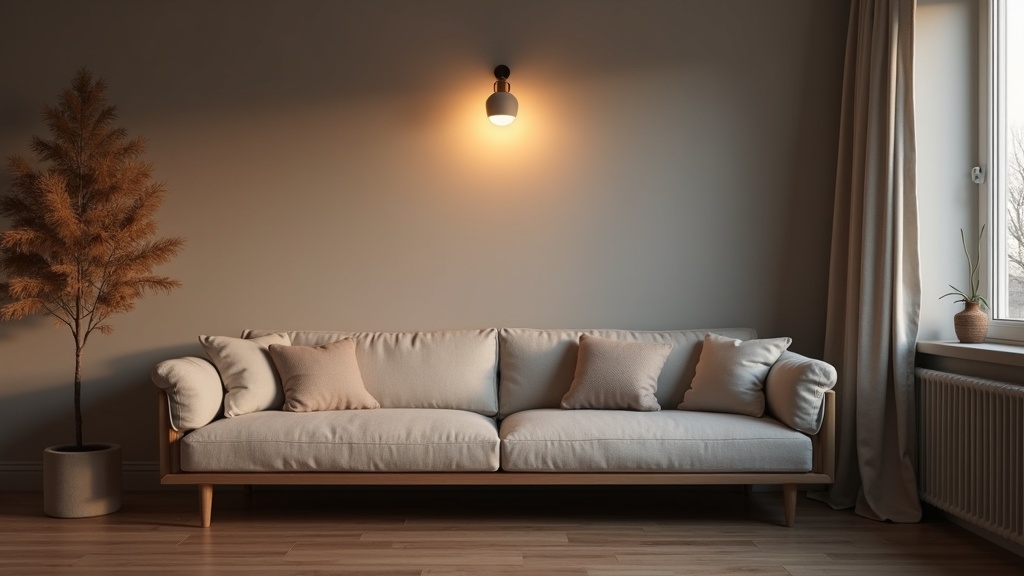
Flank a sofa, a fireplace, or a shelving unit. Wall lights for the living room work best in pairs, placed symmetrically at around 150 to 170 cm from the floor. They frame furniture rather than float above it.
Bedroom
Bedside sconces free up your nightstand. Mount them 120 to 140 cm from the floor, or roughly 30 cm above mattress height. Swing-arm models are ideal if you read in bed.
Hallways and staircases
Space sconces every 250 to 300 cm along a corridor. Here, their job is rhythm as much as light: they turn a functional passage into something that feels considered.
Bathrooms
Mount on either side of a mirror rather than above it. This eliminates the unflattering shadows that an overhead light casts on the face. Use IP44-rated fixtures near water.
How to Choose the Right Scale, Finish, and Light Temperature
Scale
A sconce should be roughly one-third the height of the wall surface it sits on. Too small and it disappears. Too large and it crowds the room. If you're flanking a sofa or bed, the pair should feel balanced with the furniture below, not competing with it.