
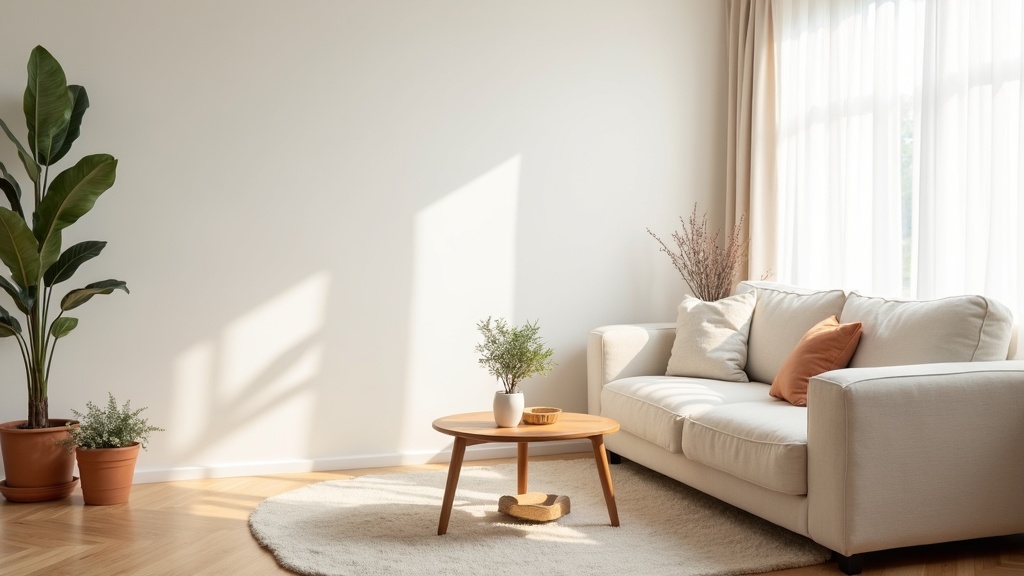
A small living room is not a problem to solve. It is a constraint, and constraints are where good design begins.
You do not need a bigger space or a bigger budget. You need clearer choices. That is what this guide is about.
Key points at a glance
- Start by feeling the room, not decorating it. Mood comes before furniture.
- Rearrange your layout before you buy a single thing. It costs nothing and often changes everything.
- One anchor piece, chosen well, does more than five average ones.
- Light is your cheapest and most powerful design tool in a small space.
- A limited palette makes a room feel cohesive and larger than it is.
- Skip what adds visual noise. Every piece should earn its place.
What you will take away
Start with how the room feels, not what it looks like
Before you search for small living room ideas on a budget, sit in the room. Spend five minutes there without moving anything.
Ask yourself: does this room feel cluttered, dark, stiff, or just wrong somehow? The answer tells you where to begin. A dark room needs light, not new cushions. A cluttered room needs removal, not rearrangement.
Design that works starts with an honest reading of the space. Everything else follows from that.
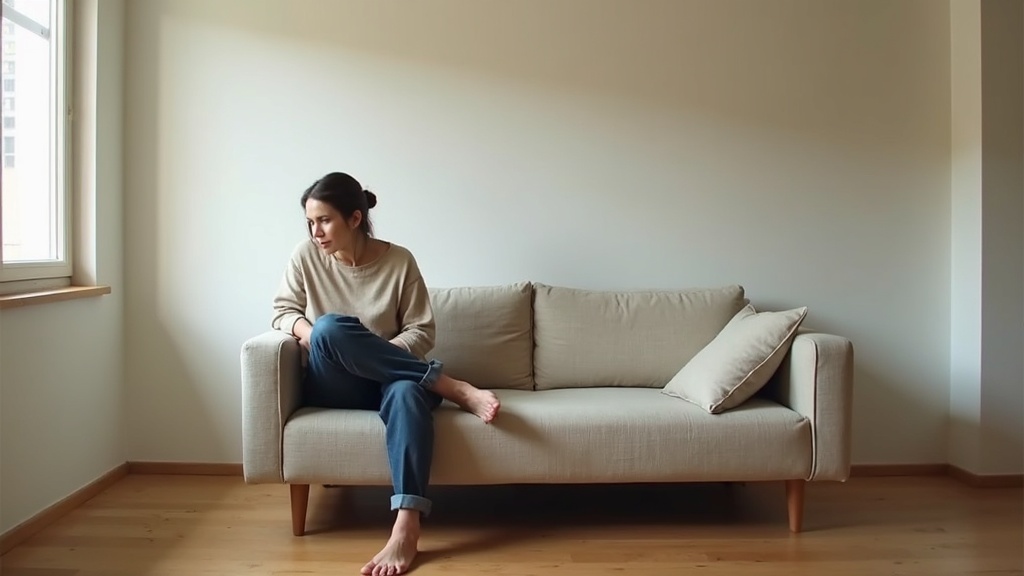
Work with your layout before you spend anything
Most people underestimate what a layout change can do. Moving furniture around is free. It is also where most small living room layout ideas begin.
A few things worth trying first
- Pull furniture away from the walls. It sounds counterintuitive, but a sofa floating slightly in the room often makes the space feel more intentional and less cramped.
- Angle the sofa toward the light source, not just the TV. It changes the entire feel of the room.
- Remove one piece entirely. An armchair, a side table, a bookshelf. Live without it for a week. You may not miss it.
The best layout for a small living room with a TV places the screen at eye level on a wall, freeing up floor space below. A slim console or a wall-mounted bracket costs very little and removes the visual weight of a heavy TV stand.
Did you know?
Research in environmental psychology consistently shows that perceived spaciousness is more about visual complexity than actual square footage. Fewer distinct objects and a unified color palette make the brain read a room as larger, regardless of its real dimensions.
Choose one anchor piece and build around it
One well-chosen piece anchors a room. It does not need to be expensive. It needs to be right in scale, tone, and material for the space.
In a small living room, that anchor is almost always the sofa. Choose it in a neutral tone that works with your walls and floor. From there, every other piece either supports it or does not belong.
This is the lagom principle in practice: not too much, not too little. One strong choice, done well, beats five average ones every time.
Use light to make a small room feel larger
Good lighting does not announce itself. It settles into the room and changes how it feels.
Natural light is the starting point. Remove heavy curtains. Replace them with sheer linen panels or simple white cotton. Keep windowsills clear. The more natural light moves through the room, the more open it reads.
Layered artificial light on a budget
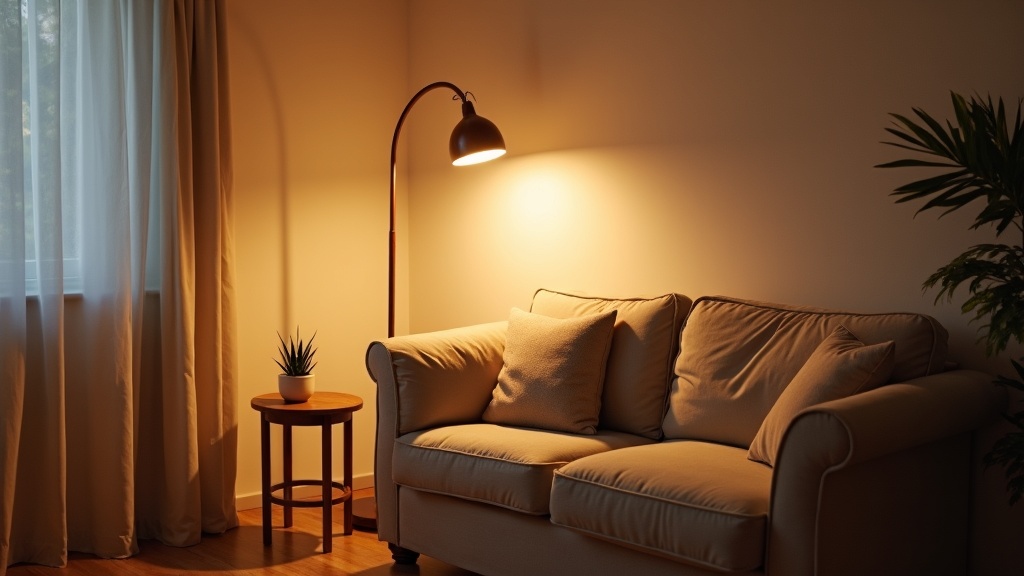
- A floor lamp with a warm bulb (2700K) in a corner creates depth. It costs less than a new side table.
- A small table lamp behind the sofa gives the room a second light source. Two layers of light always feel better than one overhead bulb.
- Avoid cool white bulbs. They flatten a small space. Warm light adds the perception of warmth and volume.
A limited palette does more than color alone
Color is not the only thing a palette controls. It also controls visual noise. Every time the eye lands on a new color or pattern, it has to process it. In a small room, that adds up fast.
Stick to three tones at most: a base (walls and floor), a mid (sofa and main textiles), and an accent (one or two objects). Natural materials in similar tones, linen, wood, stone, read as unified even when they vary slightly in texture.
| Palette role | What it covers | Budget-friendly options |
|---|---|---|
| Base tone | Walls, floor, ceiling | White or off-white paint, light wood floor |
| Mid tone | Sofa, rug, curtains | Natural linen, oat, warm grey |
| Accent tone | One or two objects | Terracotta pot, dark wood tray, one cushion |
| Texture layer | Throws, woven baskets | Second-hand wool throw, market basket |
Storage that earns its place
In a very small living room, every piece of furniture should do at least two things. A coffee table with a shelf underneath. An ottoman that opens. A bench at the window that holds blankets.
Vertical storage is underused in most small spaces. Shelves that run floor to ceiling draw the eye upward and keep the floor clear. A cleared floor always reads as more space.
One rule worth keeping: if storage is visible, what it holds should be worth looking at. Books, a few objects, a plant. Nothing else.
Did you know?
Furniture on legs, rather than pieces that sit flush to the floor, creates a visible gap that makes a room feel less heavy. That thin line of floor between the sofa and the ground registers visually as open space, even in the smallest rooms.
Small swaps with a real impact: textiles, plants, and arrangement
These are the changes that cost least and often feel the most immediate.
Textiles
A rug that is too small makes a room feel fragmented. The rug should sit under the front legs of all seating, at minimum. A larger rug from a market or a discount home store costs less than a new lamp and changes the room's sense of scale entirely.
Plants
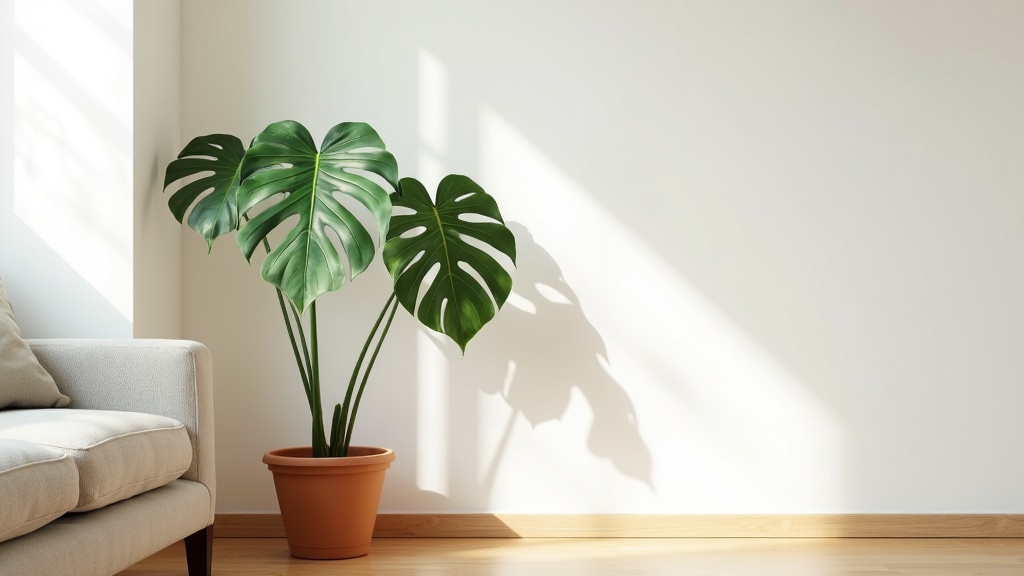
One large plant in a corner does more than three small ones scattered around. A single fiddle-leaf fig, monstera, or olive tree reads as a deliberate choice. It anchors the corner and softens the room without adding clutter.
Arrangement
Group objects in odd numbers. A trio of objects at different heights on a shelf reads as curated. Five similar objects in a row reads as collected. The difference between the two is felt immediately.
What to skip when money is tight
Knowing what not to buy is as useful as knowing what to buy. Some things are reliably poor investments in a small space.
- Large patterned rugs. They break the visual flow of a small room and date quickly.
- Accent walls in bold colors. A single dark wall can work, but it needs the rest of the room to be very calm. The margin for error is small.
- Decorative items bought in bulk. A set of ten small frames, a collection of little objects, these are the first things that make a room feel cluttered.
- Oversized furniture marketed as "cozy". A deep, wide sofa looks inviting in a showroom. In a 14-square-metre room, it fills the space and leaves nowhere to breathe.
- Trendy pieces without staying power. A small space cannot absorb a mistake easily. Buy slowly and choose things that do not ask to be noticed.
Where to start today
You do not need a plan for everything at once. Pick one thing from this list and do it this week.
- Move your sofa 20 centimetres away from the wall and see how it changes the room.
- Replace your overhead light with a floor lamp for one evening and notice the difference.
- Remove three objects from a surface and leave it bare for a few days.
- Hang your curtain rod as close to the ceiling as possible. Lower the curtain to the floor. The window will look taller.
- Put your rug on the wish list. A larger one, in a neutral tone. It is the single most impactful low-budget swap in a small living room.
Small spaces reward patience and intention. The best pieces are the ones you stop noticing, because they simply belong. Design for the way you actually live, not for a photograph.


