
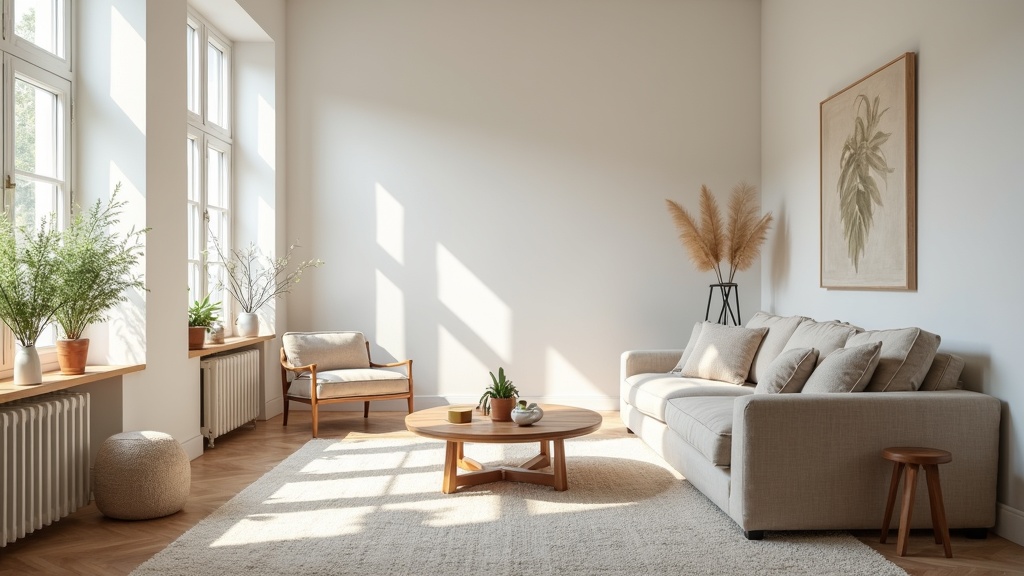
A room that flows is one you stop thinking about. You move through it without friction, sit in it without adjusting, and leave it without feeling like something was off. Most rooms don't feel that way, and the furniture isn't usually the problem.
The problem is the arrangement. Specifically, the assumption that furniture belongs against the walls, that bigger is always better, and that the TV gets to decide everything else. This guide works through that, room by room, with the spacing rules and practical fixes that actually make a difference.
Key points at a glance
- Flow is about clear pathways: aim for at least 36 inches of walking space between pieces.
- Pull furniture away from walls. Floating arrangements feel more connected and more human.
- The TV should anchor one zone, not organize the entire room.
- Rectangular rooms need a focal point and two distinct zones to avoid the bowling-alley effect.
- Visual weight matters as much as physical size: a dark sofa reads heavier than a light one.
- The 3-5-7 rule keeps decorative arrangements from feeling arbitrary or cluttered.
What good arrangement gives you
Why Flow Matters More Than Furniture
You can fill a room with beautiful pieces and still end up with something that feels wrong. The issue is almost never the furniture. It's the space between it.
Flow is the invisible architecture of a room. It's the ease with which you move from the door to the sofa, from the sofa to the kitchen. It's the reason some rooms feel generous even when they're small, and others feel cramped even when they're large.
Lagom applies here more than anywhere: not too much, not too little. Enough breathing room between pieces, enough visual rest, enough purpose in every corner.
Start With the Room, Not the Sofa
Before you move a single piece, stand in the doorway and observe. Where does your eye go first? Where is the natural light coming from? Where do people naturally walk when they enter?
The room always speaks first. The sofa responds to it.
Measure your space and sketch it roughly on paper: note the door swings, the window positions, any architectural features like a fireplace or alcove. These aren't obstacles. They're anchors. Build around them.
The Spacing Rules That Actually Work
Good arrangement is mostly a spacing problem. There are a handful of measurements worth knowing by heart.
- 36 inches (90 cm): the minimum clear walkway between furniture and a wall or another piece.
- 18 inches (45 cm): the ideal distance between a sofa and a coffee table, comfortable for reaching without leaning.
- 8 inches (20 cm): the maximum distance between a side table and the arm of a sofa or chair beside it.
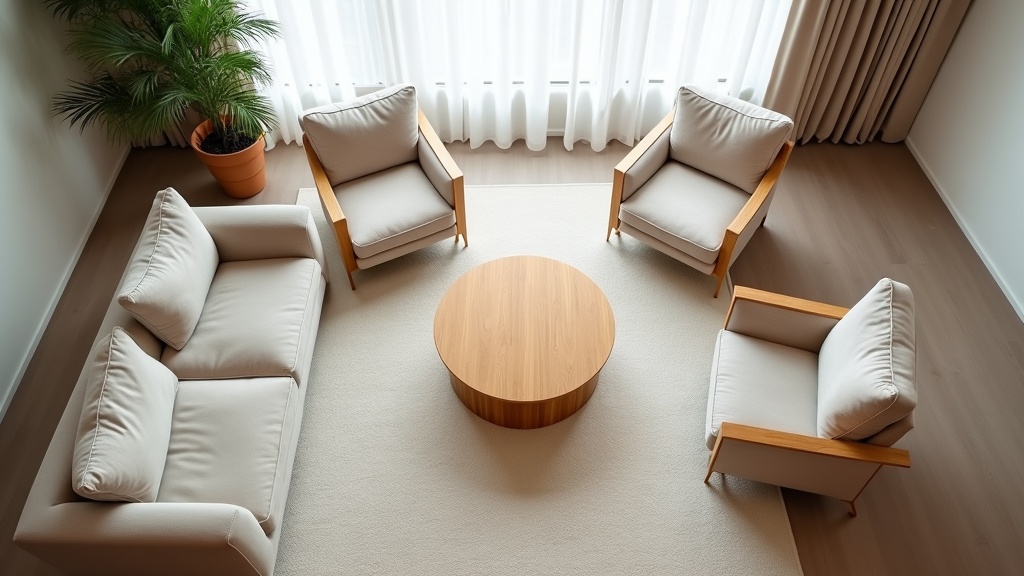
- The 2-3 rule for conversation zones: no two seats in a conversation grouping should be more than 8 feet (2.4 m) apart. Beyond that, you start raising your voice.
Did you know?
Research from environmental psychology consistently shows that narrow or blocked pathways in a room raise perceived stress levels, even when people aren't consciously aware of the obstruction. A clear path of at least 36 inches is enough to shift how comfortable a space feels.
How to Arrange Living Room Furniture for Flow Around a TV
The TV is the most arrangement-distorting object in most homes. Rooms get organized around the screen rather than around the people in them.
Treat the TV as one anchor, not the only one. The fireplace, a view, or a large piece of art can share that role.
Living room furniture layout for flow with a TV
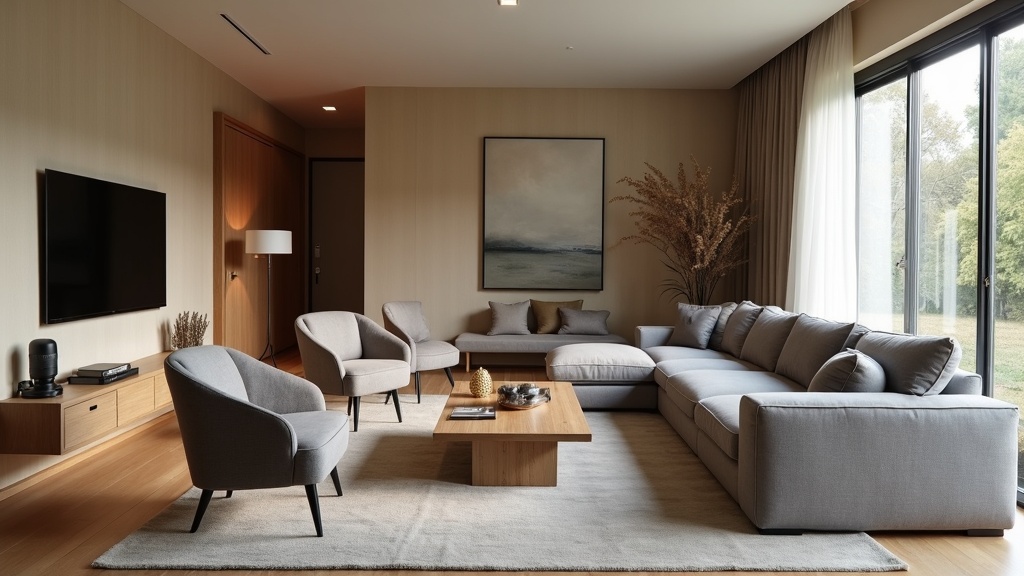
- Place the primary sofa at a distance of 1.5 to 2.5 times the diagonal screen size. For a 55-inch TV, that's roughly 7 to 11 feet.
- Angle armchairs slightly inward rather than pointing them directly at the screen. This keeps conversation possible without ignoring the TV.
- Mount or position the TV so the center of the screen sits at eye level when seated, typically 42 to 48 inches from the floor.
- Create a secondary zone elsewhere in the room, even a single chair with a lamp and a small table, to give the space a second purpose.
Rectangular Rooms, Small Rooms, and Awkward Layouts
Rectangular living room arrangement
Long narrow rooms have one chronic problem: they become corridors. The fix is zoning. Divide the room into two functional areas with a rug under each grouping. Place furniture across the width of the room, not along the length.
A console table or a pair of chairs placed back-to-back in the middle of the room can act as a soft divider without blocking sightlines.
How to arrange furniture in a small space
Small rooms punish oversized furniture more than any other mistake. One sofa that fits is worth more than one that fills. Leggy furniture, open shelving, and round tables all reduce visual weight and let the floor show through, which reads as more space.
Resist the urge to push everything against the walls. It widens the empty center and makes the room feel more awkward, not less.
Den furniture layout ideas
Dens work best when they feel intentional. One sofa, one or two armchairs, a coffee table, a bookcase. Limit the pieces and make every one of them work hard. An ottoman with storage does three jobs at once.
| Room Type | Main Challenge | Best Fix |
|---|---|---|
| Rectangular living room | Corridor effect, furniture hugs the walls | Two distinct zones with rugs, furniture across the width |
| Small room | Oversized pieces, blocked floor visibility | Leggy furniture, round tables, float away from walls |
| Square room | No natural focal point, feels static | Create one anchor (art, fireplace, TV wall), angle one chair |
| Den / media room | Over-furnished, no secondary purpose | Edit to essentials, add one reading chair with lamp |
| Open-plan space | Zones blur, furniture floats without logic | Use rugs to define each zone, sofa back as a soft divider |
The Biggest Furniture Placement Mistake
Everything against the walls. It's the most common arrangement in homes and the one that creates the most problems.
When every piece touches a wall, the center of the room becomes a void. Conversation requires projecting across it. The room feels like a waiting room, not a home.
Pull the sofa forward by 12 to 18 inches. The space behind it becomes usable. The conversation zone tightens. The room, paradoxically, feels bigger.
How Light and Visual Weight Shape the Feel of a Room
Good lighting doesn't announce itself. It settles into the room and changes how it feels. A floor lamp in a corner adds warmth and visual depth. Overhead lighting alone flattens everything.
Visual weight is about perception, not mass. A dark velvet sofa reads as heavier than a light linen one of the same size. A solid wood coffee table anchors a space more firmly than a glass one. Neither is wrong. Both are choices.
Balance heavier pieces with lighter ones. A dark sofa pairs well with a glass side table. A solid bookcase works better across from an open shelving unit than another solid piece.
Did you know?
The Swedish concept of lagom, literally meaning "just the right amount," originates from the Old Norse phrase "laget om," meaning "around the team." It described passing a shared bowl so everyone got a fair share. Applied to interior design, it's a reminder that a room belongs to everyone who uses it, not just the person who decorated it.
The 3-5-7 Rule and Other Frameworks Worth Knowing
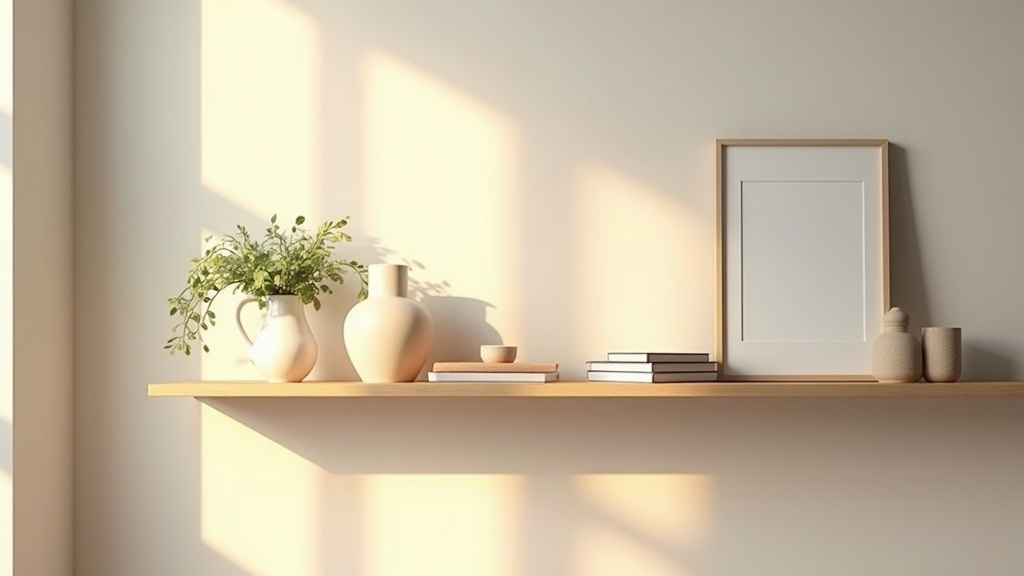
The 3-5-7 rule applies to decorative groupings: arrange objects in odd numbers, varying heights. Three items on a shelf read as intentional. Four read as paired off and symmetrical, which can feel rigid.
Other useful frameworks for how to make a room flow:
- The rug rule: at minimum, the front two legs of every seating piece should sit on the rug. All four legs on a smaller rug also works. No legs is the arrangement that breaks the zone.
- The one-focal-point rule: every room needs one place the eye goes first. Anchor it clearly, then arrange everything else in relation to it.
- The traffic triangle: in any multi-use room, map the three most common movements (sofa to kitchen, door to seating, seating to window). All three should be clear without requiring anyone to step around furniture.
Arrange Once, Adjust Twice, Then Leave It
The best arrangement process is a short one. Start with the largest piece, usually the sofa, and position it relative to the room's focal point. Then build outward: chairs, coffee table, secondary pieces, lighting.
Live with it for a week before making any changes. First impressions of a new arrangement are almost always wrong. The eye adjusts. The habits form. What felt off on day one often feels right by day five.
After one week, make one adjustment. Move one piece. Then stop. Overworking an arrangement introduces as much chaos as it resolves.
- Week one: position the primary layout and live with it.
- Week two: make one considered change based on how you actually used the room.
- Week three: add or adjust lighting. This alone changes more than most furniture moves.
A room that works is one you stop rearranging. That stillness is the point. You designed for the way you actually live, not for a photograph.


