
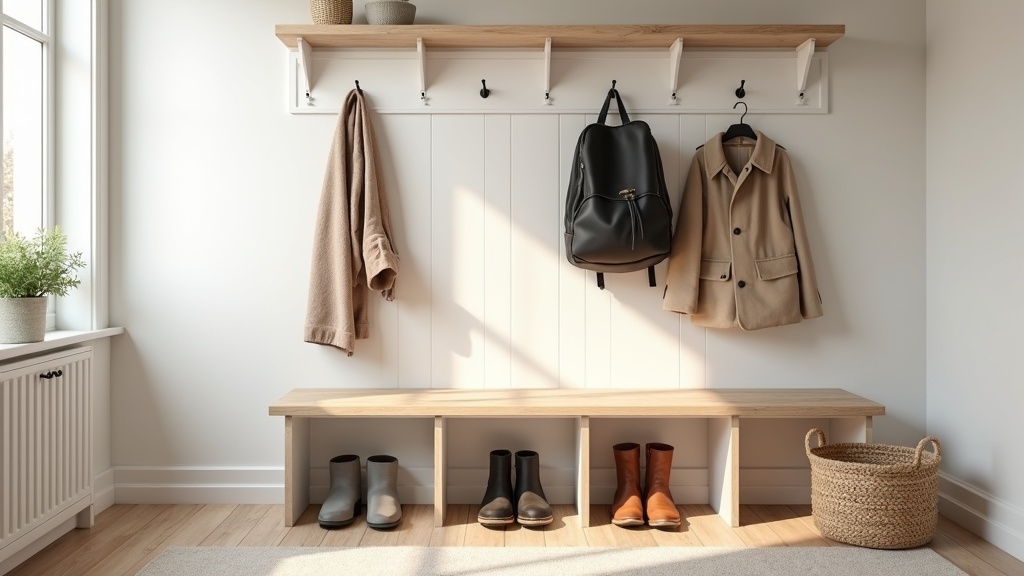
The mudroom is the first place you land when you walk through the door. Shoes come off, bags drop, keys disappear. Most homes treat this transition as an afterthought, and it shows.
A well-designed mudroom does not need to be large or expensive. It needs to be honest about what actually happens there, every morning, every evening, in every season.
Key points at a glance
- Start by mapping how your household actually uses the space, not how you wish it would.
- Layout comes before furniture: get the flow right first.
- Every functional mudroom needs four things: seating, hooks, shoe storage, and a landing spot for small items.
- Closed storage hides the chaos; open storage invites more of it.
- Small spaces can work beautifully with vertical thinking and one strong focal piece.
- Materials and light are not decorative extras, they shape how the space feels to come home to.
What a functional mudroom gives you
Start With How the Space Is Actually Used
Before you buy a single hook or basket, spend one week watching what really happens in your entryway. Where do people drop their bags? Which shoes stay near the door for days? What lands on the floor that should have a home?
This is the honest design brief. It is more useful than any mood board.
A family with young children needs low hooks and a bench they can actually sit on to pull off boots. A single adult who works from home needs a different rhythm entirely. Design for your life, not the average household.
Nail the Layout Before You Buy Anything
Mudroom layout design is about flow, not aesthetics. You need to move through the space without obstruction, even when someone else is already there unlacing their shoes.
The three zones that make a mudroom work
- The drop zone: right at the door, for immediate deposits. Keys, bags, coats.
- The sit zone: a bench or low seat where you can take off shoes without balancing on one foot.
- The store zone: deeper storage for things used weekly, not daily. Seasonal gear, sports equipment, umbrellas.
A corridor mudroom works best with everything on one wall. An L-shaped entry can handle a corner bench and dual hook rows. Never block the path to the door with furniture.
The Four Essentials Every Functional Mudroom Needs
Strip it back. A mudroom that works relies on four things, done well.
1. A bench
Not decorative. Functional. Deep enough to sit on comfortably, ideally with storage underneath for shoes or bins. 40 to 45 cm deep is the right range.
2. Hooks at the right height
A mudroom bench and hooks combination is the classic pairing for good reason. Hang hooks at 150 to 160 cm for adults, add a second row at 90 to 100 cm for children. Double-pronged hooks hold more without things sliding off.
3. Shoe storage
Open shelves invite chaos. A low shoe cabinet with a lift lid, or a pull-out drawer, keeps the floor clear. Aim to store the shoes used most, four to six pairs per person, and keep the rest elsewhere.
4. A landing surface
A small shelf or a narrow console. Somewhere for keys, sunglasses, a wallet. Without it, these things end up on the bench, the floor, or lost entirely.
Did you know?
Studies on household organization consistently show that the most-used items need to be stored within arm's reach of where they are first dropped. If the storage is more than three steps from the door, most people simply will not use it.
Storage That Hides the Right Things
Open storage looks good in photographs. In daily life, it becomes a visual catalogue of everything you forgot to put away. Closed storage is kinder to reality.
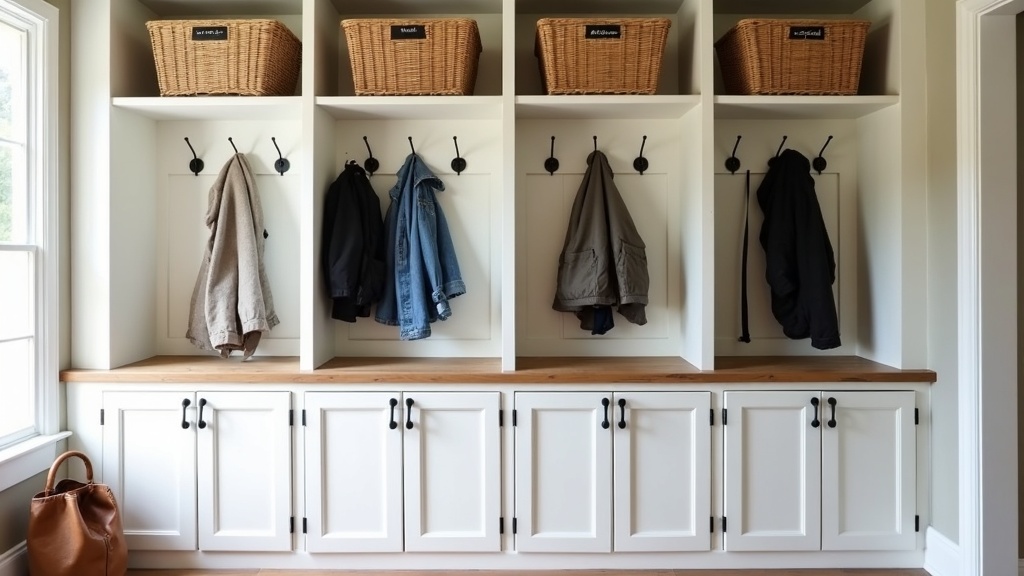
The sweet spot is a mix: hooks and a small open shelf for daily items, closed cabinets or baskets with lids for everything else. Labeled bins work especially well for families with multiple children, each child gets one bin, one hook zone, done.
How to Design a Functional Mudroom in a Very Small Space
Small mudroom ideas work when you think vertically first. Floor space is a luxury; wall space almost always exists.
- A single wall-mounted bench with a fold-down seat frees the floor when not in use.
- Floor-to-ceiling hooks take coats, bags, and hats without a single centimeter of floor lost.
- A narrow floating shelf at 170 cm acts as the landing surface and frees up the bench entirely.
- A mirror on the opposite wall doubles the perceived depth of a tight corridor entry.
Even a 60 cm wide alcove can hold a bench, two hooks, and a shoe tray. The constraint is real; the solution almost always exists.
| Storage Type | Best For | Works in Small Spaces? |
|---|---|---|
| Open cubbies | Shoes, individual bins per person | Yes, if kept disciplined |
| Cabinet with doors | Seasonal gear, cleaning items | Yes, depth permitting |
| Bench with lift lid | Shoes, sports bags | Yes, ideal for small entries |
| Floating wall shelf | Keys, sunglasses, mail | Yes, takes zero floor space |
| Wicker basket with lid | Scarves, gloves, dog leads | Yes, stackable |
Light and Materials: What Makes a Mudroom Feel Good to Come Home To
Good lighting does not announce itself. It settles into the room and changes how it feels. A mudroom lit only by a harsh overhead bulb is a functional failure dressed as an aesthetic one.
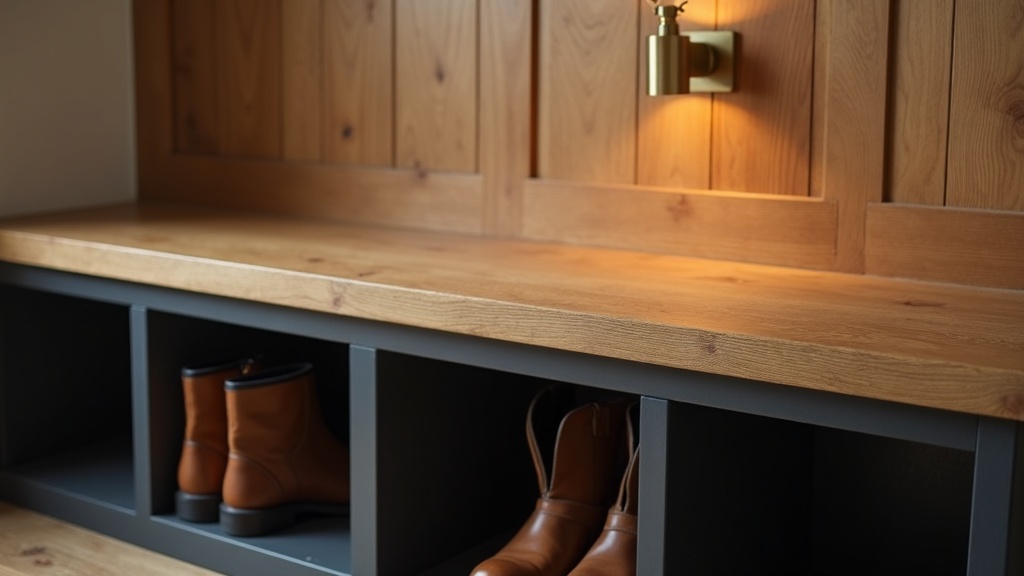
Warm-toned bulbs (2700K to 3000K) make the difference between a space that feels like a utility corridor and one that actually welcomes you. A wall sconce placed near the bench, rather than centred on the ceiling, gives the room a softer, more human quality.
Materials that hold up
The mudroom is the hardest-working surface in the house. Every material needs to earn its place.
- Flooring: large-format porcelain tile or sealed concrete. Both clean easily and handle wet boots without warping.
- Walls: semi-gloss paint or a tile wainscot to shoulder height. Fingerprints wipe off. Flat paint does not forgive.
- Bench surface: solid wood with an oil finish weathers beautifully. Painted MDF chips at the edges within a year.
Did you know?
In Sweden and Finland, the entry hall (called hall or eteinen) has been a deliberate design priority in residential architecture for decades. Removing outdoor shoes at the door is a cultural norm, and the entry space is planned from the start to accommodate this transition cleanly and gracefully.
Common Mistakes That Quietly Undermine a Mudroom
Most mudroom problems are not design failures. They are planning failures dressed in furniture.
- Too many hooks, too close together: coats overlap, nothing actually hangs flat, and the whole wall looks chaotic within a day.
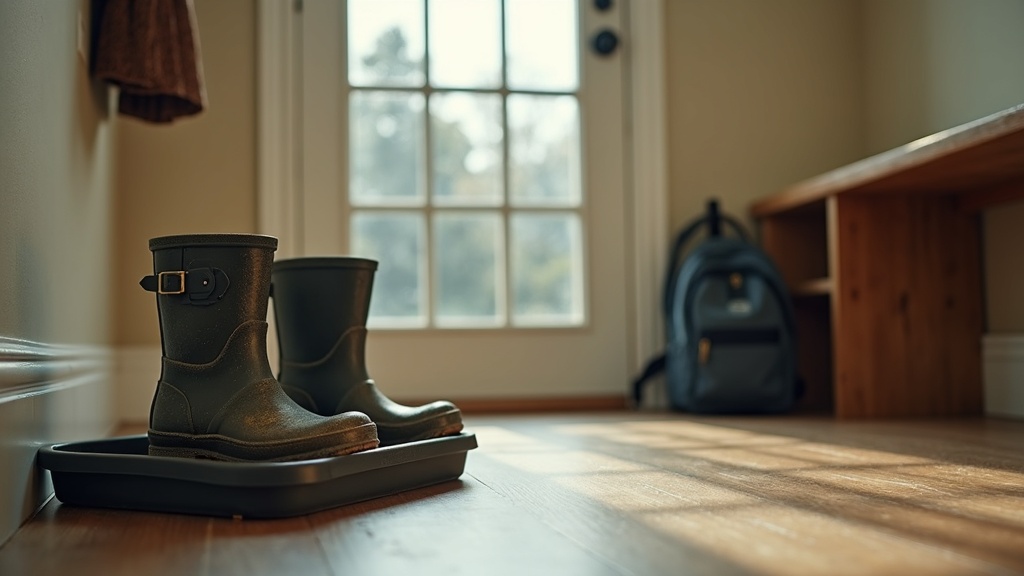
- No floor protection: a wet boot tray is not optional in any climate with rain or snow. Without it, water migrates.
- Storage too far from the door: if it requires three steps to reach, it will not be used. Habit wins over intention every time.
- Ignoring smell: wet gear, dogs, sports equipment. Ventilation, whether from a window, an extractor, or simply good air circulation, matters.
- Treating it as the last priority in the renovation budget: a mudroom that fails makes every other room harder to keep tidy.
Simple Starting Points for Renters and Non-Renovators
You do not need to own your home to have a functioning entry. Simple mudroom ideas work within constraints when you focus on what is portable and freestanding.
Start here, in this order:
- A freestanding coat rack with a wide base, placed immediately inside the door.
- A rubber boot tray on the floor beneath it.
- A small console table or wall shelf (command strip-mounted if necessary) for keys and daily items.
- One wicker basket with a lid for the overflow: scarves, dog leads, reusable bags.
That is four items. It costs very little and changes the entry completely. You are not decorating, you are creating a system. The system is what holds.
The best mudroom is not the most elaborate one. It is the one that gets used, maintained, and quietly makes every morning a little less rushed. Lagom: not too much, not too little. Just enough, done well.


