

A window is never just a window. It decides when your room wakes up, how warm it feels at noon, whether dinner at six feels intimate or exposed. Most people choose curtains the way they choose paint: quickly, and slightly wrong.
This guide is about slowing that decision down. Not to make it harder, but to make it something you do once and get right. The best window treatments for modern homes are not the trendiest, or the most expensive. They are the ones that disappear into the room and let the light do its work.
Key points at a glance
- The right window treatment changes how a room feels, not just how it looks.
- Each room has different needs: a bedroom wants blackout, a kitchen wants easy cleaning, a living room wants layered light.
- Natural materials and neutral tones age better than trends.
- Sliding glass doors need specialist solutions, not standard curtains.
- Layering two treatments gives flexibility without visual noise, if done with restraint.
- The goal is lagom: just enough coverage, just enough style, nothing extra.
What good window treatments actually give you
Why Your Windows Shape a Room More Than You Think
Light placed right does more for a room than any renovation. A window treatment is not decoration. It is a light editor, and it runs all day.
Hang curtains too short and the ceiling drops. Mount them too close to the glass and the room shrinks. Choose a fabric that blocks everything and you lose the quality of light that makes your floors and walls glow at 4 pm. These are not small things.
The window is where outside meets inside. What you put there sets the tone for everything else.
The Core Options: What Actually Works in a Modern Home
Modern interiors tend to work best with a short list of treatments. Not because options are bad, but because restraint is a design decision.
The reliable five
- Roller shades: Clean, flat, and minimal. Easy to motorize. Work in almost any room.
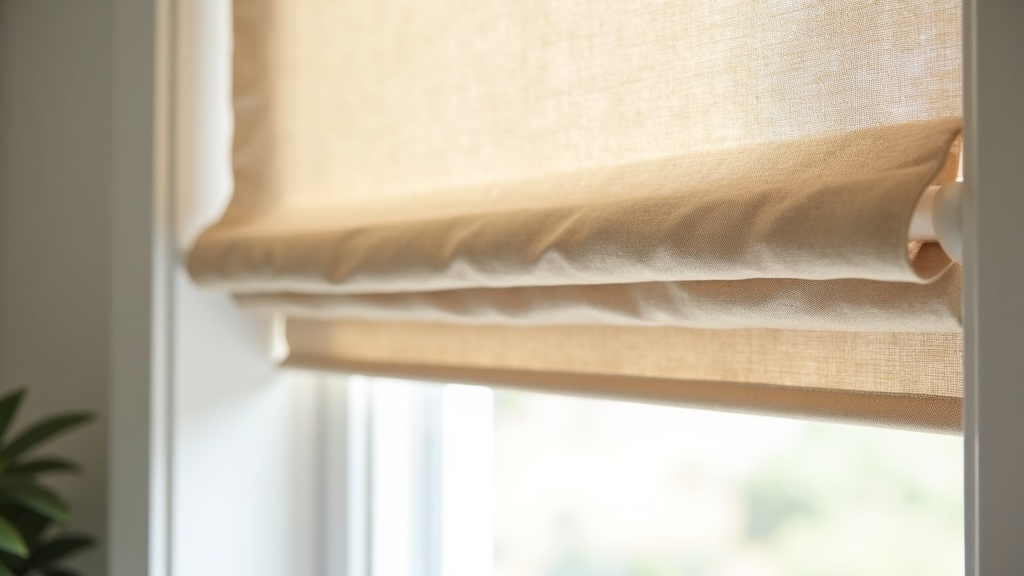
- Roman shades: Softer than rollers, more structured than curtains. A good middle ground.
- Linen or cotton drapes: The warmest option visually. Best hung high and wide.
- Cellular (honeycomb) shades: Best insulation of any blind. Nearly invisible when open.
- Woven wood shades: Natural texture, organic warmth. Pairs well with mid century modern window treatments.
Did you know?
Cellular shades can reduce heat loss through windows by up to 40%, according to the U.S. Department of Energy. In a north-facing room that never gets direct sun, that difference is felt every morning in winter.
Room by Room: Matching Treatments to How You Live
Modern window treatments for living room
The living room needs range. Bright and open for Sunday mornings, dimmed and warm for evenings. Sheer curtains layered behind heavier linen drapes give you that full range. Keep the palette close to your wall color.
Modern window treatments for bedroom
Sleep is the priority. You need real darkness, not approximate darkness. Blackout roller shades or lined drapes are the only honest answer here. Pair them with a sheer if you want morning light without the alarm of a bright window.
Modern window treatments for kitchen
Kitchens need treatments that can take humidity, grease, and frequent wiping. Faux wood blinds or easy-clean roller shades are practical without looking institutional. Avoid heavy fabrics near a hob.
Modern window treatments for dining room
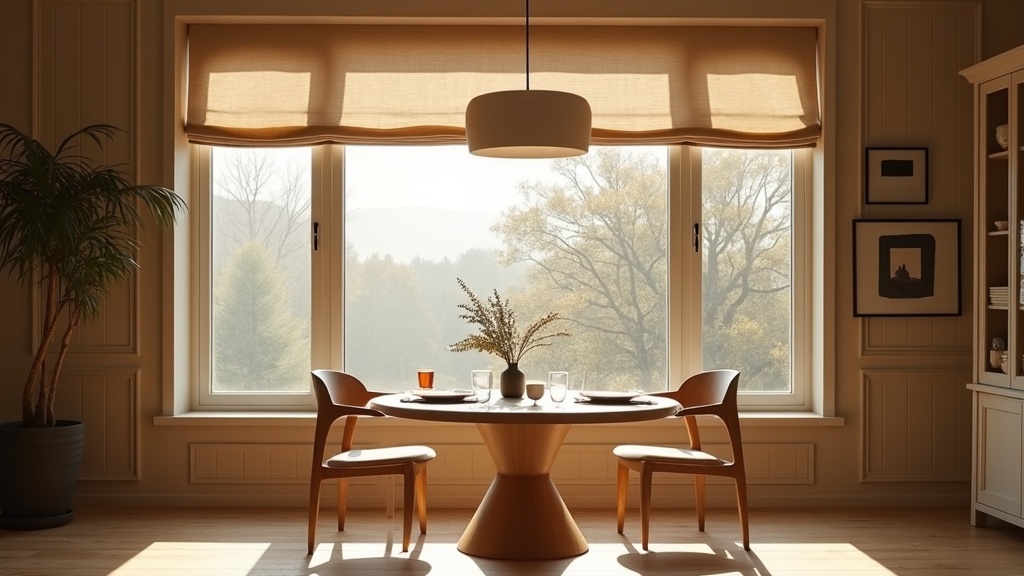
The dining room is where light matters most. A well-lit table lifts the whole meal. Roman shades or flowing drapes in a warm neutral frame the room without stealing from it. Avoid blackout here.
Light Control vs. Privacy: How to Think About Both at Once
Most people think of these as opposites. They are not. The question is timing: when do you need light, and when do you need privacy?
A top-down, bottom-up shade lets you cover the lower half of a window (street-level view) while keeping the top open for sky light. Elegant solution for ground-floor rooms.
For a room facing east, you want morning light early but control by midday. A solar shade handles glare without blackout. The room stays bright but comfortable.
| Treatment | Light Control | Privacy | Best Room |
|---|---|---|---|
| Blackout roller shade | Full block | Complete | Bedroom |
| Solar shade | Glare reduction | Daytime only | Living room, office |
| Sheer linen drape | Soft diffusion | Low | Living room, dining room |
| Cellular shade | Light filtering or blackout | Good | Any room |
| Woven wood shade | Partial, dappled | Moderate | Living room, study |
| Top-down bottom-up shade | Adjustable | Selectable by position | Ground floor rooms |
Natural Materials and Neutral Colors: The Case for Restraint
Trends in window treatments move slowly, which is an advantage. The pieces you see holding up decade after decade share two qualities: natural material and quiet color.
Linen. Jute. Cotton. Bamboo. These age honestly. They pick up the light differently in winter than in summer. They feel right next to wood floors and plaster walls because they come from the same world.
For color, start with the floor. Your treatment should sit somewhere between your floor tone and your wall tone. Not matching either, just agreeing with both. Warm whites, oat, putty, soft greige. These are not boring choices. They are the ones you stop second-guessing after a week.
Did you know?
Linen fabric actually becomes softer and stronger with every wash. Unlike synthetic textiles that pill and fade, a quality linen curtain in year five looks more settled and refined than on the day it was hung. That is genuinely rare in home textiles.
Modern Window Treatments for Sliding Glass Doors (A Special Case)
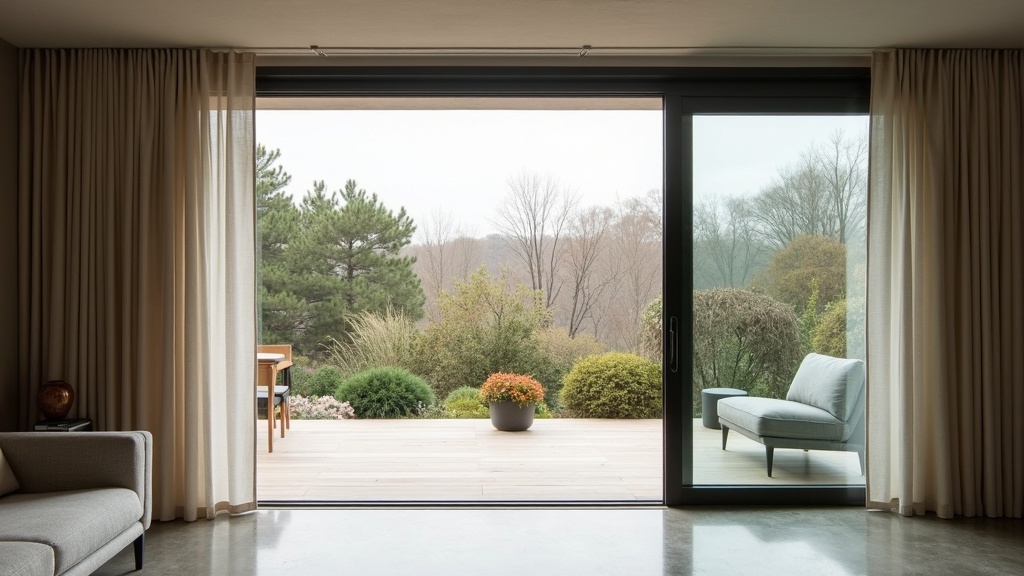
Sliding glass doors are one of the most common design problems in modern homes. Standard curtains block the door when drawn. Standard blinds look heavy on a large span of glass.
Three solutions work well here:
- Vertical blinds, updated: The old ones were harsh. New versions in soft fabric or natural woven material read very differently.
- Panel track blinds: Wide fabric panels that slide on a track. Clean, graphic, and easy to operate. A strong choice for ultra modern window treatments.
- Floor-to-ceiling drapes on a wide rod: Stack entirely to one side when open. This only works if you have wall space beside the door, but when you do, it is the most elegant option.
Layering Without the Clutter: When Two Treatments Make Sense
Layering works. It also fails when it adds weight without purpose.
The reliable combination is a functional shade behind a decorative curtain. The shade handles light control and privacy. The curtain adds softness, height, and texture. Together they do what neither could alone.
Keep the shade recessive: white, cream, or a tone very close to the wall. Let the curtain be the one with character, even if that character is simply a beautiful weave in a neutral linen.
What the Most Popular Window Coverings Right Now Tell Us About Taste
If you look at what is selling and being pinned and photographed in 2024 and 2025, a clear picture forms. Motorized roller shades in warm whites. Woven wood shades. Long linen drapes hung close to the ceiling. Mid century modern window treatments like wooden Venetian blinds in walnut or light oak are back, quietly and without fuss.
What this tells us: people are tired of visual noise. The treatments gaining traction are the ones that recede, that let the room and the light take over. The best pieces are the ones you stop noticing, because they simply belong.
How to Choose Without Overthinking It
Start with function, not aesthetics. What does this room actually need? Sleep darkness, glare control, privacy from neighbors, thermal comfort? Answer that first.
Then choose a material from the natural family: linen, cotton, woven wood, bamboo. Then choose a tone that is close to your wall color, maybe one shade warmer.
Mount high (close to the ceiling) and wide (beyond the frame by at least 10 to 15 cm on each side). This one move, done right, makes most rooms feel taller and more generous than they are.
Lagom applies here too. Not too much. Not too little. One good treatment, properly installed, in a material that belongs. That is enough. That is exactly enough.


