
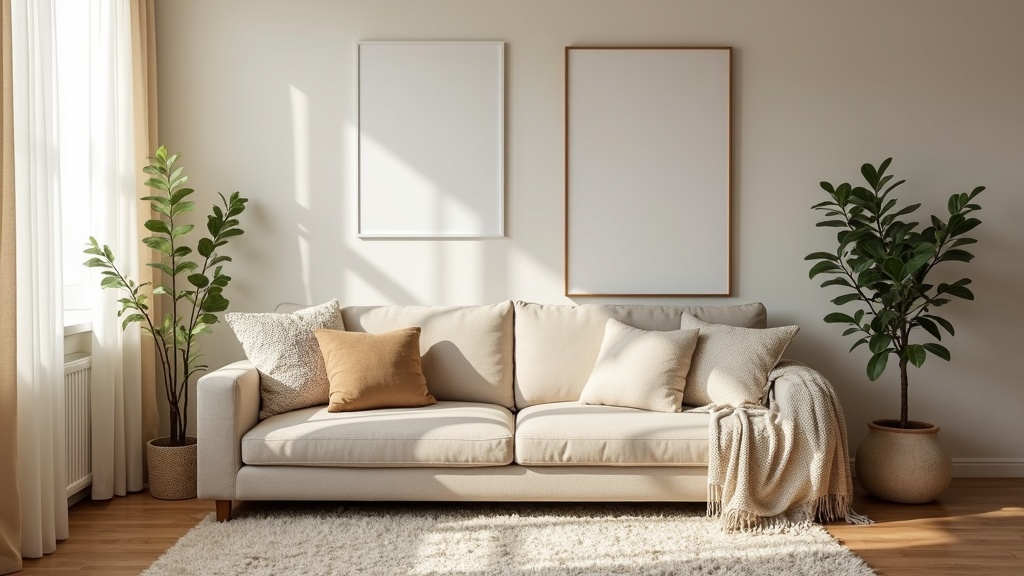
A rental is not a waiting room. It does not have to look like one. Most temporary spaces feel that way not because they are small or plain, but because nothing in them has been chosen with intention.
The good news: you do not need to own the walls to own the feeling of a room. With the right moves, a space you pay month to month can feel settled, warm, and genuinely yours.
Key points at a glance
- Lighting is the single fastest way to change how a room feels, no tools required.
- A large rug anchors any space and signals that the room was considered, not assembled.
- Removable wallpaper and peel-and-stick panels create real walls without risking your deposit.
- The 3-5-7 rule and the 70/30 rule give you a simple framework for color and proportion.
- A few high-quality pieces read as permanent. A room full of cheap fill-ins never will.
- Small details, a scent, a throw, a plant, do more than big decorating gestures.
What this guide gives you
Why Rentals Feel Temporary (And How to Change That)
White walls, overhead lighting, no curtains. That is the default rental setup, and it reads as empty by design. Landlords leave space neutral so anyone can move in. The problem is that neutral, left unchanged, reads as nowhere.
Permanence is a feeling, not a legal status. It comes from layering: light, texture, scale, scent, repetition of color. None of these things require permission or a drill.
The shift starts with one decision. Choose one thing in the room that you actually love and build from there. One good lamp. One honest rug. That is enough to begin.
Start With Light: The Fastest Way to Change How a Room Feels
Overhead lighting flattens a room. It removes shadow, and shadow is what gives a space depth and warmth. Good lighting does not announce itself. It settles into the room and changes how everything else looks.
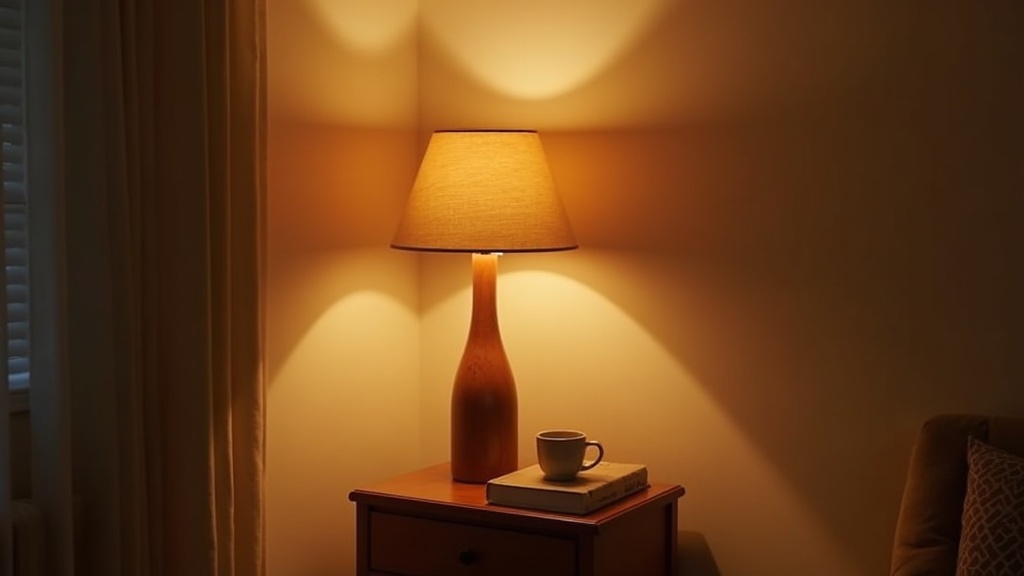
Replace overhead-only lighting with multiple light sources at different heights. A floor lamp in one corner, a table lamp on a credenza, a small lamp on a nightstand. The overhead stays off most evenings.
What to look for
- Bulbs in the 2700K range: warm, amber, not clinical.
- Lampshades in linen or paper: they diffuse light instead of projecting it.
- Plug-in sconces on command strips: wall-level light without any wiring.
Anchor the Space With a Rug
A rug does two things at once. It defines a zone in an open or undefined space, and it introduces the texture the floor never had. A rug is the fastest single piece that makes a rental look considered.
The most common mistake: choosing one too small. In a living room, the front legs of every sofa and chair should sit on the rug. A rug that floats in the middle of the furniture, touching nothing, makes a room feel more unfinished than no rug at all.
Natural materials, wool, jute, cotton flatweave, age gracefully and photograph well. They also feel meaningful underfoot in a way that polypropylene rarely does.
Did you know?
Studies in environmental psychology show that soft floor coverings consistently increase how warm and welcoming people rate a room, independent of color or furniture. The sensation of texture underfoot directly affects emotional comfort in a space.
Walls Without Paint: Texture, Pattern, and Presence
How to decorate apartment walls without paint is one of the most searched questions among renters, and for good reason. Walls are the largest surface in a room. Left bare, they dominate everything. Covered well, they become the backdrop that makes everything else work.
Renter-friendly wallpaper
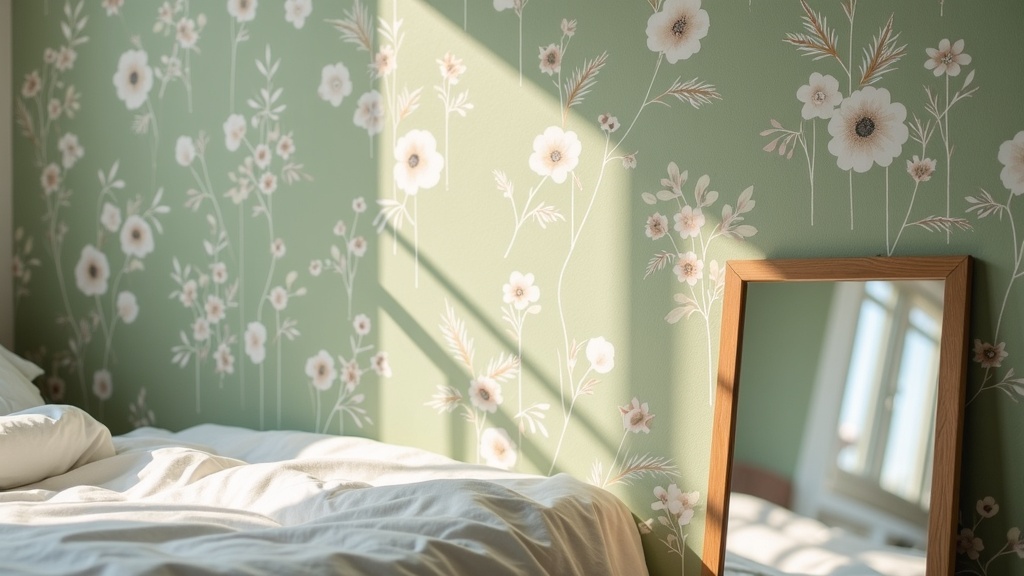
Peel-and-stick and paste-the-wall wallpapers have improved dramatically. Brands like Photowall, Milton and King, and Rebel Walls offer designs that go up cleanly and come down without damage. One accent wall is enough. You do not need four.
Other ways to add texture and color without painting
- Leaning large framed prints or mirrors directly against the wall (no holes, maximum visual impact).
- Hanging a textile, a woven wall hanging, a vintage kilim, a linen panel, from a wooden dowel.
- Gallery-style arrangements using removable adhesive strips rated for picture weight.
- Wooden slat panels with peel-and-stick backing: they create a full accent wall in under two hours.
Furniture That Reads as Considered, Not Random
Rental furniture often accumulates: a hand-me-down sofa, a flat-pack table, a chair from a closing sale. Each piece is fine on its own. Together, they read as incidental.
Cohesion does not require matching. It requires a shared language: consistent wood tones, a repeating color, a consistent material (linen, oak, rattan). Pick one thread and pull it through the room.
Invest in one or two pieces that have real presence. The best pieces are the ones you stop noticing, because they simply belong. Everything else can be budget-conscious once an anchor piece sets the tone.
The Details That Signal Permanence
A temporary space feels temporary because it lacks layers. Permanence is built from small, accumulated decisions, not one large gesture.
- Curtains hung at ceiling height, not at the window frame. This adds perceived height and softness.
- Plants, even one. A living thing signals that someone intends to stay.
- A consistent scent, a candle, a diffuser. Scent is the most underrated design tool in any room.
- Books and objects that belong to you, not to a style. Personal objects are what landlord-neutral spaces never have.
- Throws and cushions in natural materials: linen, wool, cotton. They add texture and signal comfort.
Did you know?
Houseplants in a room have been shown to reduce perceived stress levels by up to 37% in controlled studies. Beyond aesthetics, greenery signals active habitation, which is exactly what makes a space feel lived-in rather than passing through.
The 3-5-7 Rule and the 70/30 Rule: What They Actually Mean for Renters
Two simple rules handle most decorating decisions without requiring any formal training.
The 3-5-7 rule
When grouping objects (on a shelf, a console, a windowsill), use odd numbers. Groups of three, five, or seven feel balanced without feeling arranged. Even numbers tend to look deliberate in a stiff way. Odd numbers feel gathered.
The 70/30 rule
70% of the room in a dominant tone, 30% in an accent. For renters working with white walls, the 70% is already decided. Use that 30% for color through textiles, cushions, a rug, or art. This is also how to add color to a room without painting a single wall.
| Approach | Deposit safe? | Visual impact | Approx. cost |
|---|---|---|---|
| Peel-and-stick wallpaper | Yes | Very high | $60, $180 per wall |
| Wooden slat accent panel | Yes | High | $80, $200 per wall |
| Large leaning mirror or art | Yes | Medium, high | $40, $300 |
| Gallery wall (adhesive strips) | Yes, if weight limits respected | Medium | $20, $120 |
| Textile wall hanging | Yes | Medium | $30, $150 |
| Paint (with landlord consent) | Only if repainted on exit | Very high | $50, $200 per room |
What to Avoid: Mistakes That Keep a Rental Feeling Temporary
Knowing what not to do is as useful as any positive step.
- Furniture pushed against every wall. This is a waiting-room floor plan. Bring pieces toward the center and let the edges breathe.
- Nothing at ceiling height. A room with no vertical visual interest reads as low and unfinished. Use tall bookcases, floor lamps, ceiling-height curtains.
- Too many small things. Lots of small objects create visual noise. Edit down. Group thoughtfully. Leave space between things.
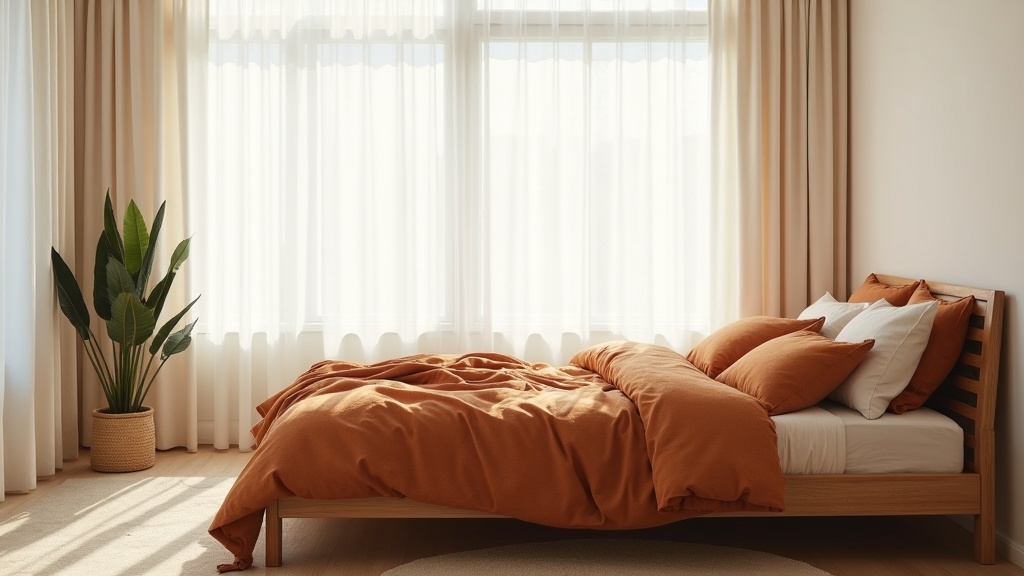
- Ignoring the bedroom. Most decorating energy goes to the living room. But the bedroom is where you begin and end every day. It deserves the same consideration.
A Minimal Checklist for Making Any Rental Feel Like Yours
This is not a room makeover plan. It is a sequence. Do one thing, then the next. Lagom: not too much, not too little. Just enough, done well.
- ☐ Replace overhead-only lighting with two or three warm lamps at different heights.
- ☐ Add one large rug with front furniture legs sitting on it.
- ☐ Choose one wall for texture or pattern: renter-friendly wallpaper, wood slats, or a large leaning piece.
- ☐ Hang curtains at ceiling height, not at the window frame.
- ☐ Pick a 70% base tone and a 30% accent, and carry both through cushions, throws, and small objects.
- ☐ Bring in one living plant.
- ☐ Add a consistent scent (candle or diffuser, not both).
- ☐ Edit the surfaces. Remove anything that does not belong or that you do not actively like.
That is the whole list. Eight steps. A space that looks and feels permanent does not come from doing more. It comes from doing the right things, once, with care.


