
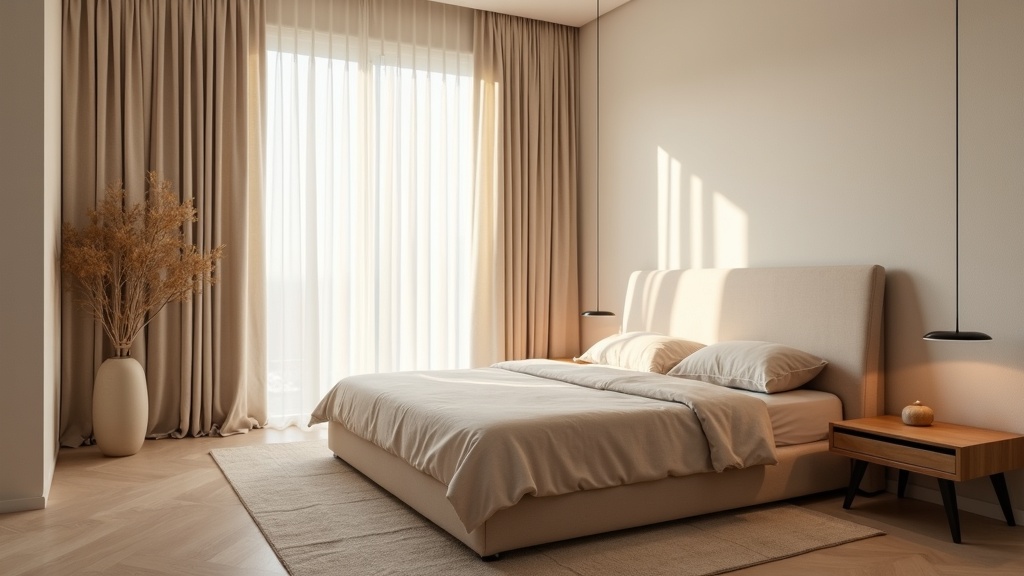
Most bedrooms are designed to be photographed. They look right in a grid, but walking into them feels like nothing. The light is too bright or too flat. The furniture is too big or too sparse. The room doesn't rest, and so neither do you.
These contemporary master bedroom design ideas start somewhere different: with feeling. How the room holds you when you wake up at 6am. How it settles around you at night. The aesthetics follow from there.
Key points at a glance
- Start with the feeling you want, then choose materials and furniture to match it
- The bed headboard sets the visual tone for the entire room
- A contemporary bedroom color palette works best when it stays within three tones
- Layered lighting (ambient, task, accent) transforms a bedroom more than any paint color
- Built-in or flush storage reads as calm; visible clutter reads as noise
- Texture does the work that pattern often overdoes
What this approach gives you
Start With How You Want the Room to Feel
Before you choose a bed frame or a paint color, answer one question: what do you actually want to feel when you walk in? Grounded. Held. Clear-headed. Light.
Every material decision flows from that answer. A room built around "calm" chooses muted linen, warm wood, and low furniture. A room built around "clear" leans into white plaster walls, cooler light, and barely-there furniture. Neither is wrong. But designing without an answer leads to rooms that feel like nobody made a real choice.
Write the feeling down. One word is enough.
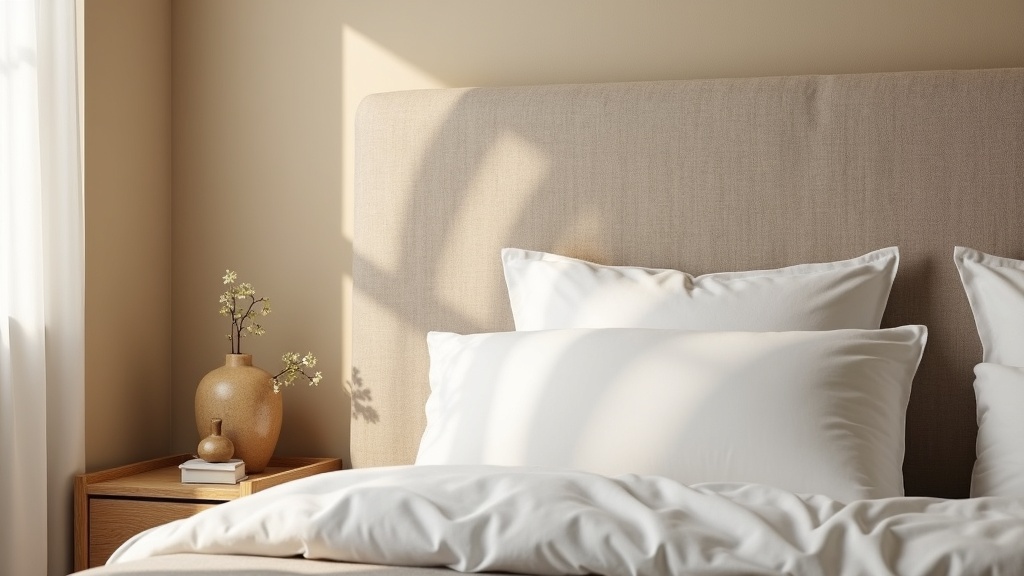
The Bed as Anchor: Proportion, Height, and Headboard Choice
The bed is the room. Everything else orbits it. Get the proportion wrong and no amount of styling fixes it.
Height matters more than most people think
A low-profile bed (40 to 50 cm from floor to mattress top) opens the ceiling and makes the room feel larger. It works especially well in rooms with standard 2.4m ceilings. Taller platform frames can feel heavy unless the room has real volume.
Headboard as a statement, quietly made
- Upholstered linen or boucle: adds warmth without weight, absorbs sound softly
- Solid oak or walnut panel: grounds the room, works in Scandinavian and contemporary styles equally
- Full wall-to-wall padded headboard: a single strong move that removes the need for much else on that wall
- No headboard: only works if the wall texture is interesting enough to carry the space
Leave at least 90 cm on each side of the bed. Less than that and the room starts to feel like it's squeezing you.
A Color Palette That Does the Work Quietly
The strongest contemporary bedroom color palettes use three tones maximum: a dominant neutral, a mid tone for textiles, and one warm or cool accent used sparingly.
Did you know?
Studies from the Scandinavian Sleep Institute found that rooms painted in warm off-whites (LRV 70, 80) with visible wood tones were associated with faster sleep onset compared to rooms with bright white or saturated walls. Colour temperature in paint is just as relevant as colour temperature in bulbs.
Warm off-whites (greige, linen white, bone) hold daylight differently to cold whites. They shift with the light across the day, which gives the room life without any effort.
Dusty sage, slate blue, and warm taupe all work as accent tones. The rule is simple: if you can name the colour easily, it's probably too strong for a bedroom wall.
Light as a Design Material, Not an Afterthought
Good lighting doesn't announce itself. It settles into the room and changes how it feels.
A single overhead light is the fastest way to make a bedroom feel like a waiting room. Layer instead.
| Light Type | Position | Effect |
|---|---|---|
| Ambient (dimmed) | Central ceiling, flush or recessed | Sets the overall mood; always on a dimmer |
| Task lighting | Wall-mounted sconces beside the bed | Frees the nightstand, directs light precisely |
| Accent lighting | Concealed LED behind a headboard panel or under a floating shelf | Creates depth, softens hard edges at night |
| Natural light control | Blackout linen or layered sheer and blackout | Lets you shape the room's mood at any hour |
Bulb colour temperature for a bedroom: 2700K to 3000K. Warmer than your living room. Cooler than candlelight.
Storage That Disappears Into the Walls
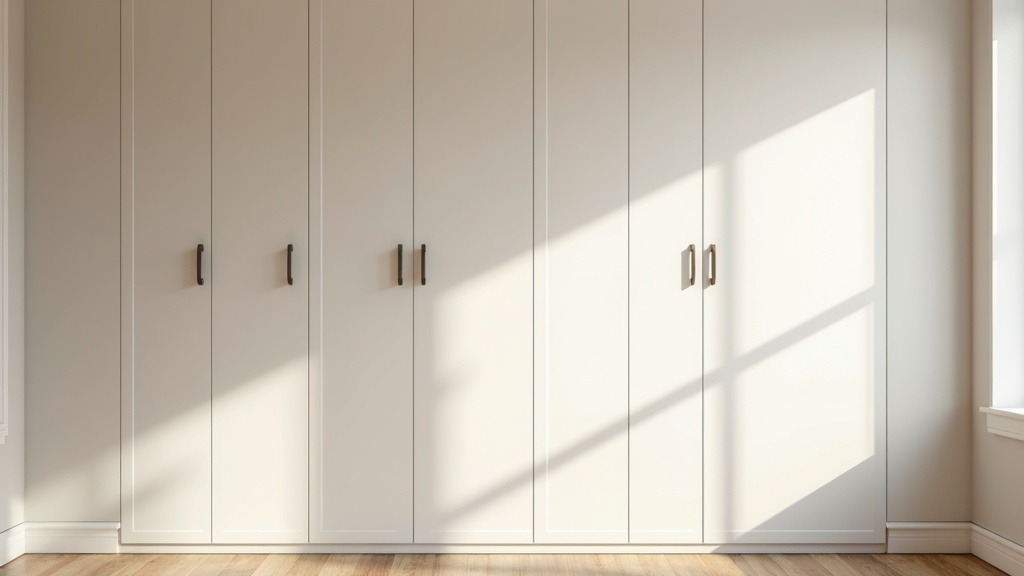
Visible storage is visual noise. In a contemporary master bedroom, the goal is to make storage structural: built into the architecture rather than placed against it.
What works best
- Floor-to-ceiling fitted wardrobes with push-to-open or recessed handles: no hardware to catch the eye
- Under-bed drawers on a low platform base: recovers dead space without adding furniture
- Bedside niches cut into a feature wall: replace nightstands entirely in tighter rooms
- A single low dresser doubling as a surface for a lamp and a plant: functional and grounding
The test: stand at the door and scan the room. If your eye catches more than two surfaces with things on them, there's too much out.
Did you know?
Research from Princeton University's Neuroscience Institute showed that visual clutter directly competes for neural resources, reducing your ability to focus and process information. In a bedroom, that translates to a measurable effect on how quickly your nervous system downregulates at night.
Texture Over Pattern: How to Layer Without Noise
Pattern in a bedroom works against you unless it's very small or very far away. Texture is the quieter tool and it does more.
Rough linen against smooth cotton. A chunky knit throw on a flat weave duvet. A raw oak bedside table beside a plastered wall. These contrasts register without demanding attention, which is exactly what a bedroom should do.
A practical layering order
- Start with the largest surface: walls (plaster, limewash, or a quality matte paint)
- Add the rug: natural fibre, generous size, at least 60 cm beyond the bed on three sides
- Layer the bed: fitted sheet, duvet cover, fold-down top layer in a contrasting weave
- Finish with one throw and two to four cushions: never a full headboard arrangement

Layout Logic for Couples and Solo Sleepers
The layout changes depending on how many people use the space regularly. These are the two scenarios worth designing for properly.
For couples
Symmetry isn't mandatory, but balance is. Each person needs a landing spot: a bedside surface, a reading light, a small amount of personal storage. Wall sconces on each side free the nightstands for actual use. If one partner wakes earlier, a separate dimmer circuit on each side matters more than any aesthetic choice.
For solo sleepers
Position the bed to give you the best view of the room when you wake. That usually means facing the window or the door, with the longest wall behind you. One generous nightstand beats two small ones. Use the second side of the bed for a chair or a reading lamp: a destination rather than a blank space.
The One or Two Pieces That Change Everything
A contemporary master bedroom doesn't need many things. It needs the right things, chosen deliberately.
The pieces that consistently shift a room: a properly scaled rug (most people buy too small), a wall sconce with real warmth to the bulb, a single piece of art placed lower than instinct suggests, and blackout curtains that reach from ceiling to floor.
The best pieces are the ones you stop noticing, because they simply belong. That's the difference between a room that was styled and a room that was designed.
Your starting checklist
- Define your one-word feeling before buying anything
- Measure twice: bed proportion and clearance first
- Replace the ceiling light with a dimmed ambient source plus two bedside sconces
- Choose a rug at least 200 x 300 cm for a standard double or queen setup
- Edit the surfaces: one lamp, one small object, one plant per side maximum
- Hang curtains 15 to 20 cm above the window frame, not on the frame itself


