
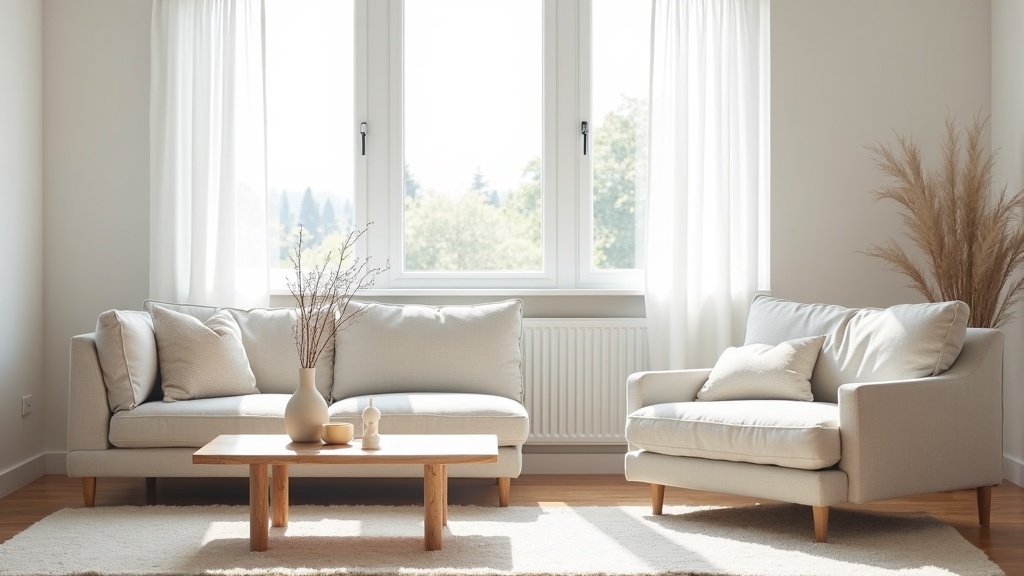
Most rooms don't fail because of bad taste. They fail because of too many good ideas placed next to each other without a plan. A mid-century chair here, a bohemian rug there, a minimalist shelf that fights with both.
Knowing how to coordinate interior design styles isn't about following rules. It's about understanding what makes a room feel settled, and applying that with a quiet hand.
Key points at a glance
- Every cohesive room starts with one anchor style, not a collection of inspirations.
- The 70/20/10 rule gives your space proportion without making it feel rigid.
- Light, texture, and material are the real connectors between two different styles.
- Some style pairings work naturally. Others need a strong common thread to hold.
- Scandinavian design is the most versatile base for mixing styles because it edits, not decorates.
- Three common mistakes break a room's flow. Each one is easy to avoid once you see it.
What this guide gives you
Why Most Rooms Feel Off (And What's Actually Missing)
Walk into a room that feels unsettled, and you rarely know why. Nothing is broken. Nothing is ugly. But something resists.
Usually, the problem is proportion. Too many styles competing at the same volume. Or a room that's been decorated piece by piece, with no single idea holding the whole thing together.
A cohesive home aesthetic isn't achieved by buying a matching set. It's achieved by giving one style the lead and letting everything else support it, quietly.
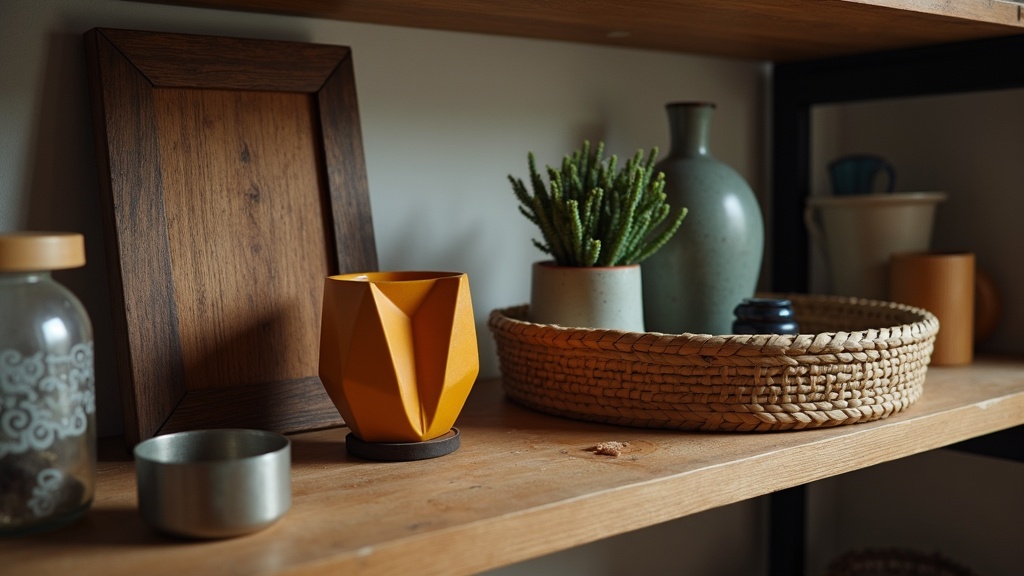
Start with One Anchor Style, Not a Mood Board
Mood boards collect what you love. They're useful for finding your interior design style. But they're dangerous as a decorating plan.
Before mixing anything, name your anchor style. This is your primary design style, the one that sets the tone for every room. Scandinavian, mid-century modern, Japanese minimalism, soft industrial. Pick one.
From there, a secondary style can add warmth, texture, or contrast. But it plays a supporting role. It doesn't compete.
How to identify your anchor style
- Look at the pieces you've kept across every move. What do they have in common?
- Notice what materials you reach for: wood, linen, stone, metal, glass.
- Ask what you want the room to feel like at 6pm with one lamp on.
Did you know?
Research in environmental psychology shows that visual complexity in a room raises cortisol levels. Spaces with a clear, dominant visual language are consistently rated as more relaxing, even when they contain the same number of objects.
The 70/20/10 Rule: A Quieter Take on the 80/20 Principle
You may have heard of the 80/20 rule for interiors. The 70/20/10 version is more precise, and more liveable.
70% of the room speaks your anchor style. This includes the walls, floors, large furniture, and overall palette. 20% introduces your secondary style through textiles, lighting, and mid-size pieces. The final 10% is detail: a single object, a contrasting finish, a moment of surprise.
That 10% is where personality lives. It's also where most people overdo it.
How to Use Light, Texture, and Material to Bridge Two Styles
When blending home decor styles, the connectors matter more than the pieces themselves.
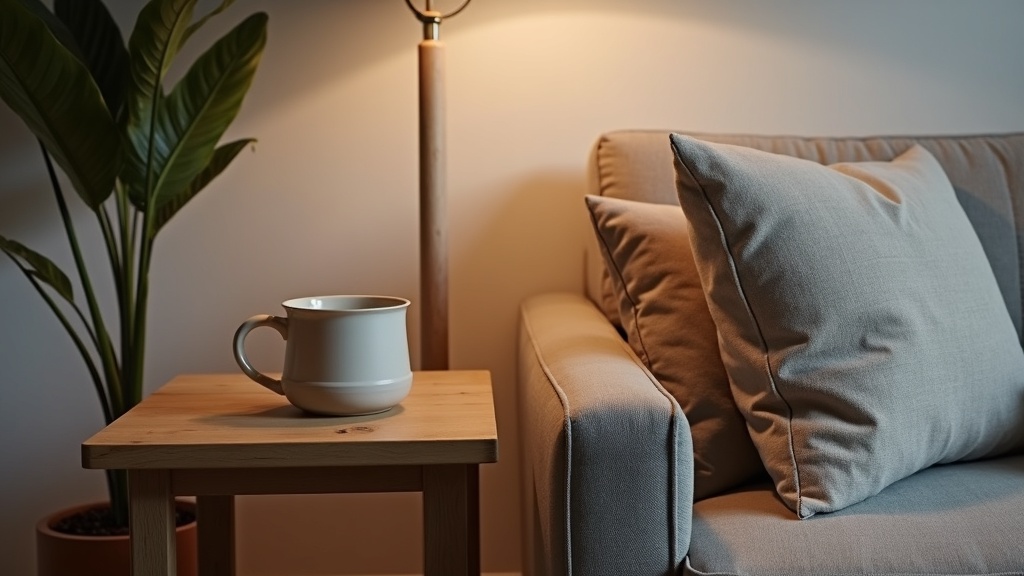
Light is the most powerful one. Good lighting doesn't announce itself. It settles into the room and changes how it feels. A warm-toned bulb can make a modern room feel more human. A focused beam on a raw wood surface can make an eclectic shelf look curated.
Texture creates conversation between styles. A smooth concrete table can sit next to a chunky wool throw because both have honesty about what they are. Friction happens when materials perform, when plastic pretends to be wood, or when synthetic velvet stands next to hand-thrown ceramics.
Repeating a material across different style pieces is the easiest way to make a room feel deliberate. Use oak in the frame, in the tray, in the stool. The style of each piece can vary. The material links them.
Which Design Style Pairings Work Well Together
Not every combination holds. Some pairings share enough DNA to blend naturally. Others need a very strong common thread, usually material or palette, to avoid looking like a collision.
| Pairing | Compatibility | Connector to use |
|---|---|---|
| Scandinavian + Japandi | Effortless | Shared restraint, natural materials |
| Mid-century + Bohemian | Natural | Warm wood tones, organic shapes |
| Industrial + Transitional | Workable | Neutral palette, mixed metals kept consistent |
| Modern + Traditional | Challenging | One dominant, strong colour anchor |
| Coastal + Minimalist | Natural | Light palette, linen and rattan as bridges |
| Maximalist + Eclectic | Risky | Strict colour family to contain the volume |
What Scandinavian Design Gets Right About Mixing Styles
Scandinavian interior design tips tend to focus on what to remove, not what to add. That restraint is exactly what makes it such a reliable anchor for mixing styles.
Lagom is the Swedish concept at the core of it: not too much, not too little. Just enough, done well. A Scandinavian base room has enough breathing room that a second style can enter without crowding it.
It also handles contrast well. A Scandinavian room in white oak and linen can absorb a single dramatic piece, a deep blue velvet chair, a hand-knotted Moroccan rug, without losing its calm. The key is that the Scandinavian elements never stop being the majority.
Did you know?
The term "Japandi", the now widely used blend of Japanese and Scandinavian aesthetics, was first coined by interior designers around 2017, but its visual principles had been practised in Nordic homes for decades before it had a name.
Three Mistakes That Break a Coordinated Room
1. Mixing at the wrong scale
A bold bohemian rug and a bold mid-century sofa are both beautiful. Together, they fight. When two pieces from different styles both carry strong visual weight, neither wins. One needs to recede.
2. Inconsistent metal finishes
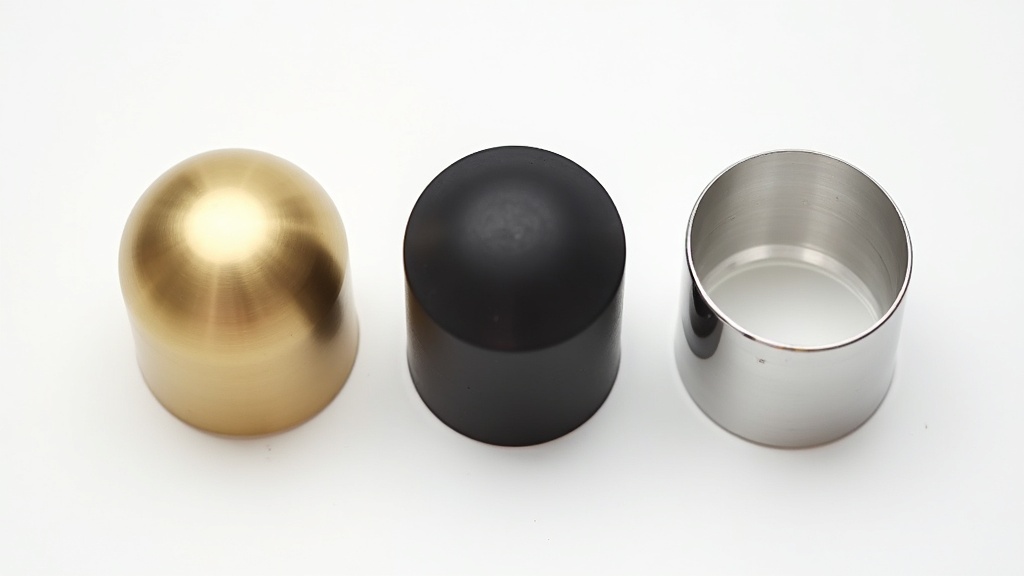
Brass and chrome in the same room is one of the fastest ways to make a space feel unresolved. Choose one metal family and stay with it across light fittings, handles, and frames. One exception is intentional, done with purpose. Two accidental ones read as a mistake.
3. Treating every room as its own project
Eclectic interior design done right is cohesive across the whole home, not just within each room. If you move through spaces and the palette shifts dramatically every time a door opens, the home has no identity. A consistent floor, a recurring colour, a shared material: these are the threads that make the whole thing feel designed.
A Simple Room-by-Room Framework to Apply This at Home
You don't need to redesign everything. Start with the room where you spend the most time, and apply one question per element.
Living room
- What is the single largest piece of furniture? Its style is your anchor. Everything works with it, not around it.
- Does the lighting feel warm enough at night? If not, no amount of furniture rearranging will fix the mood.
- Count your metal finishes. If you have three or more, edit down to one.
Bedroom
- The bed is always the anchor. Style the textiles in the same palette, but vary the texture.
- One personal object from a different style is allowed. One. Make it count.
Kitchen and dining
- Material consistency matters most here. Wood, stone, and one metal, kept throughout.
- Lighting over the table shapes the entire feel of a meal. Get it right before touching anything else.
The best pieces are the ones you stop noticing, because they simply belong. That's the goal: a home where nothing shouts, and everything holds.


