
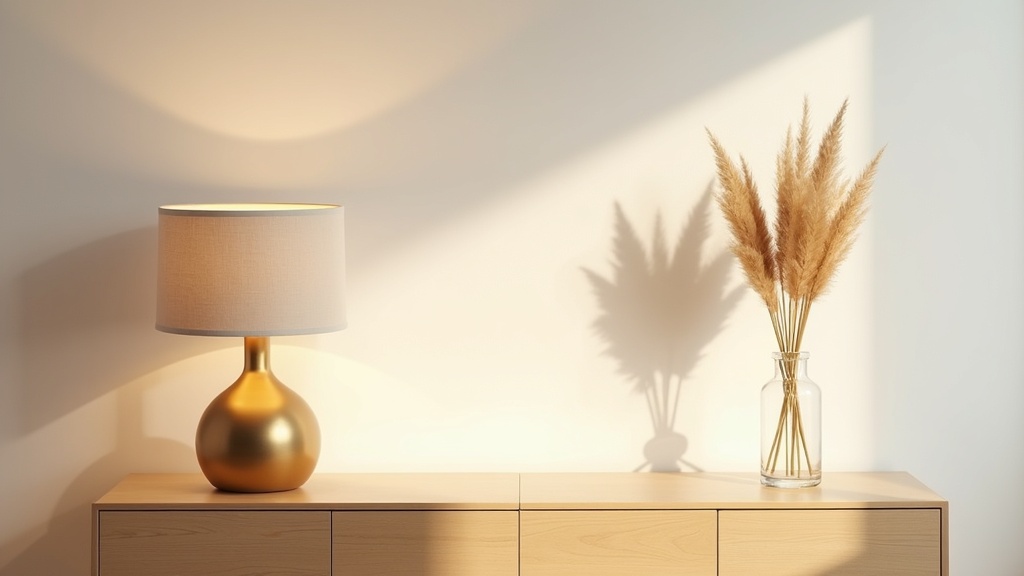
A brass table lamp does something most lighting can't. It adds warmth before you even switch it on. The metal itself carries a glow, a visual temperature that shifts how the whole room reads.
In a Scandinavian interior, where the palette is often quiet and the materials understated, that warmth becomes the whole point. Not decoration. Not statement. Just the right amount of light, in the right place, doing exactly enough.
Key points at a glance
- Brass works in Scandinavian spaces because it adds warmth without visual noise.
- Brushed brass is the most versatile finish for minimalist, everyday interiors.
- Linen, cream, and warm white shades perform best with brass bases.
- Placement matters more than the lamp itself: bedside, reading corner, and console table are the three key spots.
- Brass lamp design is evolving for 2026, with slimmer forms and mixed materials gaining ground.
- Antique and vintage brass pieces bring character that new production rarely matches.
Why this guide is worth your time
Why Brass Works So Well in a Scandinavian Interior
Scandinavian design is built around natural materials: wood, stone, linen, wool. Brass fits that language. It comes from the earth. It ages. It changes slightly over time, the way wood does.
In a room of whites, greys, and pale oak, brass is the warm note that stops the space feeling cold. It catches light without demanding attention. That restraint is exactly what a Nordic palette needs.
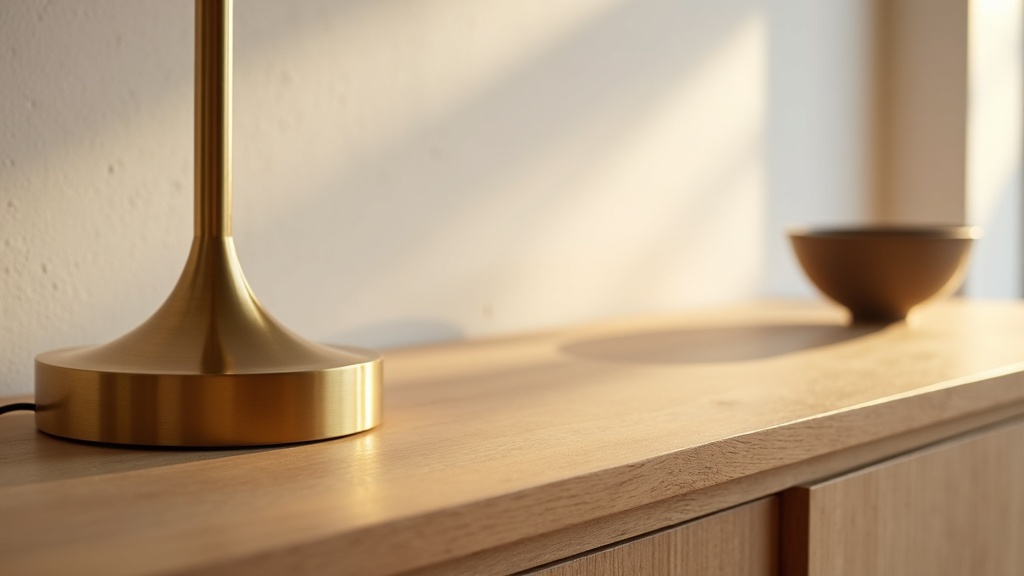
Good lighting doesn't announce itself. It settles into the room and changes how it feels. Brass table lamps for warm Scandinavian interiors work precisely because they do this quietly.
Brushed, Polished, or Antique: Choosing the Right Brass Finish
The finish changes everything. Same base shape, three very different results.
Brushed brass
The safest choice for a minimalist interior. The matte surface diffuses light and doesn't compete with other materials. A brushed brass table lamp minimalist pairing suits almost any Scandinavian scheme.
Polished brass
More reflective, more presence. Works well in rooms that have a deliberate mix of periods, or where you want the lamp to be a considered focal point. Harder to pull off in a very spare, neutral space.
Antique brass
Antique brass table lamps carry genuine depth. The slightly darkened, lived-in tone reads as warmth rather than decoration. In a room with aged leather, raw linen, or dark-stained wood, antique brass feels completely at home.
| Finish | Best Interior Match | Maintenance | Mood |
|---|---|---|---|
| Brushed brass | Pale oak, linen, white plaster | Very low, hides fingerprints | Calm, understated |
| Polished brass | Mixed-period rooms, marble, dark walls | Moderate, shows marks | Confident, slightly formal |
| Antique brass | Dark wood, aged leather, raw linen | Low, patina is the point | Warm, layered, lived-in |
| Lacquered brass | Contemporary, graphic interiors | Easy but can chip with age | Precise, clean-lined |
Are Brass Table Lamps Still in Style?
Yes. And the more useful question is: why do they keep coming back?
Brass never really left. It went quiet during the chrome and nickel era, then returned because warmth in an interior is not a trend, it is a need. Spaces that feel cold don't feel welcoming, regardless of how well they photograph.
Modern brass table lamps from a Scandinavian design perspective have also become more refined. Slimmer stems, less ornamentation. The material does the work, not the shape.
Did you know?
Brass has been used in Scandinavian homes since at least the 17th century, primarily in candleholders and lanterns. Its association with domestic warmth in Nordic culture predates the design movements we now call Scandinavian by several hundred years.
What Scandinavian Lighting Design Actually Means
It's not a style. It's a relationship with light shaped by geography. In Sweden, Norway, Denmark, and Finland, winter days can offer fewer than six hours of usable daylight. Lighting becomes emotional infrastructure, not just function.
The result is a design philosophy built around layered, low, intimate light sources. Overhead lighting is used sparingly. Table lamps, floor lamps, and candles do the real work. The goal is always the same: make the room feel inhabited and warm, even on the darkest afternoon in December.
Lagom guides the whole approach. Not too bright, not too dim. Not too many lamps, not too few. Just enough, done well.
What Shade Color Looks Best with a Brass Lamp
The shade controls how the light lands on the room. Get it wrong and the whole thing falls flat.
Linen and warm white
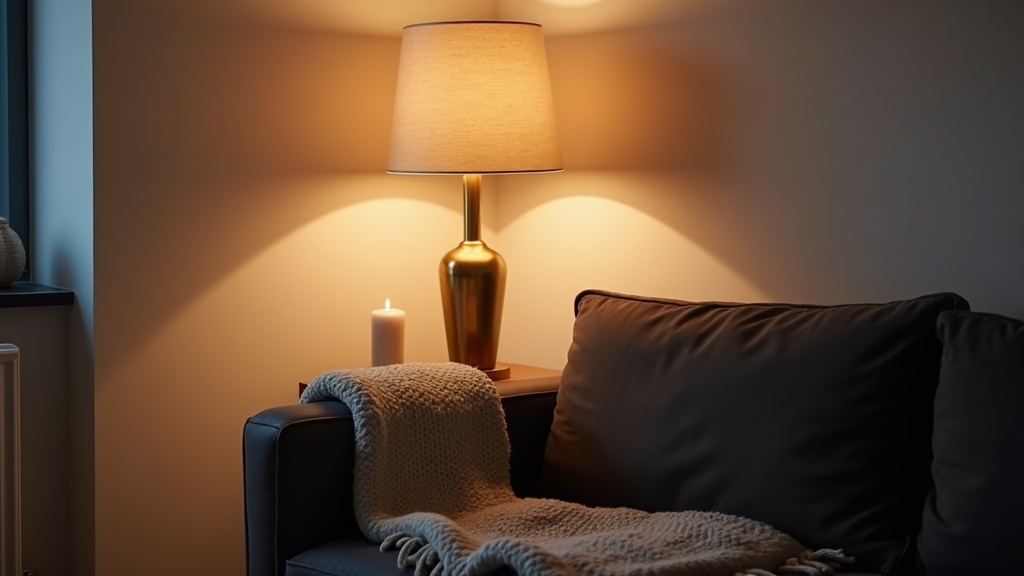
The classic choice for good reason. Natural linen shades push a warm amber light that feels completely at home with brass. The two materials share the same tonal family.
Cream and off-white
Softer than a bright white, which can read as clinical. Cream shades diffuse light generously and add no competing colour.
Shades to avoid
- Bright white: creates a cool, slightly harsh pool of light that works against brass's warmth.
- Black: directs light downward in a way that can feel stark in a Scandinavian scheme. Best saved for more dramatic interiors.
- Coloured shades: usually compete rather than complement, unless you have a specific, deliberate palette to match.
Did you know?
The colour temperature of a bulb matters as much as the shade colour. For a warm Scandinavian interior, aim for 2200K to 2700K. This range mirrors candlelight and late sunset, the two most psychologically comforting light sources for humans.
Where to Place a Brass Table Lamp for Maximum Effect
Light placed right does more for a room than any renovation. Position matters far more than most people realise.
Bedside table
The most personal placement. A warm brass lamp at eye level when you're sitting up in bed creates a cocoon of light that makes the whole room recede pleasantly into shadow. This is exactly the effect Scandinavian bedrooms aim for.
Reading corner
Pair with a proper reading chair and a floor lamp on the opposite side if space allows. The brass lamp on a side table handles ambient warmth; the floor lamp handles task lighting. Two sources, balanced.
Console or hallway table
An entry hall lamp sets the tone before anyone reaches the main living space. A single brass table lamp on a console table, switched on in the early evening, is one of the simplest improvements you can make to how a home feels on arrival.
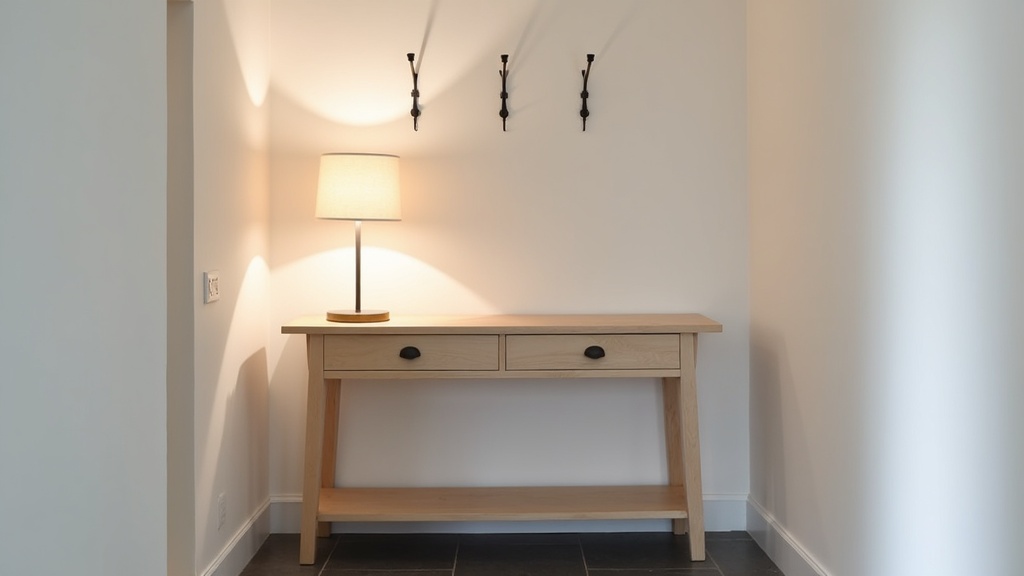
Table Lamp Trends for 2026: Where Brass Fits In
The broader table lamp trends for 2026 are moving toward material honesty. Less lacquer, less paint, more visible craft. Brass fits this direction precisely because it is exactly what it looks like.
Three specific directions are worth watching:
- Mixed materials: brass bases paired with stone, travertine, or ceramic bodies. The warmth of metal meets the weight of natural material.
- Slimmer profiles: the wide, elaborate base is giving way to a more considered, architectural stem. Proportions are tighter.
- Vintage and mid-century revival: vintage mid century modern table lamps with clean lines and honest brass work are finding a new audience. Original pieces, where available, carry a quality of material that current production rarely reaches.
Modern brass table lamps for a Scandinavian sensibility in 2026 are less about statement and more about permanence. Buy once, keep it for decades. That is lagom applied to purchasing.
Five Brass Table Lamps Worth Considering Right Now
These are not sponsored recommendations. They are chosen for coherence with a warm Nordic interior and for the quality of their proportions.
- Gubi Bestlite BL2: a 1930 design with clean industrial bones. Polished brass version holds its own in a contemporary Scandinavian room without looking retro.
- HAY Arcs Table Lamp: minimal brass arc form, very clean. The brushed finish reads beautifully in natural daylight and electric light alike.
- Ferm Living Collect Lamp: modular system with interchangeable brass shades and bases. The column base in brass with an off-white glass shade is the right combination for a quiet interior.
- Nordlux Dftp Audo Aluvia: pendant-adjacent thinking applied to a table lamp scale. Aluminium and brass combination for 2026's mixed-material direction.
- A vintage Danish workshop lamp, sourced secondhand: any adjustable brass workshop lamp from the 1960s or 1970s. These were built to last fifty years and most of them have. The patina is impossible to replicate.
Before You Buy: Three Questions Worth Asking
A lamp is a long-term decision. These three questions cut through the noise.
- Where will it actually sit? Measure the height of the surface. A lamp that reads well at floor level looks wrong on a high console table. Eye level when seated is the general rule for ambient lamps.
- What bulb does it take? Check whether it accepts an Edison screw or bayonet fitting, and whether the maximum wattage allows for a warm 2200K LED. Some vintage fittings limit your options.
- Does the shade come with it, or is it sold separately? Many better-quality brass bases are sold without shades. That is actually an advantage: you can choose the shade that works for your specific space rather than accepting a default.


