
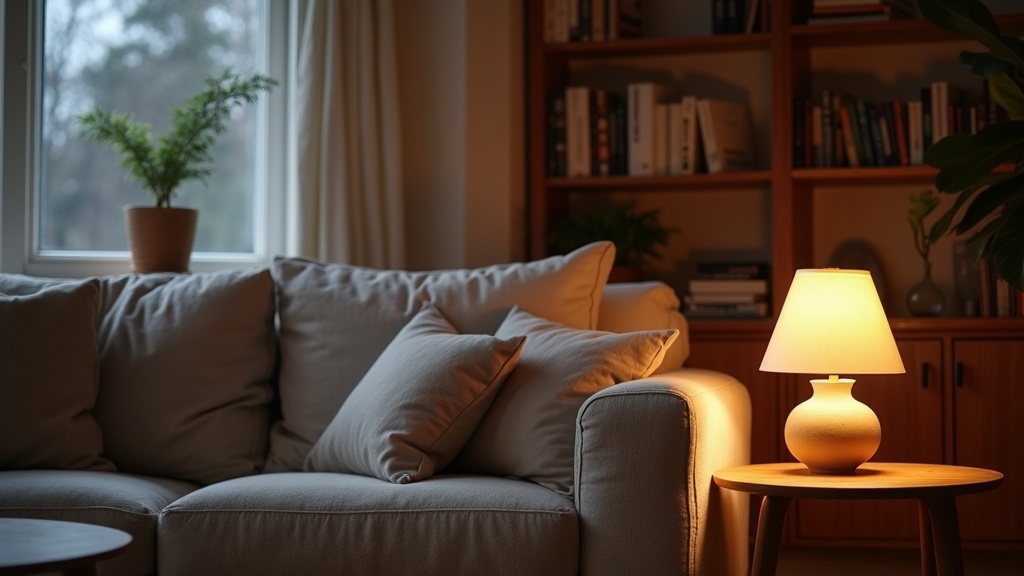
Most people buy the right lamp, then put it in the wrong place. The room never quite feels settled, and they can't explain why. The lamp itself isn't the problem.
Good lighting doesn't announce itself. It settles into a room and shifts how the whole space feels. Table lamp placement in living rooms for balanced light is less about rules and more about understanding how light moves, pools, and breathes across a space.
Key points at a glance
- Placement shapes a room's mood far more than lamp style or wattage.
- The 5'7" rule keeps light at eye level and eliminates harsh glare.
- Most living rooms need two to four light sources, not one central fixture.
- End table lamps beside a sofa should sit roughly at seated shoulder height.
- Layering table lamps with floor lamps and ambient sources creates true balance.
- Small rooms and rentals have workable solutions that don't require overhead wiring.
What balanced lighting actually gives you
Why placement matters more than the lamp itself
A beautiful lamp in the wrong spot contributes almost nothing to a room. It becomes decoration at best, a glare source at worst.
The lamp's job is to cast light where people actually are: seated on the sofa, reading in the armchair, setting something down on the coffee table. Position determines function. A lamp that's too far from the seating area, too high, or tucked into a corner does none of these things.
Light placed right does more for a room than any renovation. It changes the perceived size of the space, softens hard lines, and makes furniture feel like it belongs there.
The core rule: spread light, don't pool it
One strong lamp in one spot creates a bright island surrounded by shadow. The contrast is tiring on the eyes and makes the room feel smaller than it is.
Balanced light means distributing sources across the room, so the brightness transitions gently from zone to zone. Think of it as filling a room with light the way water fills a vessel: gradually, evenly, with no dry patches.
Lagom applies here. Not too much. Not too little. Multiple modest sources, placed with intention, always outperform one powerful fixture trying to do everything.
Where to place a table lamp in a living room
End tables beside the sofa
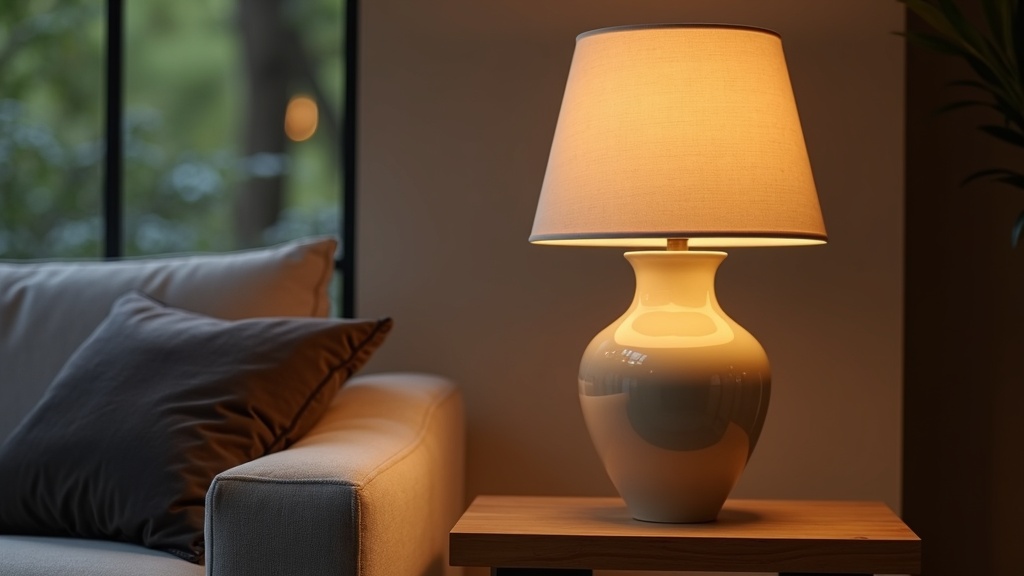
This is the most used position, and for good reason. A table lamp next to a sofa provides direct light for reading, adds warmth to the seating area, and anchors the arrangement visually.
Place the lamp so the bottom of the shade sits roughly at shoulder height when you're seated. That puts diffused light at face level without shining the bulb directly into your eyes.
Console tables and sideboards
A lamp on a console behind the sofa or along a wall lights the perimeter of the room. This lifts the perceived ceiling height and prevents the far walls from disappearing into darkness.
Accent corners
A corner lamp softens the geometry of a square room. It works especially well paired with a plant or a low shelf. The light bounces off the walls and returns as ambient glow.
Did you know?
The human eye is most comfortable with light sources positioned at or slightly below eye level when seated (roughly 40 to 48 inches from the floor). Overhead light sources trigger a mild stress response associated with harsh midday sun, which is one reason a single ceiling fixture rarely feels relaxing in the evening.
The 5'7" lighting rule and what it actually means for table lamps
The 5'7" rule (about 170 cm) suggests that the top of a lamp shade should sit at approximately eye level for a standing person. This is a useful starting point, but it was designed with floor lamps in mind.
For table lamps in a living room, the relevant measurement is the combined height of the table and the lamp. A low coffee table calls for a taller lamp. A tall console can carry something shorter.
The practical test: sit in your usual spot on the sofa. If you can see the bare bulb, the lamp is too low. If the shade is above your head, it's too high to be useful. Adjust the table height or the lamp height until the light falls naturally on what you're doing.
How many lamps does a living room need?
A common question. The honest answer depends on the room size and whether you have overhead lighting, but a useful baseline exists.
- Small room (under 150 sq ft): two sources minimum, one table lamp and one ambient or floor lamp.
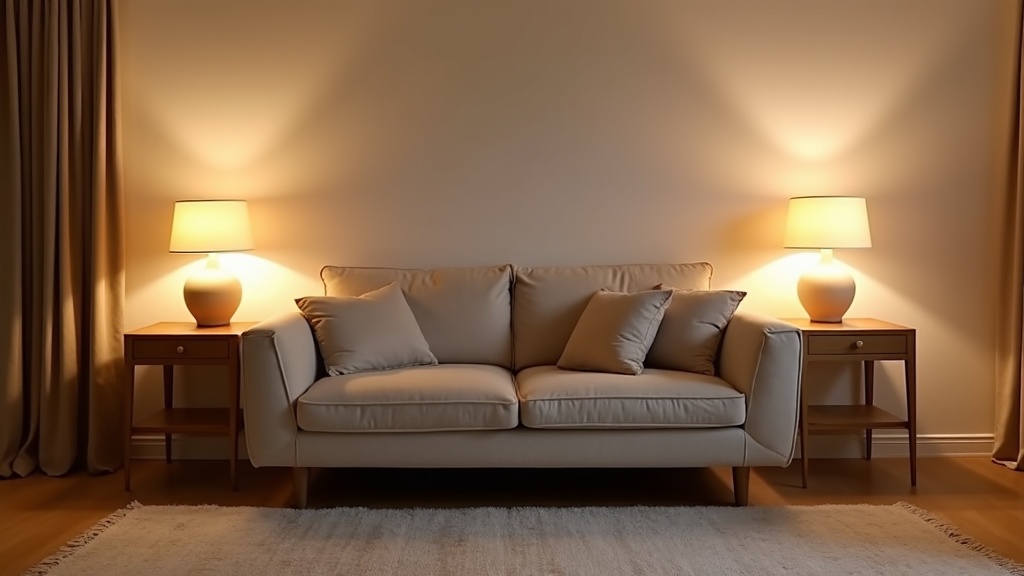
- Medium room (150 to 250 sq ft): three sources work well, two table lamps flanking the sofa and one accent or floor lamp.
- Large or open-plan room: four to six sources, distributed across distinct zones (seating, reading corner, console or shelving).
The goal is that no single lamp carries the whole room. Each one contributes a layer. Layered lighting in a living room is what makes the space feel complete at 9 PM, not just serviceable.
| Position | Best lamp height | Primary function |
|---|---|---|
| End table beside sofa | 58, 64 cm (table + lamp) | Task and ambient |
| Console or sideboard | 45, 55 cm lamp height | Ambient and perimeter fill |
| Accent corner | 65, 75 cm lamp height | Mood and shadow softening |
| Bookshelf or niche | 25, 40 cm (small lamp) | Accent and focal point |
| Reading armchair side | 58, 64 cm (table + lamp) | Directed task light |
Pairing table lamps with other light sources for true balance
Table lamps work best as part of a system, not as standalone solutions. How to balance lighting in a living room comes down to using three layers: ambient, task, and accent.
Ambient layer
This is the base level of light. It might come from a ceiling fixture, a large floor lamp, or several table lamps together. It sets the overall brightness of the room.
Task layer
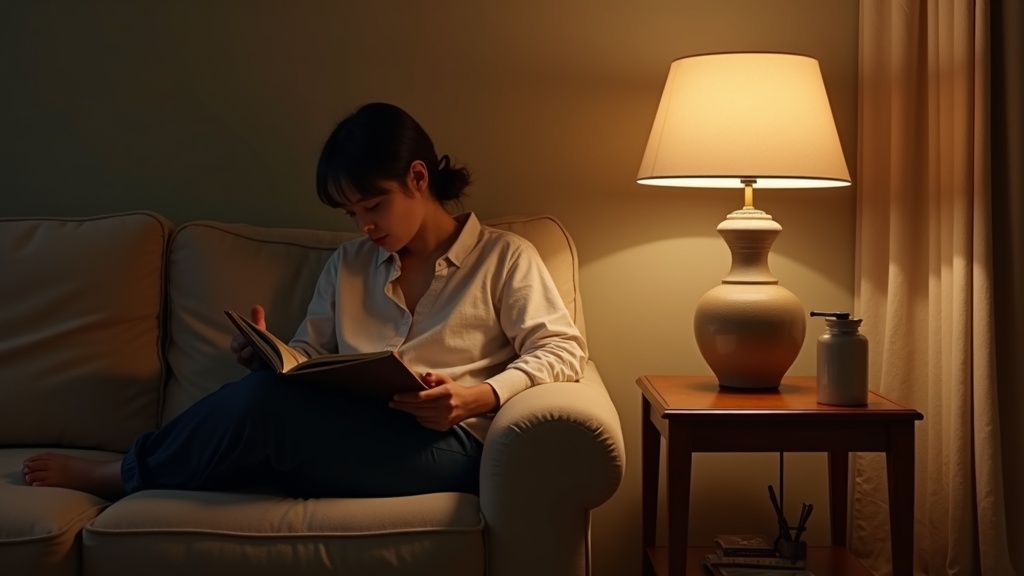
Table lamps beside the sofa or reading chair are your task layer. They're bright enough to read by, positioned where you actually sit.
Accent layer
Small lamps on shelves, candles, or LED strip lighting behind furniture create depth. They aren't meant to light the room. They give it character.
Did you know?
Studies in environmental psychology show that people consistently rate rooms with multiple low-level light sources as more comfortable and socially inviting than identically furnished rooms lit by a single overhead fixture. The distribution of light, not its total lumen output, drives that perception.
Common placement mistakes and how to fix them
- Lamp too far from the seating area. If you have to lean toward the lamp to get enough light, it's not close enough. Move the end table nearer to the armrest.
- All lamps at the same height. Variety in lamp height creates visual rhythm. Mix a taller console lamp with a shorter table lamp.
- One lamp doing everything. A single table lamp, even a powerful one, leaves most of the room unlit. Add a second source on the opposite side or across the room.
- Lamp in the corner with no reflective surface nearby. Corners absorb light. Place the lamp close to a light-coloured wall or a mirror to bounce the light back into the room.
- Shade too dark or too opaque. A thick, dark shade turns a lamp into a directional spotlight. For ambient warmth, choose a linen or paper shade that allows light to pass through.
Small rooms, rentals, and other constraints: practical adjustments
Not every living room has the space for multiple end tables, and not every rental allows ceiling fixtures. That's not a problem. It's just a different set of decisions.
Living room lighting without overhead light
This is more common than people think. Two well-placed table lamps plus one floor lamp can fully replace a ceiling fixture in most living rooms. The floor lamp handles the ambient layer. The table lamps handle task and warmth.
Small rooms
In a small room, scale matters. A large lamp on a small table overwhelms. Choose a lamp that's proportional to its surface. A slim, tall lamp takes up less visual space than a short, wide one.
Rentals with limited sockets
Use a multi-socket floor-level power bar hidden behind the sofa. Plug two table lamps and a floor lamp into the same circuit. One switch, layered light, no wiring required.
What to do right now
Sit in your usual spot this evening. Look at where the light falls. If you're in shadow, move the lamp closer. If one area glows while the rest of the room disappears, add a second source. Trust what you see, not what the floor plan suggests.
Balanced light isn't a design achievement. It's a daily comfort. Get it right and you stop thinking about it entirely, which is exactly the point.


