
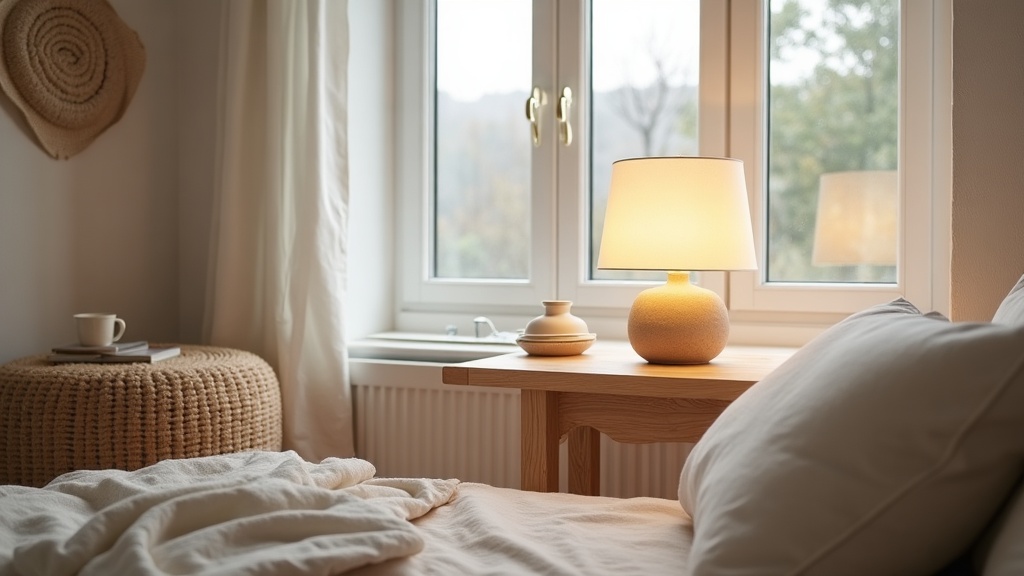
A lamp sitting in the wrong corner does nothing. The same lamp, with the right shade, in the right spot, makes a room feel like somewhere you want to stay. That shift is almost entirely about material.
Glass and ceramic lampshades for Scandinavian style have been doing this quietly for decades. No trend has displaced them, because they were never about trend. They were about light, material honesty, and the specific feeling of a room that has been thought about.
Key points at a glance
- The lampshade material shapes the quality of light far more than the bulb wattage.
- Glass shades diffuse and spread light; ceramic shades absorb and concentrate it.
- Authentic Scandinavian design favours natural materials, visible craft, and restraint.
- Danish studio pottery, including the Soholm tradition, remains a benchmark for ceramic lamp quality.
- Choosing between glass and ceramic comes down to how you use the room, not personal taste alone.
- Both materials work across mid-century, contemporary Nordic, and transitional interiors.
What these shades give you
Why the Shade Matters More Than the Bulb
Swap the bulb in a bad fitting and you still have a bad fitting. Change the shade, and you change the room. The shade decides where light goes, how soft it lands, and what colour it picks up on the way down.
A 6-watt bulb behind frosted opal glass reads warmer than a 10-watt behind clear. The material filters, scatters, or holds the light. The shade is the instrument; the bulb is just the power source.
What Makes a Lampshade Truly Scandinavian
Scandinavian design does not decorate for the sake of it. Every decision has a reason rooted in function, material, or climate. Long winters shaped how Nordic people think about indoor light: it matters, and it should be handled with care.
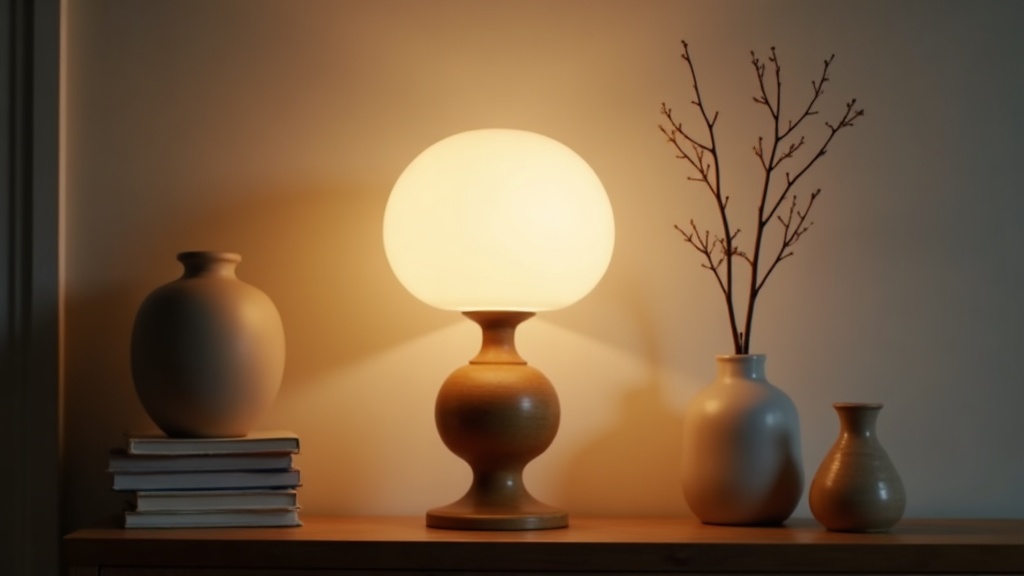
The visual language is consistent. Organic forms, restrained colour palettes, visible material texture, and nothing superfluous. A Scandinavian glass lamp shade tends toward simple geometry: globe, dome, or cylinder. A ceramic base carries the maker's hand in its glaze.
- Natural materials used without apology
- Shapes derived from function, not ornament
- Colour palettes borrowed from nature: fog, birch bark, iron, sea
- Craft quality that makes the object worth keeping for decades
Glass Lampshades: How Light Moves Through Them
Glass is the most cooperative material for Nordic lighting design. It bends light rather than blocking it. The result depends entirely on the type of glass: clear, smoked, opal, or acid-etched each behaves differently.
Clear glass gives an unmediated, bright pool. Smoked or amber glass warms the tone considerably, flattering wood floors and linen. Opal glass diffuses the source completely, spreading soft, shadowless light across the room.
Swedish lamp shades from the mid-century period often used handblown glass with slight irregularities. Those imperfections are the point. They catch the light differently at different angles and give the shade a presence that machine-pressed glass cannot replicate.
Did you know?
The Swedish glassworks at Orrefors and Kosta Boda both produced lamp shades for residential use from the 1920s onward. Some of those original handblown pieces still appear at Scandinavian estate sales and continue to function perfectly as lampshades today.
Ceramic Lampshades: Weight, Texture, and Warmth
Ceramic shades are less common than ceramic bases, but they exist and they are worth seeking. A stoneware shade with a matte iron glaze casts a focused, directional light. It also adds physical weight and presence to a lamp that glass cannot.
More often, the ceramic component is the base. A vintage ceramic lamp base in a Nordic home carries the room in a way that a metal or resin equivalent never quite manages. The glaze absorbs and reflects light differently depending on the hour and season. That responsiveness is what makes ceramic worth the investment.
Danish Studio Pottery and the Soholm Tradition
The Danish island of Bornholm became a centre for studio ceramics in the postwar decades. Soholm Stentoj, founded there in 1835 and peaking creatively in the 1950s and 60s, produced lamp bases that are now collected internationally.
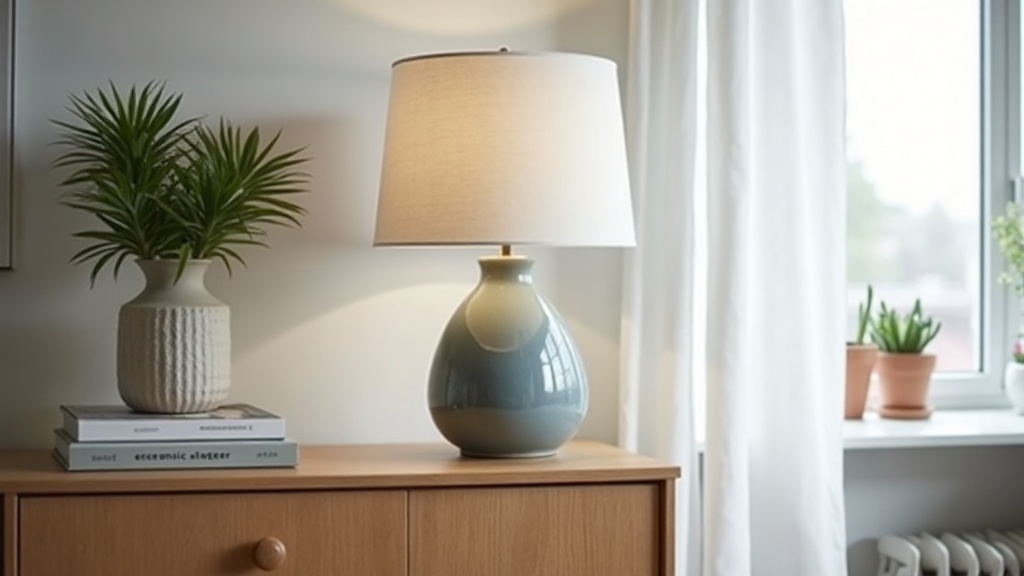
A Soholm lamp is identifiable by its dense stoneware body, the unpredictable beauty of its reactive glazes, and a silhouette that sits somewhere between sculpture and utility. Browns, greys, terracottas, and deep sea blues appear frequently. Each glaze firing is slightly different from the last.
The mid century ceramic lamp tradition in Denmark also includes work from Søholm's contemporaries: Palshus, Eslau, and smaller ateliers whose pieces appear unmarked at auction. Learning to recognise the clay body and glaze style matters more than finding a signature.
Did you know?
Soholm Stentoj operated on Bornholm for over 130 years. At its mid-century height, the workshop employed local potters who developed their own glaze recipes. Many of those formulas were never fully documented, which is why two Soholm bases from the same period can look strikingly different in colour and surface texture.
How to Choose Between Glass and Ceramic for Your Space
The choice is practical before it is aesthetic. Think about what the lamp needs to do first.
| Criteria | Glass shade | Ceramic base + fabric shade |
|---|---|---|
| Light quality | Diffused or directional depending on glass type | Soft, warm, focused downward |
| Visual weight | Light, airy, recedes into the room | Grounded, sculptural, anchors a corner |
| Best room | Kitchen, hallway, home office | Living room, bedroom, reading nook |
| Maintenance | Wipes clean, shows fingerprints | Dust occasionally, glaze is robust |
| Investment level | New from £40; vintage from £80 | New from £60; vintage Soholm from £120 |
If the room needs general light, lean toward glass. If it needs an object that earns its place even when switched off, choose ceramic.
Lampshade Trends for 2025 and 2026 in Nordic Interiors
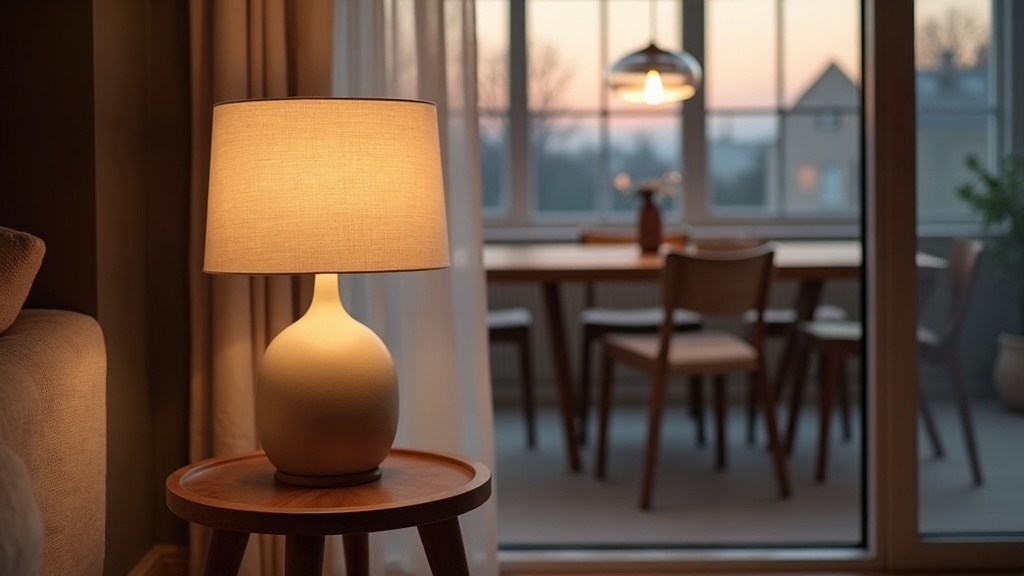
The move in Nordic interiors right now is toward less, but more considered. Fewer light sources, each one chosen carefully. The ambient ceiling fixture is losing ground to a layered scheme of table lamps and pendants at different heights.
What is gaining ground
- Smoked and amber glass pendants over kitchen islands and dining tables
- Stoneware lamp bases in earthy tones: clay, ochre, warm grey
- Reissued mid-century silhouettes from Scandinavian workshops, particularly globe forms
- Mixing vintage ceramic bases with new, simply made fabric shades
What is fading
- Oversized rattan and woven shades that dominated 2021 to 2023
- All-white interiors relying on recessed ceiling lights for everything
- Matching lamp sets bought as a pair
The shift is toward lamps that have a history, or at least look like they might. A Danish ceramic lamp bought at a weekend market sits in a 2025 interior more comfortably than it ever did in 2005.
Where to Find Glass and Ceramic Lampshades Worth Keeping
The best pieces are rarely in the first place you look. Here is where to direct your attention.
For vintage ceramic and glass
- Scandinavian estate sales and auctions, especially Lauritz.com and Bruun Rasmussen for Danish pieces
- Etsy sellers specialising in Nordic vintage (search "Soholm lamp", "Palshus", "Swedish ceramic lamp base")
- Local vintage fairs in the UK, Germany, and the Netherlands, where Scandinavian export pieces turn up regularly
For new pieces in the Nordic spirit
- Muuto, Nuura, and Gubi for Scandinavian glass lamp shade designs rooted in mid-century craft
- Independent studio potters in Denmark, Sweden, and Finland who produce signed lamp bases in small runs
- Hay and Ferm Living for affordable, design-literate options that sit well alongside vintage finds
Buy for longevity. A piece that is still beautiful in twenty years is not expensive, whatever its price tag says today. That is lagom thinking applied to a lamp: not too much, not too little. Just the right thing, chosen well.


