
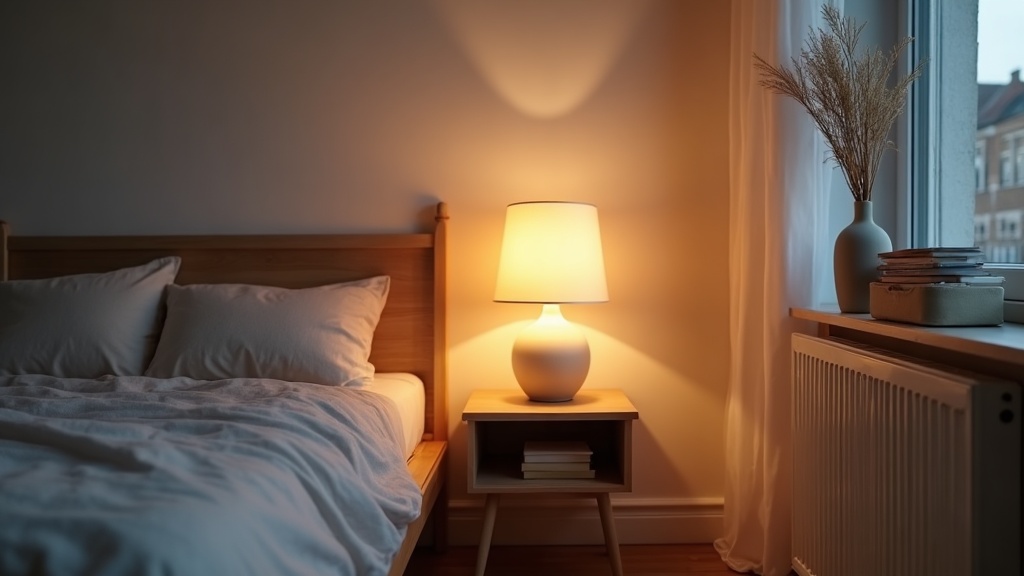
Most people buy a light bulb the way they buy a battery: grab the wattage, done. Then they wonder why their bedroom feels like a waiting room at 9pm.
Getting bedroom lighting right is less about hitting a number and more about understanding what kind of light a room actually needs, and when. Here is how to think about it clearly.
Key points at a glance
- A bedroom needs roughly 10 to 20 lumens per square foot for comfortable ambient light.
- Layering three types of light (ambient, task, accent) makes a room feel considered, not just lit.
- Colour temperature matters as much as brightness: stay at or below 2700K for the bedroom.
- Most bedrooms need at least three separate light sources to feel balanced.
- You can achieve great bedroom lighting without touching a single wire.
What good bedroom lighting actually gives you
The Number People Search For (And Why It Only Gets You Halfway)
People search for a single number. A definitive answer. The truth is, there is one, but context is everything.
A bedroom is not an office. You are not trying to read a spreadsheet. You are reading, resting, waking up slowly. The goal is control, not raw brightness.
Lumens Per Square Foot: The Baseline for a Bedroom
The standard starting point is 10 to 20 lumens per square foot for bedroom ambient lighting. That is lower than a kitchen (30 to 40) or a home office (50+), and intentionally so.
A 150 square foot bedroom, fairly typical, wants somewhere between 1,500 and 3,000 lumens of total light output from all sources combined. Not from one ceiling fixture. From everything in the room.
Why Lux, Lumens, and Watts Are Not the Same Thing
Lumens measure total light output from a bulb. Lux measures how much of that light actually lands on a surface. Watts measure energy consumed, not brightness.
A 60W incandescent and a 9W LED can produce almost the same lumens. The LED just does it more efficiently. When buying bulbs, ignore watts. Read the lumen figure on the box.
Did you know?
The EU phased out the sale of most incandescent bulbs by 2012. Today, a standard LED bulb produces around 800 lumens at just 8 to 9 watts, the same output that once required a 60-watt incandescent. Reading watts as a brightness guide is now genuinely obsolete.
The Three-Layer Rule: Ambient, Task, and Accent Light
One overhead light does one thing: it illuminates a space flatly. That is fine for a hallway. A bedroom deserves more nuance.
Ambient light
This is your base layer. A ceiling fixture, a pendant, a flush mount. It fills the room with general, diffused light. Aim for the lower end of your lumen target here.
Task light
This is the light you actually use. Reading in bed, getting dressed, applying make-up. A bedside lamp is the most common form. Bedside lamp lumens should sit between 400 and 800 for comfortable reading without eye strain.
Accent light
Not strictly necessary, but it changes a room's character entirely. A small table lamp in a corner, a strip of warm light behind a headboard, a candle-like wall sconce. These are not about brightness. They are about depth.
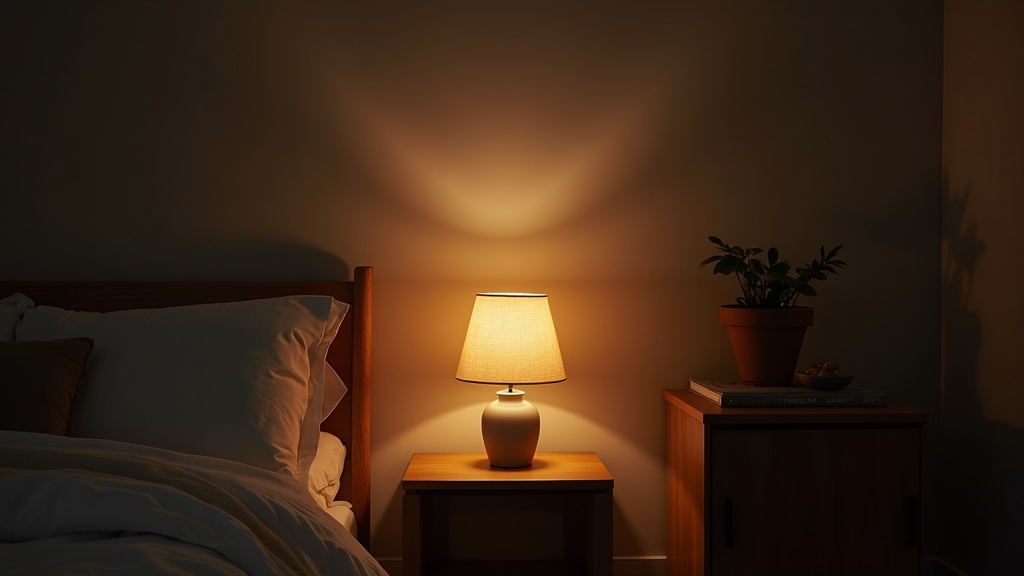
How Many Light Sources Does a Bedroom Actually Need?
The short answer: at least three. One ambient source, one or two bedside lamps, and one accent source.
- Small bedroom under 100 sq ft: two sources minimum (one ambient, one task)
- Standard bedroom 100 to 180 sq ft: three to four sources
- Large bedroom over 180 sq ft: four to five, including a second ambient source or floor lamp
More sources at lower individual brightness beats one source trying to do everything. Spread the light; don't concentrate it.
Colour Temperature Matters More Than Brightness
Colour temperature is measured in Kelvin. Lower numbers are warmer and more amber. Higher numbers are cooler and bluer.
For a bedroom, 2200K to 2700K is the target. That range mimics candlelight and late-afternoon sun. It signals to your body that the day is winding down, which matters for melatonin production and sleep quality.
Anything above 3000K in a bedroom starts to feel clinical. Above 4000K and you are actively working against restful sleep.
Did you know?
Research from Harvard Medical School found that blue-enriched light (above 4000K) suppresses melatonin roughly twice as much as warm amber light. Swapping your bedroom bulbs to 2700K costs almost nothing and can meaningfully improve how quickly you fall asleep.
Quick Calculator: Matching Light Output to Your Room Size
| Room Size | Total Lumens Needed | Suggested Sources |
|---|---|---|
| Under 80 sq ft | 800 to 1,600 lumens | 1 ambient + 1 bedside |
| 80 to 130 sq ft | 1,600 to 2,600 lumens | 1 ambient + 2 bedside + 1 accent |
| 130 to 180 sq ft | 2,600 to 3,600 lumens | 1 to 2 ambient + 2 bedside + 1 to 2 accent |
| Over 180 sq ft | 3,600 to 5,000 lumens | 2 ambient + 2 bedside + 2 to 3 accent |
These are starting points, not rules carved in stone. A room with dark walls absorbs more light and needs to sit at the higher end. A white room with a low ceiling and a mirror can get away with less.
Common Mistakes That Make a Bedroom Feel Wrong
- One overhead light, nothing else. It creates flat, unflattering light with no depth.
- Bulbs above 3000K. They look fine in the shop. They feel wrong at 10pm in a bedroom.
- Bedside lamps that are too dim. Under 400 lumens strains your eyes when reading. You end up using the overhead anyway.
- No dimmer switch. Being able to drop the ambient light to 30% costs very little and changes everything.
- Lamps placed too high. A bedside lamp shade should sit roughly at shoulder height when you are sitting up in bed.
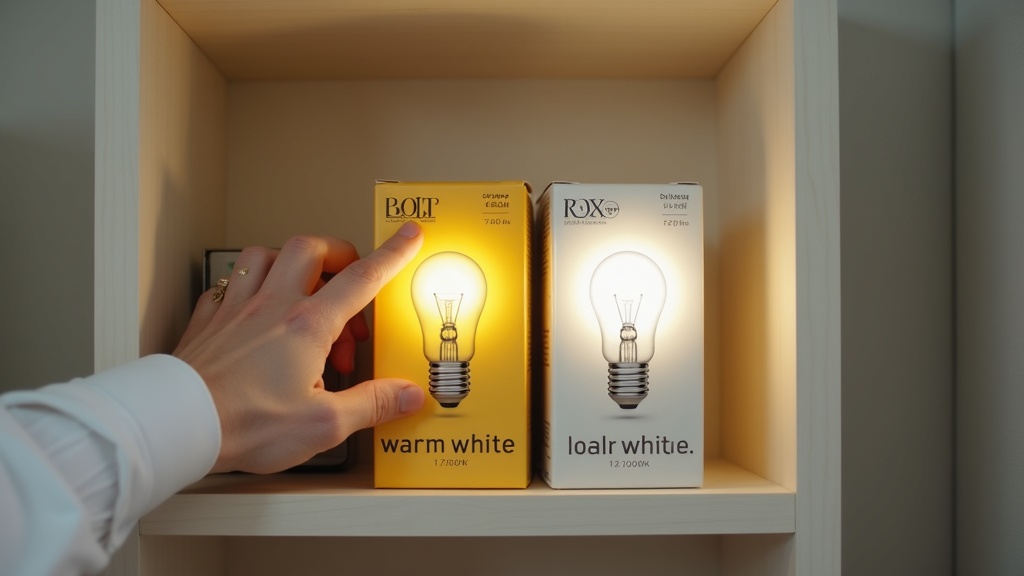
Bedroom Lighting Without Rewiring
Good news: almost everything here requires zero electrical work. Plug-in wall sconces, battery-operated LED strip lights, smart bulbs with adjustable colour temperature, floor lamps, table lamps. All of it works without touching a single wire.
A smart bulb in a bedside lamp, set to dim automatically at 9pm, does more for sleep quality than most wellness products at a fraction of the cost.
Lagom Lighting: The Just-Enough Approach to a Restful Room
The Swedish concept of lagom means not too much, not too little. Exactly right. It applies to bedroom lighting better than almost anything else in interior design.
You do not need a lighting consultant. You do not need a renovation. You need to think in layers, choose warm bulbs, spread your sources, and resist the urge to over-light.
Good lighting doesn't announce itself. It settles into the room and changes how it feels. That is what you are aiming for. A bedroom that holds you gently at the end of the day, not one that keeps you wide awake.
Start with your lumen target. Add a warm bulb to every lamp you already own. Then, one by one, add sources until the room feels right. You will know when it does.


