
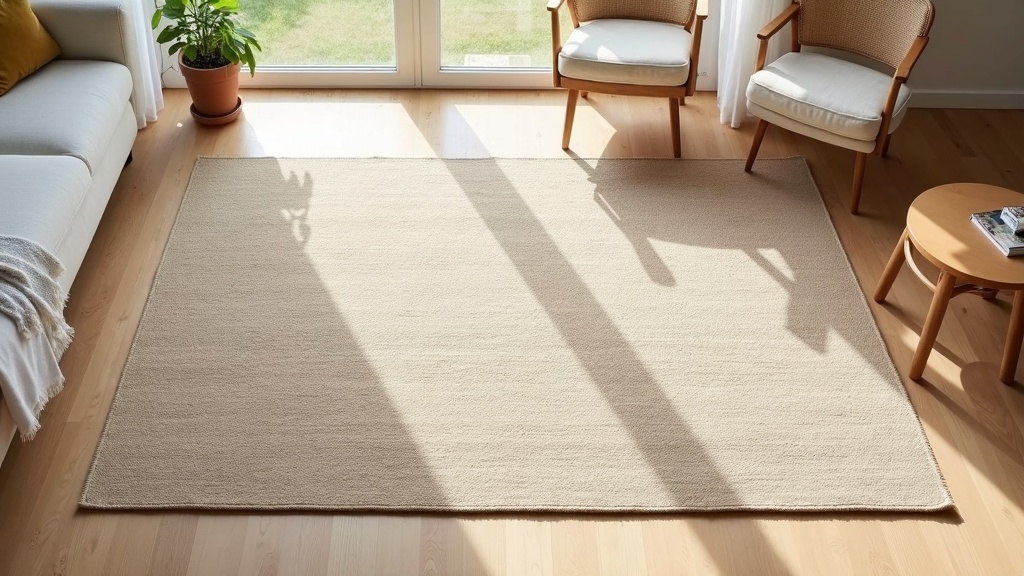
Most people choose a rug the way they choose a throw pillow: by color, by texture, by what looks good in a photo. Then it arrives, gets unrolled, and feels oddly small. The sofa floats. The room feels unsettled. The rug becomes an afterthought instead of a foundation.
Size is not a detail. It is the decision. Get it right, and the room holds together without effort. Get it wrong, and no amount of styling fixes the imbalance.
Key points at a glance
- Measure your room and map your furniture layout before choosing any rug.
- In a living room, all front legs on the rug is the reliable minimum. All four legs is the ideal.
- A queen bed needs at least a 8×10 ft rug, with 18, 24 inches of rug visible on each side.
- Dining rugs should extend at least 24 inches beyond every chair, chairs pulled out.
- In small or open-plan spaces, one defined rug per zone creates order without walls.
- A rug that is too small almost always looks like a mistake. When in doubt, go larger.
What a well-sized rug actually does
Why rug size shapes a room more than style does
A beautiful rug in the wrong size creates friction. The eye senses something is off before the mind names it. Scale, proportion, and the amount of bare floor left visible all affect how a room feels to be inside.
Pattern, color, and pile texture matter, but they operate on the surface. Size operates on the structure of the room. It changes perceived proportions, warmth, and the sense that furniture belongs together.
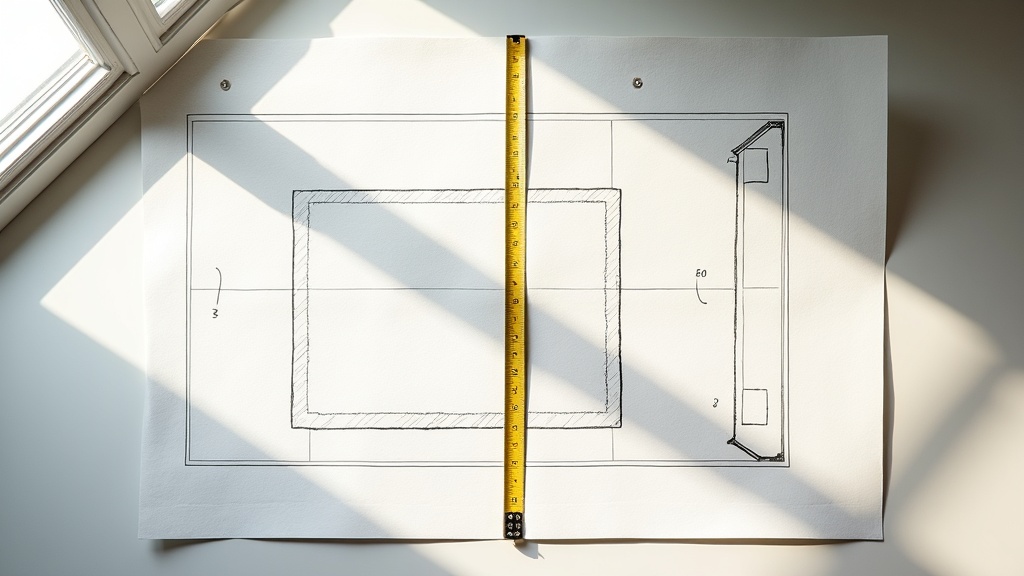
The one measurement to take before you buy anything
Measure your room, then subtract. Leave 12 to 18 inches of bare floor between the rug edge and the wall on all sides. That border grounds the rug visually and stops the space from feeling wall-to-wall carpeted.
In smaller rooms, 8 inches of border is acceptable. The border is what gives a rug room to breathe.
The painter's tape method
Before you buy, use painter's tape on the floor to mark the rug dimensions you are considering. Live with it for a day. Walk around it. Sit in your usual spot. This one step eliminates almost all size regrets.
Did you know?
Studies on spatial perception consistently show that people overestimate how large a rug will look on the floor. The standard recommendation from interior designers is to always order one size up from your first instinct. A rug that seems large on a product page almost always looks right, or even modest, once it is on the floor.
Living room rugs: finding the size that grounds the space
The living room has three reliable configurations, and knowing which one fits your space saves guesswork.
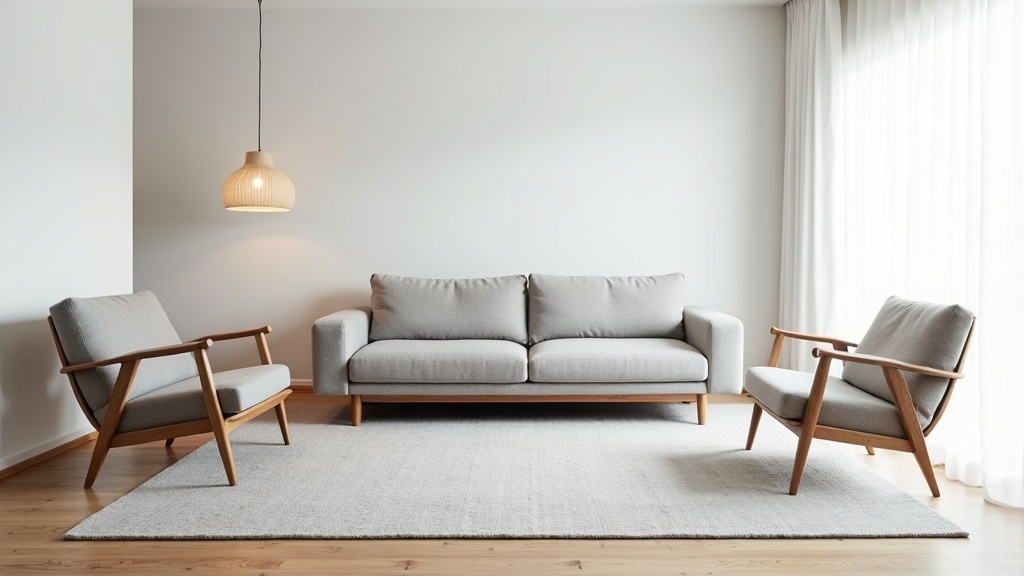
- All four legs on: Every piece of furniture sits fully on the rug. Best for larger rooms. The seating group feels unified and settled.
- Front legs on: Only the front legs of sofas and chairs touch the rug. Works well in mid-size rooms and is the most common approach. It still visually connects the furniture.
- All legs off: The rug sits in the center of the seating group, untouched. This only works with a coffee table on top, and only when the rug is large enough that it still reaches toward the furniture.
For most living rooms, a 9×12 ft rug is the workhorse size. It works for rooms roughly 12×15 ft or larger. Smaller rooms often fit an 8×10 ft. Anything under 5×8 ft in a living room tends to look like a bath mat.
Sectional sofas, floating furniture, and other living room complications
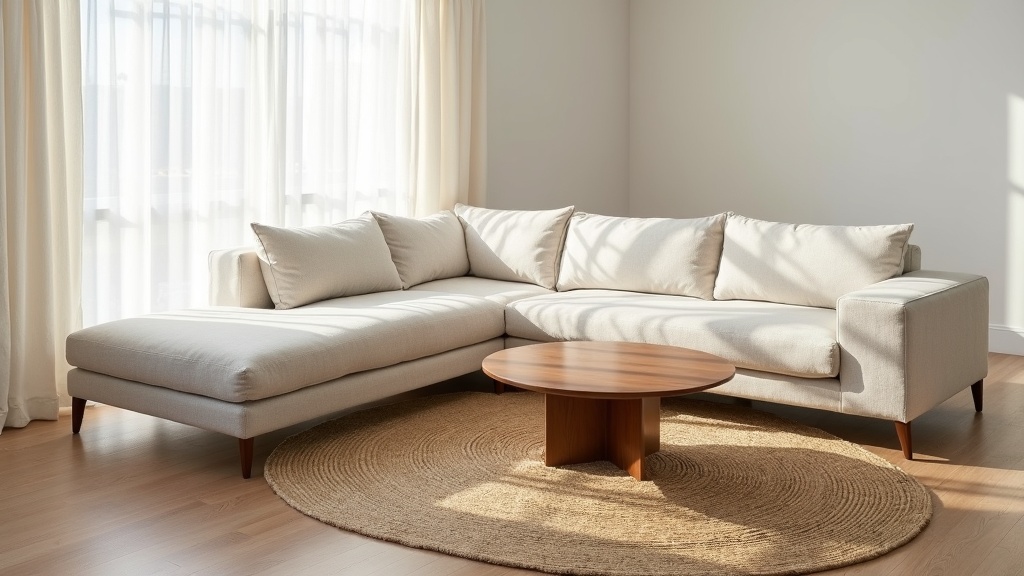
A sectional changes the equation. The rug needs to anchor the whole L-shape, not just one arm of it. For a rug size for a living room with a sectional, a 9×12 ft or 10×14 ft is usually the minimum.
The inner corner of the sectional should sit on the rug. If it does not, the sofa floats away from the space instead of belonging to it.
Bedroom rugs: how much floor should actually show
The bedroom rug has one job: soft floor underfoot when you step out of bed. That means the rug must extend at least 18 to 24 inches beyond the sides and foot of the bed.
For a queen bed (60×80 inches), an 8×10 ft rug is the practical minimum. A 9×12 ft gives more generous coverage and works better in rooms above 12 ft wide. Sliding the rug partially under the bed is correct and intentional. About two-thirds of the rug should disappear beneath the bed frame.
How to choose rug size for a bedroom with a king bed
A king bed (76×80 inches) needs a 9×12 ft at minimum. In a generous primary bedroom, a 10×14 ft feels considered and calm. Nightstands can sit on the rug or off, both work.
| Bed Size | Minimum Rug Size | Ideal Rug Size |
|---|---|---|
| Twin (38×75") | 5×8 ft | 6×9 ft |
| Full (54×75") | 6×9 ft | 8×10 ft |
| Queen (60×80") | 8×10 ft | 9×12 ft |
| King (76×80") | 9×12 ft | 10×14 ft |
| California King (72×84") | 9×12 ft | 10×14 ft |
Dining rooms: the rule most people get wrong
The mistake is sizing the rug to the table alone. The rug needs to accommodate the chairs, pulled out. A standard dining chair needs about 20 inches of clearance when pulled back. Add that to all four sides of the table.
A 36×72-inch dining table needs a rug at least 8×10 ft. Round tables often work well with a large round rug, 8 ft in diameter minimum. If a chair leg catches the rug edge every time someone sits down, the rug is too small.
Did you know?
A low-pile or flatweave rug is almost always preferable under a dining table. High-pile rugs make chairs harder to pull out and trap food debris more readily. Natural fibers like wool or sisal clean more easily than synthetics in high-traffic dining areas.
Smaller spaces: entryways, home offices, and apartments
Entryways are often measured too generously. A runner of 2×6 ft or 2×8 ft works well in a narrow hall. In a square entry, a 4×6 ft gives a clear landing zone without crowding the door swing.
For apartment rug sizing, the instinct to go small to save space usually backfires. A 5×8 ft rug in a small living room looks like it wandered in from another room. An 8×10 ft, even in a compact apartment, makes the space feel more intentional. Bigger grounds. Smaller fragments.
In a home office, a rug under the desk should allow the chair to roll freely on it. A 6×9 ft works for most desk setups. A chair mat on top is optional but protects pile in high-traffic rolling zones.
When two rugs share an open-plan space
Open-plan rooms need visual boundaries. Two rugs can coexist if they are clearly separated with bare floor between them, at least 12 to 18 inches of gap. That gap is what signals two distinct zones.
They do not need to match. They do need to relate, either in tone, fiber type, or weight. A jute and a wool in similar warmth levels read as a considered pair. A bold geometric next to a second bold geometric creates competition, not calm.
If both rugs are the same size in an open-plan space, the eye reads them as repetition rather than zoning. Vary the size. Let the living area rug be larger. Let the reading nook rug be smaller and slightly different in character.
Before you commit: a practical checklist
These questions take two minutes and prevent most regrets.
- Have you measured the room and subtracted for the floor border on all sides?
- Have you taped the size on the floor and sat with it for at least a few hours?
- Does the rug reach under at least the front legs of every key piece of furniture?
- In the bedroom, will there be 18 to 24 inches of rug visible on both sides of the bed?
- In the dining room, will the chairs stay on the rug when pulled out?
- Is the pile height appropriate for the room's traffic and function?
- Have you checked the rug's return policy before ordering?
The best rug is one you stop noticing after a week because it simply belongs. It holds the furniture together, softens the light that falls across it in the late afternoon, and makes the room feel finished in a way that is hard to articulate but immediately felt. Size is what gets you there. Everything else is preference.


