
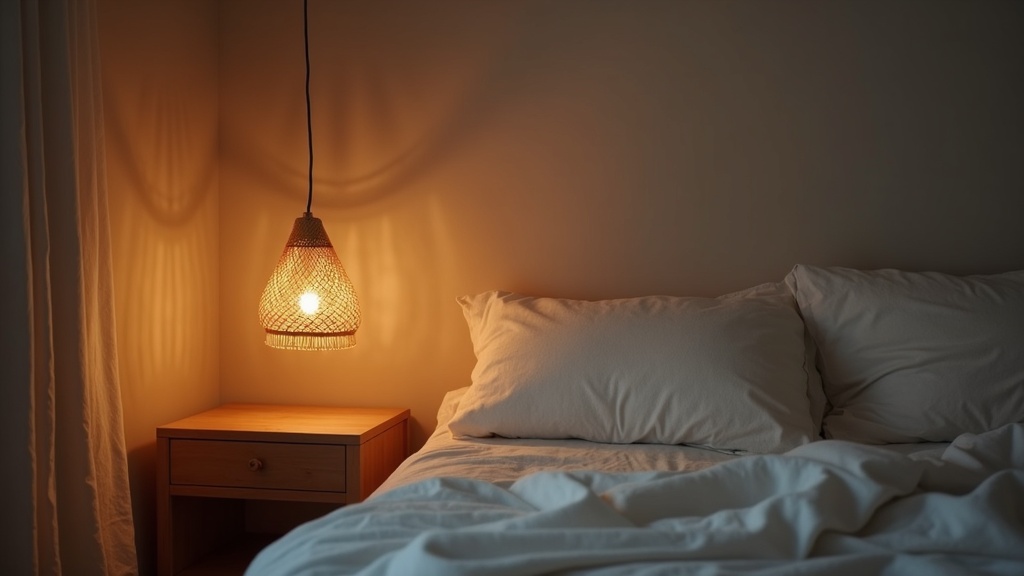
Most bedrooms have one light. A ceiling fixture, usually too harsh, often too central. You switch it on and the room feels like a waiting room. You switch it off and you can't see anything. There is a better way, and it doesn't require an electrician.
Layered lighting means building a room from multiple light sources, each doing a different job. Done right, you stop noticing the lights and start noticing how good the room feels.
Key points at a glance
- Good bedroom lighting uses three distinct layers: ambient, task, and accent.
- A single overhead light is rarely enough, and often works against the mood you want.
- Bulb temperature matters more than wattage: 2700K creates warmth, 4000K creates alertness.
- You can layer lighting without rewiring, using plug-in pendants, floor lamps, and dimmers.
- The 3-source rule is a practical starting point for any bedroom size.
- Natural light counts as a layer too, and deserves as much thought as artificial sources.
What layered lighting gives you
Why most bedrooms get lighting wrong
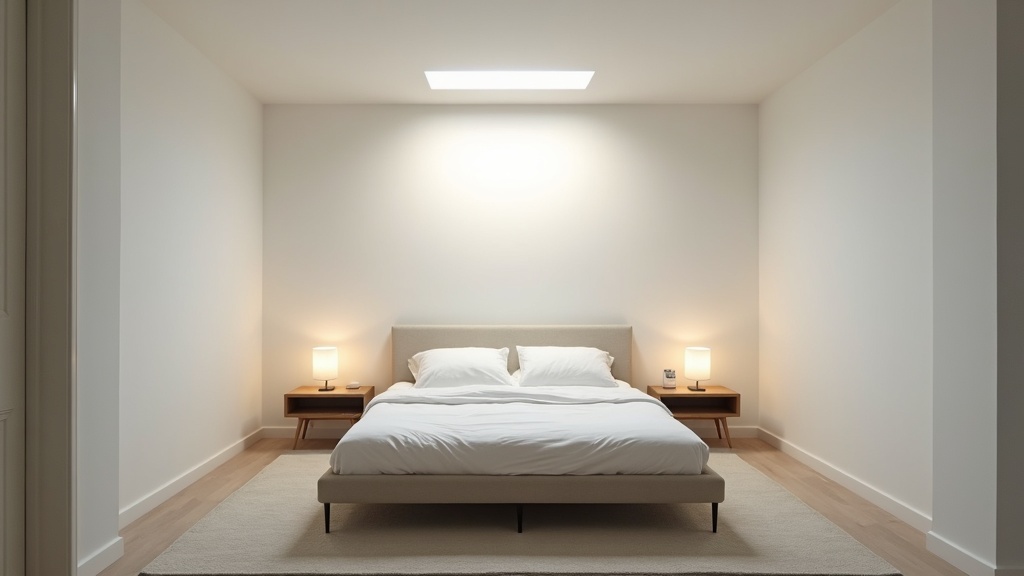
The default approach is one overhead light, often a central ceiling fixture chosen more for its looks than its function. It floods the room evenly, casts flat shadows, and makes everything feel equally, uninvitingly bright.
Flat light flattens a room. It removes the texture from textiles, the depth from walls, the sense that a space has been considered. It also works against sleep: high-intensity overhead light suppresses melatonin, the hormone that signals your body it's time to rest.
The fix isn't more light. It's more considered light.
The three core layers: ambient, task, and accent
Every well-lit room, bedroom or otherwise, draws from three types of light. They work together. Remove one and the whole system loses balance.
Ambient light
This is your base layer. It fills the room with a general, soft glow. Think of it as daylight's stand-in after dark: present but not demanding attention.
Task light
Directed and purposeful. A bedside lamp for reading. A wall sconce above a vanity. A floor lamp angled toward a chair. Task lighting lives where you actually do things.
Accent light
The layer most people skip entirely. Accent lighting adds depth, highlights a texture, traces the edge of a headboard, or pools softly in a corner. It doesn't need to be useful. It needs to make the room feel alive.
Did you know?
Exposure to light above 200 lux in the hour before bed can delay melatonin onset by up to 90 minutes, according to research from Harvard Medical School. A dimmed bedside lamp typically emits 20 to 50 lux. That difference matters far more than most sleep supplements.
Start with ambient: setting the base mood
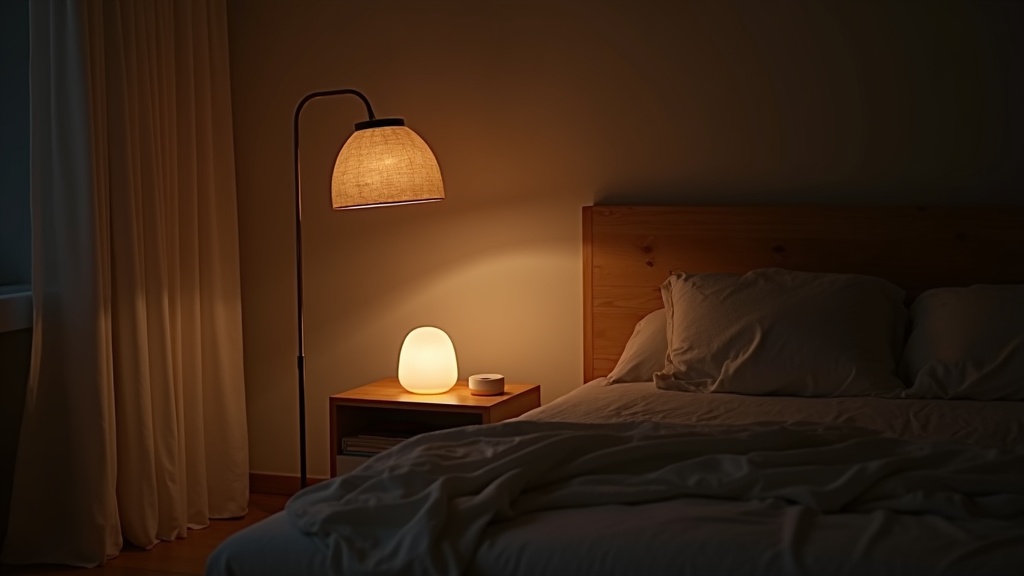
Ambient light doesn't have to come from the ceiling. A large floor lamp with a linen shade, a plug-in pendant hanging in a corner, a wall-mounted uplighter: all of these diffuse light softly through a room without the clinical feel of a bare overhead bulb.
The goal is glow, not glare. You want light that touches the ceiling and the upper walls, making the room feel larger and calmer. A shade that diffuses upward as well as outward does this quietly.
If you do use a ceiling fixture, fit it with a dimmer. Being able to bring it down to 30% in the evening changes the entire character of the room.
Add task lighting where it actually gets used
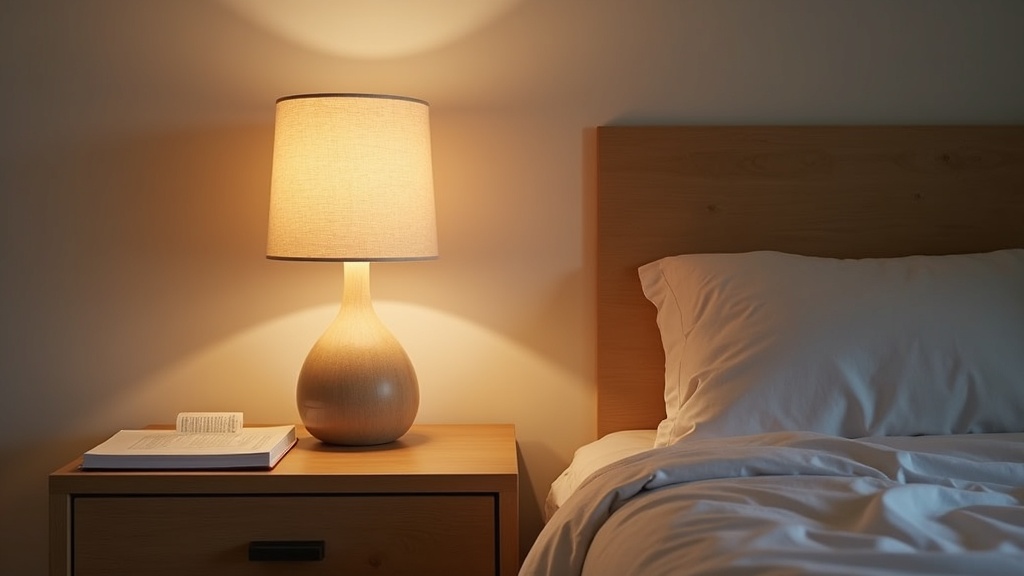
Bedside lighting is the most important task layer in a bedroom. Most people underestimate how much it matters. A lamp that's too tall, too bright, or positioned too far from the pillow turns reading into a squint.
The ideal bedside lamp places the bottom of the shade at roughly shoulder height when you're sitting up in bed. This directs light onto the page without shining into your eyes or disturbing a sleeping partner.
- Wall-mounted swing-arm sconces keep the nightstand clear and allow precise positioning.
- Clip-on reading lights are a practical solution in rented spaces or small rooms.
- Asymmetric bedside setups (one reader, one non-reader) work well with individually switched lamps.
Accent light as the layer most people skip
This is where a bedroom stops being functional and starts being felt. Accent lighting draws the eye, creates shadow, and gives a room its character after dark.
It could be a small LED strip tucked behind a headboard, casting a warm band of light against the wall. A candle-height table lamp on a low shelf. A battery-powered puck light inside a glass-fronted wardrobe. None of these illuminate the room. All of them change how it feels.
Accent light is the lagom layer. A little is everything. Too much becomes performance. The point is depth, not drama.
The 3-source rule (and when to break it)
A practical starting point: every well-lit room needs at least three light sources. One ambient, one task, one accent. Three sources mean you can always mix and match, turning off the overhead and keeping just the bedside lamps and a low shelf light for a completely different atmosphere.
When to break it: large bedrooms, or rooms with distinct zones (a reading chair, a dressing area, a desk), may need four or five sources. The principle stays the same. Each source has a role. None of them repeat each other's job.
| Light Source | Layer | Best Position | Key Benefit |
|---|---|---|---|
| Ceiling pendant (dimmer) | Ambient | Centre or off-centre above bed | General fill light, adjustable mood |
| Floor lamp (linen shade) | Ambient | Corner or beside a chair | Soft upward glow, no rewiring needed |
| Bedside table lamp | Task | Shoulder height at pillow level | Directed reading light |
| Wall swing-arm sconce | Task | Mounted above nightstand | Adjustable angle, frees surface space |
| LED strip behind headboard | Accent | Rear edge of headboard | Warm halo, architectural depth |
| Small shelf or cabinet lamp | Accent | Low surface, opposite the bed | Mood anchor, visual balance |
Bulb temperature and why 2700K changes everything
Colour temperature is measured in Kelvin. The lower the number, the warmer and more amber the light. The higher the number, the cooler and bluer it becomes.
2700K is the standard for bedrooms. It reads as warm, intimate, and close to candlelight. It doesn't trigger the same alertness response as daylight-spectrum bulbs. It makes skin tones look better. It makes a room feel like somewhere you want to stay.
3000K works too, particularly if you want a slightly crisper feel without losing warmth. Anything above 3500K belongs in a kitchen or bathroom, not a bedroom.
Did you know?
The colour rendering index (CRI) of a bulb tells you how accurately it shows the true colours of objects in the room. A CRI above 90 makes textiles, wood, and skin tones look noticeably richer. Most cheap LED bulbs sit around CRI 80. The difference on a linen duvet or a warm oak floor is immediately visible.
How to layer bedroom lighting without rewiring
You don't need to touch a single wire. Most layered bedroom setups are built entirely from plug-in or battery-powered sources.
- Plug-in pendant lights hang from a hook in the ceiling and plug into a wall socket. No electrician, genuine pendant effect.
- Smart bulbs in existing fixtures let you dim and warm the light from your phone, even if the fixture itself has no dimmer switch.
- Battery-operated LED strip lights work behind headboards, under beds, or inside shelving units with zero installation.
- Rechargeable table lamps (cordless) can sit anywhere in the room without dictating where you place the furniture.
The Scandinavian approach leans heavily on many small sources rather than one large one. A cluster of four modest lamps at different heights does more for a bedroom than one statement chandelier and nothing else.
How to light a bedroom naturally
Natural light is the first layer, and it's free. The way morning light enters the room, how it moves across the floor through the day, where it pools in the afternoon: all of this shapes how the bedroom feels before a single switch is flipped.
Sheer curtains instead of blackout allow diffused morning light to fill the room gradually. Warm-toned walls (ivory, sand, pale terracotta) reflect natural light in a way that cold whites never do. Mirrors placed to catch and redirect daylight extend the effect further into the room.
If the room faces north or gets little direct sun, warm-temperature artificial light becomes even more important. The goal is always the same: a room that feels like it's bathed in the right kind of light, whatever the hour.
A simple lighting checklist for your bedroom
Use this as a starting point. You don't need everything at once. Add one source at a time and see what the room needs next.
- ✦ Ambient layer: at least one diffused light source that fills the room softly (floor lamp, ceiling pendant on a dimmer, or wall uplighter)
- ✦ Task layer: individual bedside lighting at shoulder height, separately switched for each side of the bed
- ✦ Accent layer: one small, low light source that creates depth (shelf lamp, LED strip behind headboard, or a single candle-height lamp)
- ✦ Bulb temperature: all sources at 2700K or 3000K, consistent across the room
- ✦ Dimming: at least one source on a dimmer or smart bulb for evening wind-down
- ✦ Natural light: sheer or semi-sheer window treatments to diffuse daylight without losing it
- ✦ CRI: bulbs rated 90+ wherever you care about colour accuracy
Good lighting doesn't announce itself. It settles into the room and changes how it feels. Build the layers slowly, live with each one, and adjust. The room will tell you when it's right.


