
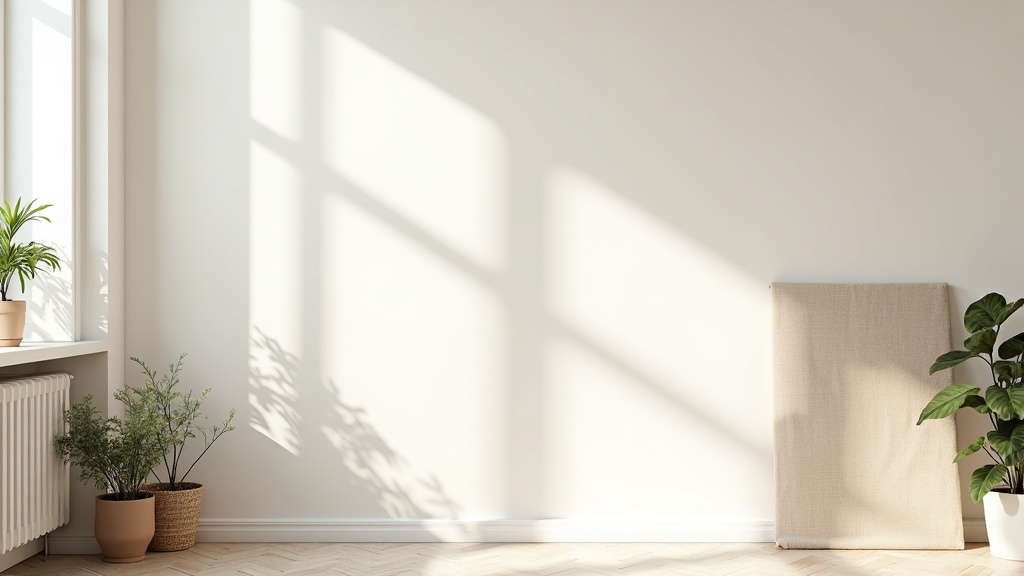
Your landlord owns the walls. You own how they feel. That distinction matters more than most renters realise, because the gap between a flat that looks rented and one that looks lived-in has almost nothing to do with nails.
The right renter friendly wall decor ideas don't compromise. They work with paint, plaster, and the rules, and they still manage to make a room feel like yours.
Key points at a glance
- Command strips and adhesive hooks work well, but surface prep and weight limits are everything.
- Peel-and-stick wallpaper transforms a room when applied to smooth, painted walls, and peels off cleanly.
- Leaning, propping, and layering art removes the wall equation entirely.
- Textiles hung from dowels or curtain rods add warmth and texture without a single pin.
- Mirrors and shelves add visual weight and function with minimal anchor points.
- Photographing your walls before and after protects your deposit.
What you get from this guide
Why Rental Walls Are Actually an Interesting Design Constraint
Constraints focus the eye. When you can't pin everything up or repaint on a whim, you make more deliberate choices. The result is often a room that feels calmer, more considered, and less cluttered than one where anything goes.
Think of it as lagom applied to walls. Not too much, not too little. Just enough, done well.
The Adhesive Hierarchy: Which Products Hold, Which Peel Clean
Not all renter friendly wall adhesive products are equal. The difference between a clean peel and a stripped patch of paint usually comes down to three things: surface texture, weight, and how long the strip has been on the wall.
The basics
- Command strips (3M): the standard. Reliable up to their stated weight limit. Always stretch-release slowly at 45 degrees, never pull straight off.
- Monkey hooks: thin wire hooks that slide into drywall and leave a pinhole, not a gouge. Technically a small puncture, but one most landlords overlook.
- Adhesive putty (Blu-Tack type): fine for lightweight paper prints. Can leave grease marks on flat paint after months. Test a hidden spot first.
- Double-sided mounting tape: strong, but often too strong. Hard to remove cleanly from painted plaster. Use only on very smooth surfaces and check the removal instructions before committing.
Did you know?
3M recommends waiting at least one hour after application before hanging anything on a Command strip, and at least 24 hours in high-humidity rooms like kitchens or bathrooms. Temperature below 15°C significantly reduces adhesion, which matters in poorly heated rentals in winter.
| Product | Best for | Removal risk | Weight limit |
|---|---|---|---|
| Command strips | Frames, mirrors, small shelves | Low if removed correctly | Up to 7.2 kg (large strips) |
| Adhesive putty | Lightweight paper prints | Medium (grease on flat paint) | Under 200 g |
| Monkey hooks | Drywall, heavier frames | Pinhole only | Up to 11 kg |
| Peel-and-stick wallpaper | Accent walls, smooth surfaces | Low on eggshell/satin paint | N/A (surface coverage) |
| Double-sided tape | Tiles, glass, very smooth walls | High on painted plaster | Varies widely |
Art Without Nails: Framing and Hanging That Leaves No Trace
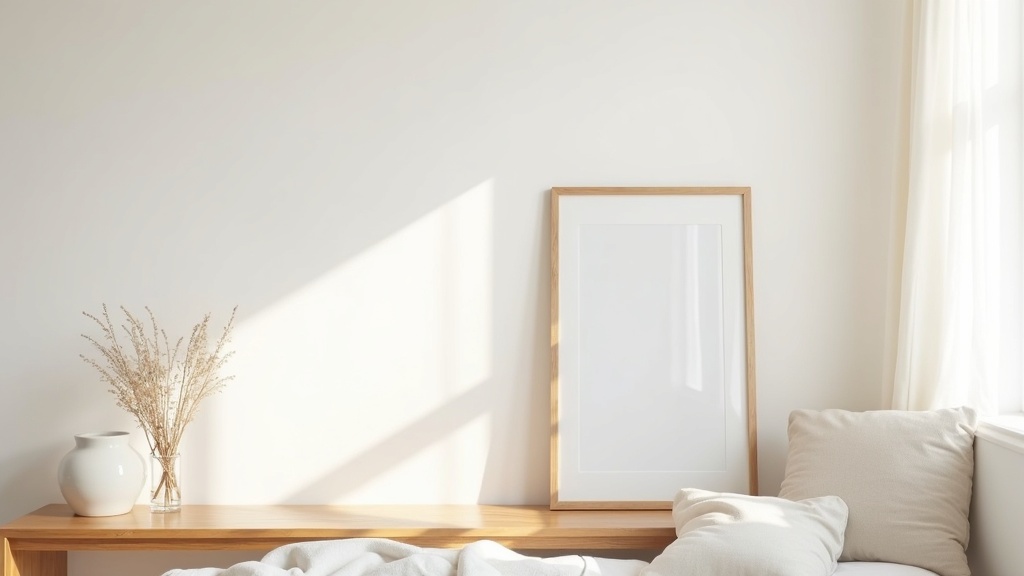
Renter friendly wall frames solve a real problem: most art looks best at a precise height, and achieving that without a nail feels awkward. It doesn't have to be.
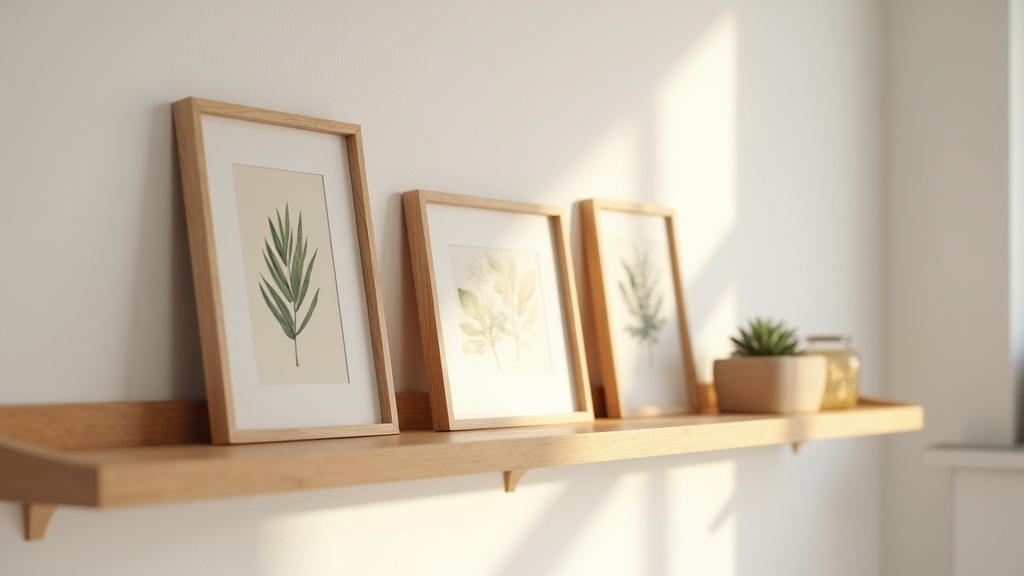
A frame rail, also called a picture ledge, sits on a single adhesive bracket and holds multiple frames at once. Swap art in and out without touching the wall again.
Three formats that work without nails
- Picture ledges mounted with Command large utility strips. One ledge, many frames, endlessly rearrangeable.
- Clip frames (no glass edge frame) hung with a single Command poster strip. Light and flat against the wall.
- Oversized prints in simple frames leaned against the wall on a shelf or the floor. The lean is a choice, not a workaround.
Peel-and-Stick Wallpaper: Where It Works and Where It Doesn't
Peel and stick wallpaper for rentals has improved dramatically. The good versions go up straight, don't bubble in the first week, and peel off without lifting paint, provided the paint beneath is in good condition and fully cured.
Where it works well: smooth walls painted with eggshell or satin finish. One accent wall behind a bed or sofa. A niche or alcove, where the edges are naturally hidden.
Where it struggles: textured walls (it won't adhere flat), freshly painted walls under 30 days old, and humid bathrooms unless the product is specifically rated for moisture.
Did you know?
Peel-and-stick wallpaper applied to a freshly painted wall (less than 28 to 30 days after painting) can chemically bond with the still-curing paint and pull it off on removal. Always check when the walls were last painted before you start, and test a small hidden patch first.
Leaning, Layering, and Propping: The No-Touch Approach
The most underused approach in apartment wall decor without nails is simply not touching the wall at all. Leaned art, propped objects, and layered shelves create depth and visual interest without a single fixing point.
- Lean a large canvas or framed print directly on the floor against the wall. Layer a smaller frame in front of it.
- A tall, slim ladder shelf against a wall holds plants, books, and objects at different heights. The wall reads as styled without anything attached to it.
- Prop a mirror on a mantelpiece or sideboard. It reflects light and doubles the visual space of whatever is in front of it.
Light as Decor: Candles, Sconces, and Clip-On Options
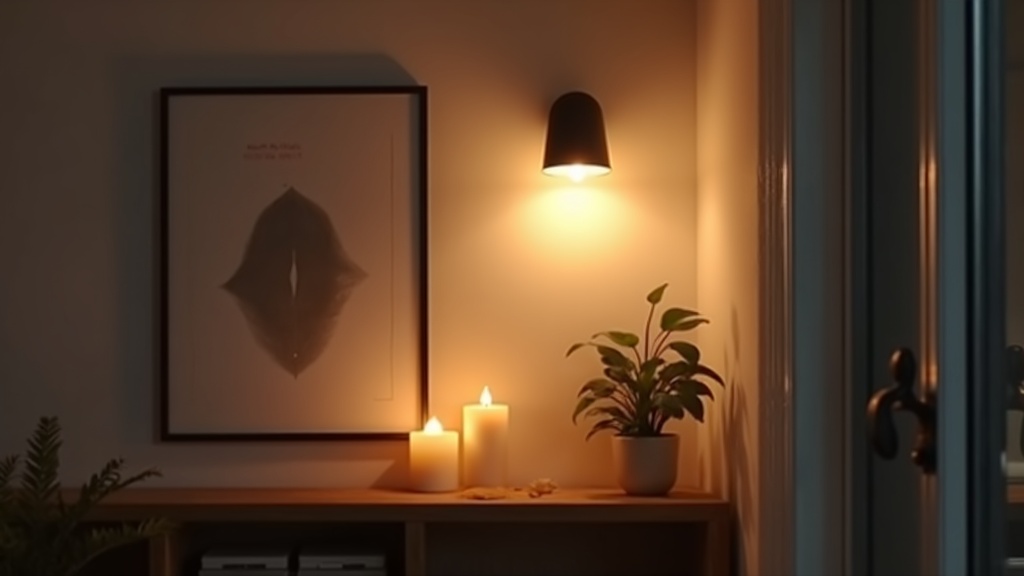
Good lighting doesn't announce itself. It settles into the room and changes how it feels. For renters, this is one of the most accessible tools, because it requires almost no wall contact at all.
Battery-powered sconces with adhesive backs now look genuinely good. Brands like VOLISUN or Lightess make arc-shaped wall sconces with warm-toned LEDs that sit on a removable adhesive plate. They change the atmosphere of a room in an evening.
Layered light sources to consider
- A plug-in pendant hung over a hook strip near the ceiling.
- String lights (warm white, not coloured) draped along a shelf or behind a translucent textile panel.
- A cluster of pillar candles on a low tray near a leaned mirror. The reflection multiplies the light without multiplying the candles.
Textiles on Walls: How to Hang Fabric Without Pins
Fabric softens a room in a way that framed art cannot. A large woven textile or linen panel absorbs sound, adds warmth, and fills a wall without weight.
The cleanest method: a wooden dowel or thin brass curtain rod, suspended from two Command large hooks. Feed the textile over the rod. The whole thing goes up in twenty minutes and comes down the same way.
Textiles that work well on walls
- Raw linen panels in natural or stone tones.
- Woven wall hangings on a dowel (these are also great DIY renter friendly wall decor projects).
- A vintage rug or kilim hung horizontally from a curtain rod. Heavy enough to need two strong Command hooks, but entirely removable.
Mirrors and Shelves: Visual Weight Without Structural Damage
A large mirror does two things: it reflects light and it makes a room feel larger. For renters, an oversized mirror leaned against a wall is one of the highest-impact, zero-damage moves available.
Floating shelves on Command strips are now rated for real weight, up to 2.7 kg on a single large strip. That's enough for a few small objects, a plant, and a candle. Keep the load honest and they stay put.
Removable wall decor ideas don't have to mean compromise. A well-placed shelf and a leaned mirror can do more for a room than a wall covered in pinned prints.
What to Photograph Before You Move Out (and Why It Matters)
This is the practical side that most guides skip. Document everything, and do it twice: once before you decorate, and once after you've taken everything down.
What to photograph
- Each wall, straight-on, in good daylight, before you put anything up.
- Any existing marks, holes, or scuffs that were there when you moved in.
- Each adhesive product you use: photograph the packaging, the stated weight limit, and the removal instructions.
- The wall after removal, showing it clean and undamaged.
Store these in a dated folder. If there is any dispute about the deposit, you have a clear record of the wall's condition before and after your tenancy.
Where to start
Pick one wall. The one you see first when you sit down, or the one that faces you in bed in the morning. That's the one that shapes how the room feels every day.
Start with light. Add one source at wall height, battery-powered or plug-in. Then lean something large: a frame, a mirror, a textile on a rod. Step back. See how much has changed before you've touched a single thing.
The walls are temporary. The feeling you build in them doesn't have to be.


