
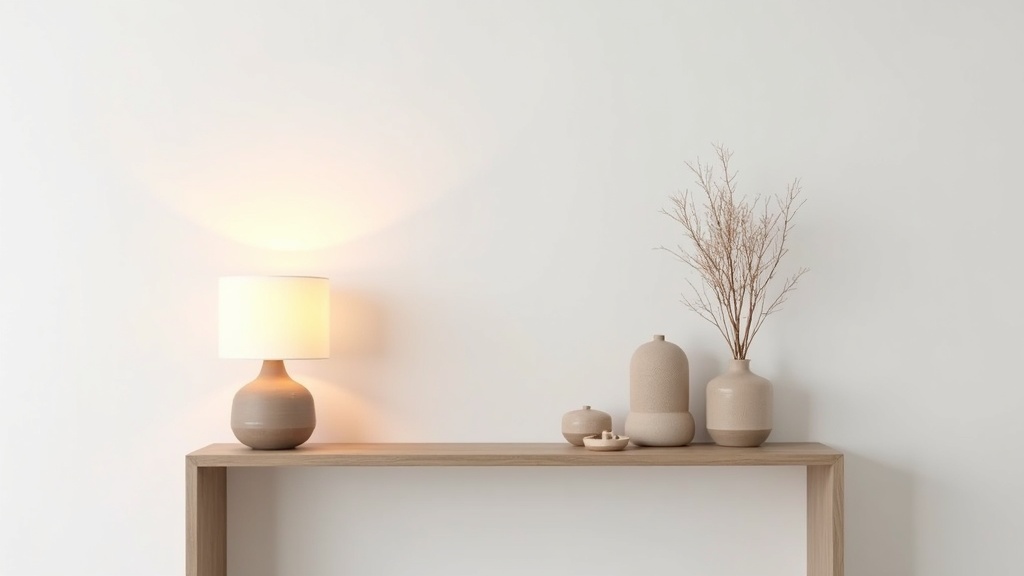
A console table is one of the first things you see when you walk through the door. It sets the tone for the whole house. Get it wrong and it looks cluttered. Get it right and it feels like someone who truly understands a space lives there.
The lamp is the anchor. Everything else arranges itself around it. This guide walks you through exactly how to style a console table with a table lamp, from proportions to placement to the quiet art of knowing when to stop.
Key points at a glance
- The lamp should stand between two-thirds and three-quarters the height of the table surface to the ceiling clearance above it.
- Place the lamp to one side, never dead center. Off-center creates visual breathing room.
- Layer three height levels around the lamp: tall, medium, and low. It stops the table looking flat.
- Negative space is part of the design. Leave at least one area of the table completely bare.
- Warm bulbs (2700K) shape mood. Cool bulbs (4000K) kill it.
- Every object on the table should earn its place. If you can't say why it's there, it probably shouldn't be.
What good console styling gives you
Why the lamp comes first
Good lighting doesn't announce itself. It settles into the room and changes how it feels. That's why the lamp is not just another object on the table. It is the starting point for every decision that follows.
The lamp defines the mood. A low, wide shade casts a soft pool of amber light and makes a space feel intimate. A taller, narrow lamp pushes light upward and creates height. Choose the lamp before anything else, and let the rest respond to it.
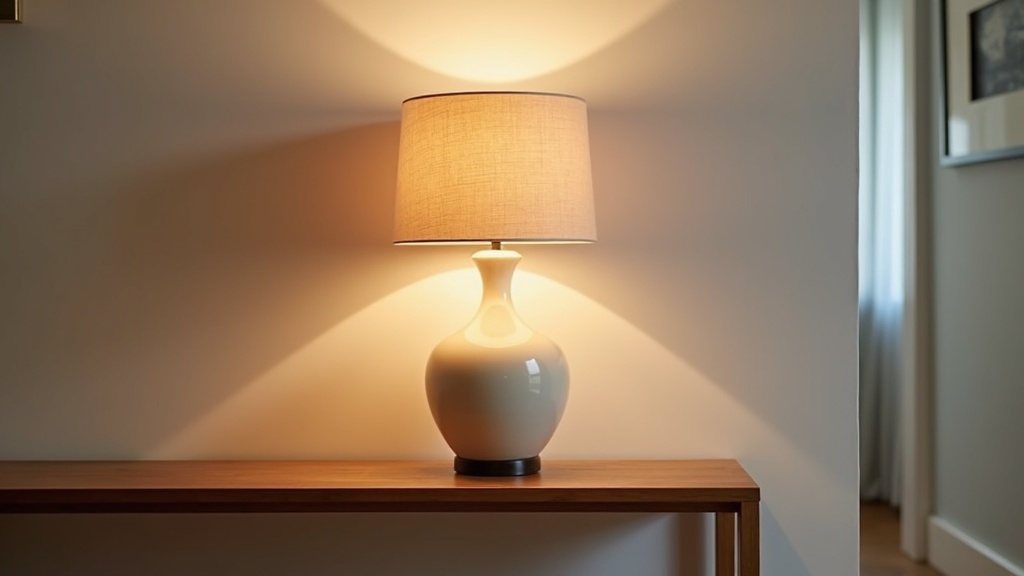
How big should a lamp be on a console table
Proportion is everything. A lamp that's too small disappears. One that's too large overwhelms the table and the room around it.
The general rule: the lamp, including its shade, should sit between 58 and 64 centimetres tall on a standard console table of around 80 centimetres height. That puts the shade roughly at eye level when you're standing, which is where light becomes flattering and functional at once.
For the shade width, aim for it to be no wider than one-third of the table's total length. On a 120cm table, a shade around 35 to 40cm across feels balanced without crowding the surface.
Did you know?
The colour temperature of a bulb changes how the entire room feels. A 2700K warm white bulb mimics candlelight and is widely considered the most flattering for living spaces. A 4000K cool white bulb, common in offices, creates a clinical effect that works against the relaxed atmosphere most hallways need.
| Console table length | Ideal lamp height | Max shade width |
|---|---|---|
| 90 cm | 55 to 60 cm | 28 to 32 cm |
| 120 cm | 58 to 64 cm | 35 to 40 cm |
| 140 cm | 60 to 68 cm | 38 to 44 cm |
| 160 cm or longer | 62 to 70 cm | 40 to 48 cm |
Where to place the lamp on the table
Never centered. A lamp placed exactly in the middle of a console table freezes the composition. It looks symmetrical in the wrong way, more like a shrine than a styled surface.
Place it one-third of the way in from one end. This gives you a dominant zone and a lighter zone, which is exactly the visual rhythm a long, narrow table needs. If there's a mirror above, the lamp can sit slightly toward the mirror's center of gravity, but still off the table's midpoint.
If you're working with two lamps for a larger console, treat them as bookends with strong objects between them. Keep the objects lower than the shades so the lamps retain visual authority.
How to layer around it: height, weight, and negative space
A well-styled console table reads in three levels: tall, medium, and low. The lamp is your tallest point. From there, you build downward.
- Tall: The lamp itself, or a tall vase or framed artwork leaning against the wall behind the table.
- Medium: A small sculptural object, a candle in a solid holder, a low plant, a stack of books standing upright.
- Low: A tray, a single smooth stone, a small ceramic dish, one sprig of dried botanicals laid flat.
Negative space is not empty space. It is part of the composition. Leave at least 30 percent of the table surface bare. That open area is what lets the eye rest and the styled parts breathe.
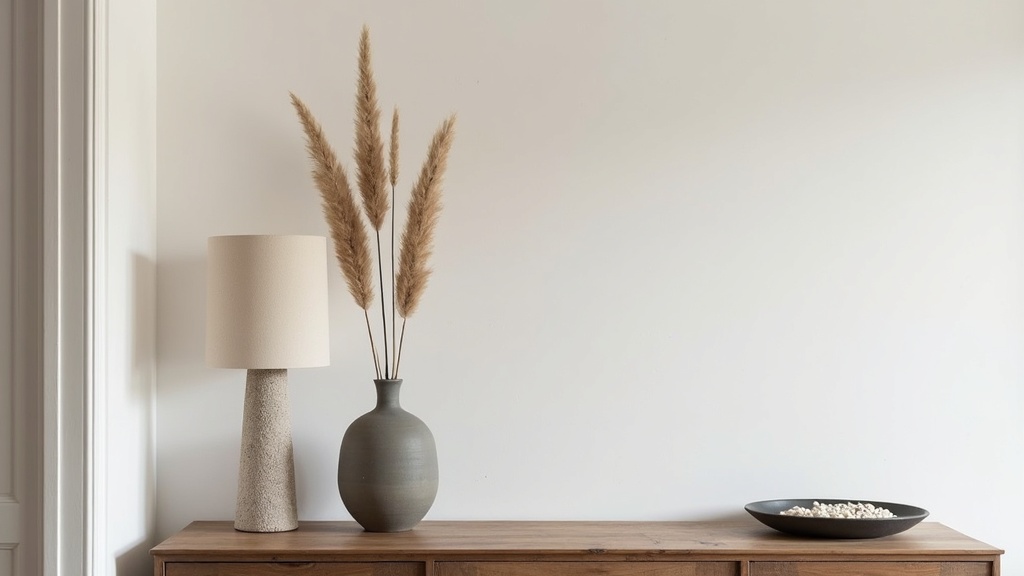
What to put next to a table lamp on a console
The objects beside the lamp should feel related, not random. Think about material, texture, and tone rather than theme.
A rough linen shade pairs well with matte ceramic, smooth stone, or raw wood. A glass lamp base wants something with weight beside it: a solid brass object, a dark glazed pot, a heavy book. Contrast in texture keeps the eye interested. Contrast in scale keeps the proportions honest.
A few combinations that consistently work:
- Ceramic lamp + small terracotta pot + a single dried branch in a bud vase
- Brass lamp + stacked art books + a low marble tray with one candle
- Linen shade lamp + woven basket tray + a smooth river stone and one small plant
- Sculptural concrete lamp + dark glazed vessel + a folded linen runner on the table surface
Did you know?
Interior stylists working for editorial shoots typically follow a rule of odd numbers: three or five objects always look more natural than two or four. The brain reads even numbers as deliberate and stiff. Odd groupings feel gathered, as if they arrived there over time.
The one rule every console table needs
Lagom. Not too much, not too little. Just enough, done well.
Every object on that table should earn its place. Ask yourself: does this add height, texture, warmth, or meaning? If the answer is no to all four, put it back. A console table that holds six well-chosen objects will always outperform one crowded with fifteen.
The best-styled surfaces are the ones where nothing feels forced. The lamp glows, the objects sit quietly, and the whole thing looks like it simply belongs there.
Common mistakes that kill the mood
- A bulb that's too bright or too cool. Even a beautiful lamp becomes harsh with the wrong bulb. Use warm white, 2700K, always.
- Objects all the same height. This flattens the composition completely. Vary the levels.
- The lamp centered on the table. It kills any sense of movement or rhythm.
- Too many materials. More than three material families (wood, ceramic, metal, for example) and the table starts to look like a market stall.
- No negative space. Every centimetre covered means nothing stands out.
- A shade that's too small for the base. The base and shade should feel like they belong to the same object, not two separate purchases.
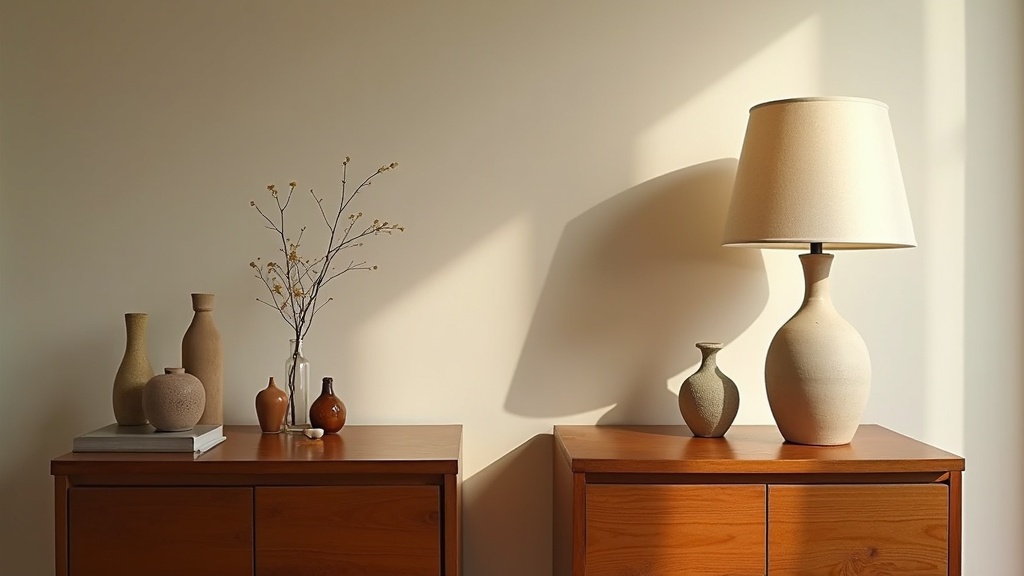
Three console table setups that actually work
Setup 1: The calm entryway
A slim 120cm oak console. On the left, a tall ceramic lamp with a linen drum shade. Center: a small stoneware vase with a single stem of eucalyptus. Right side: bare. A round tray with keys and a small candle sits just inside the lamp's glow. Total object count: four. Effect: immediate calm.
Setup 2: The art lover's table
A 140cm dark-stained console against a deep grey wall. A brass arc lamp on the far right casts light back toward the center. Three art books stacked flat in the middle, a smooth white ceramic sculpture on top. One framed print leaning against the wall at the left edge. Negative space to the far left. The lamp is the punctuation, not the subject.
Setup 3: The nature-forward corner
A 100cm console in whitewashed mango wood. A textured concrete lamp with a wide, shallow shade on the left. A tall glass vase with dried pampas grass rising above even the lamp shade. A small woven tray on the right holding one smooth stone and a stubby beeswax candle. The mix of organic textures does the work. The lamp ties it together.
Your next steps
Start by removing everything from your console table. Place the lamp first, off-center, one-third from one end. Switch it on. Stand back and look at what the light does to the wall and the space around it.
Then add one object at a time, checking the height variation and the negative space after each addition. Stop when the table feels complete, which is usually earlier than you expect. That moment of restraint is where the styling happens.
Light placed right does more for a room than any renovation. The console table is where that truth lives closest to the door.


