
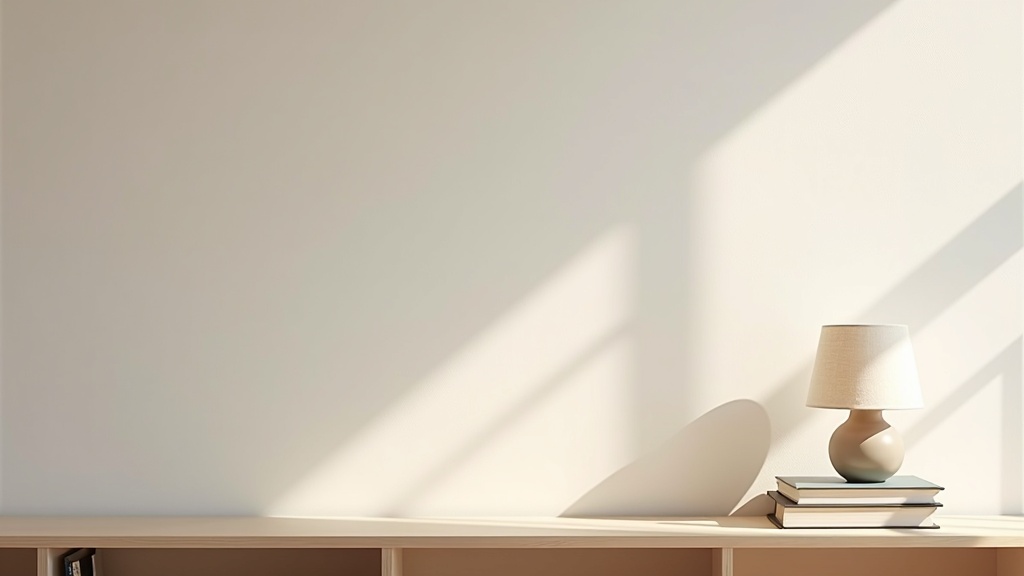
A shelf holds objects. A lamp on that shelf holds the room together. The difference is not about decoration. It is about how light lands on everything around it, and what it makes you notice or let go of.
This is about lampshade styling for minimalist shelves and surfaces. Not how to fill space, but how to use one object well and stop there.
Key points at a glance
- A lampshade is a mood object, not just a light source. Shape and material matter as much as the bulb inside.
- The 3-5-7 rule is a useful guide for shelf decorating, but knowing when to break it is the real skill.
- Cordless lamps give you full freedom on shelves and sideboards with no cable compromise.
- Linen, rice paper, and matte ceramic shades work best in calm, minimal rooms.
- Lampshade trends for 2025 and 2026 lean toward organic forms and warm, low-wattage glow.
- The Swedish concept of lagom (just enough) is the clearest styling principle you can apply.
What you will get from this guide
Why a Lampshade Changes Everything on a Shelf
Good lighting does not announce itself. It settles into the room and changes how it feels. That is exactly what a lamp does on a shelf: it gives the arrangement a warm centre of gravity.
Without light, a shelf is just storage. With one small lamp, it becomes a place you look at in the evening and feel something. That is not a small thing.
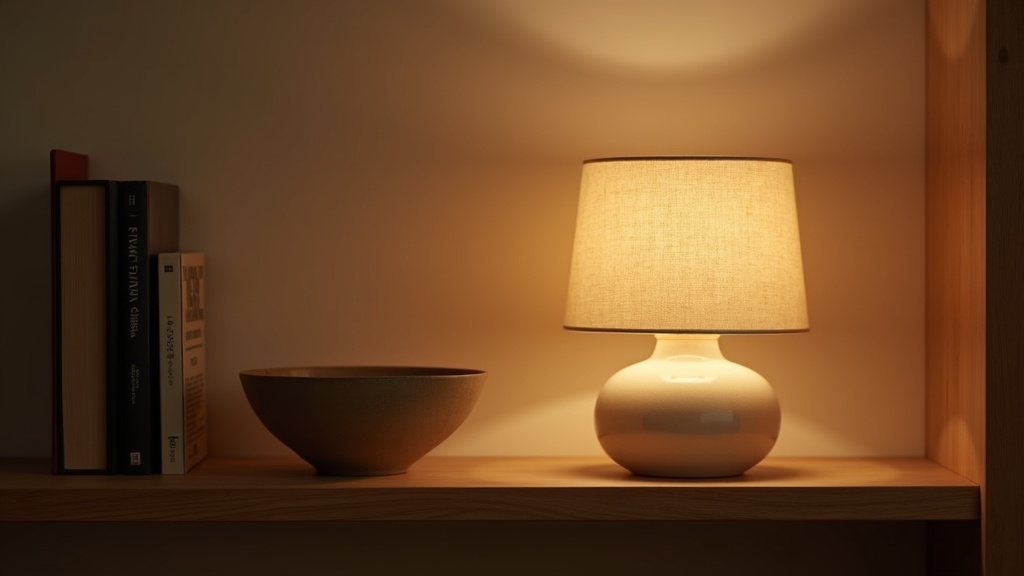
Choosing the Right Lampshade Shape for a Minimal Surface
Shape is the first decision. On a narrow shelf, a tall cylinder or a cone shade draws the eye upward without eating horizontal space. Wide empire shades belong on side tables, not shelves: they crowd everything beside them.
Shapes that work well on shelves
- Cylinder: clean, vertical, works in any direction
- Cone (tapered drum): slightly more visual interest, still compact
- Bell (small scale): soft and classic, good for consoles and nightstands
- Globe or ball: works without a traditional shade, adds sculptural quality
The rule is simple. If the shade is wider than the lamp base, check it fits the surface depth first. Most shelves are 25 to 35 cm deep. Work within that.
The 3-5-7 Rule, and When to Break It
The 3-5-7 rule for shelf decorating says: group objects in odd numbers. Three items per cluster, five across a long shelf, seven in a larger arrangement. It works because odd groupings feel less rigid, more natural.
Your lamp counts as one of those objects. Build the group around it, not the other way around.
Did you know?
The 3-5-7 rule originates from traditional floral design, where odd-number groupings were found to look more organic and balanced to the human eye. Interior stylists adopted it in the 1980s, and it has remained a core principle in Scandinavian shelf styling ever since.
When to break it: a single lamp beside a single object (one book, one stone, one plant) can be more powerful than any group of seven. Restraint is the real skill in minimalist shelf decor ideas.
What to Place Around a Lamp (and What to Leave Out)
A lamp needs breathing room. That means one or two companions at most, chosen carefully.
Good companions for a lamp on a shelf
- A small ceramic vase, ideally matte and in an earthy tone
- Two or three books, stacked horizontally
- A single sculptural object: a smooth stone, a small wooden figure
- A low trailing plant (pothos or string of pearls in a minimal pot)
What to leave out
- Frames (they compete for visual attention with the lamp)
- Anything shiny or reflective (it fights the warmth of the light)
- Too many small items (they create noise, not calm)
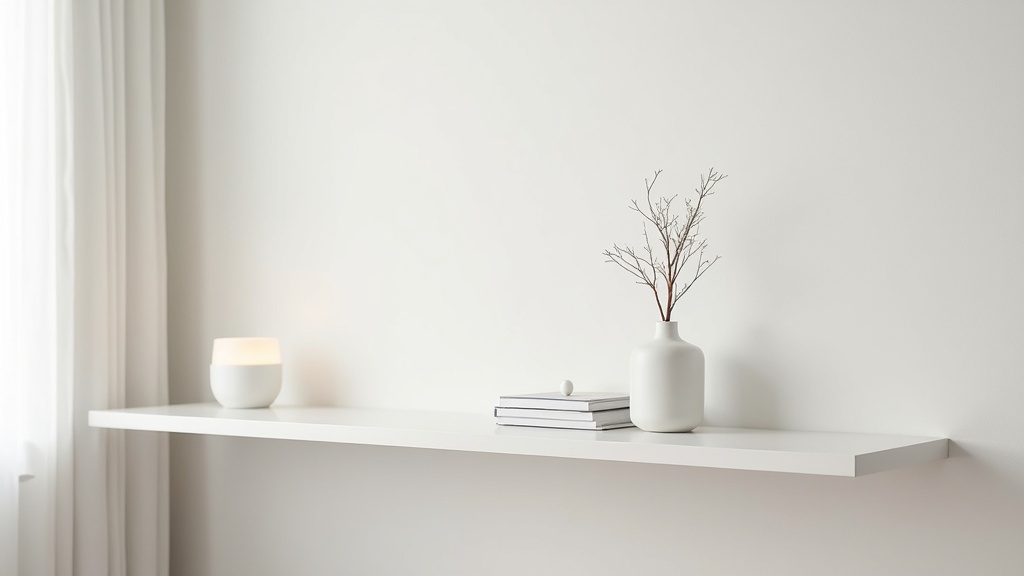
Lampshade Materials and Textures That Work in Calm Spaces
Material is what the eye rests on. In a minimal room, the wrong texture creates visual noise. The right one disappears into the arrangement, which is exactly what you want.
| Material | Light quality | Best surface | Notes |
|---|---|---|---|
| Linen | Warm, diffused glow | Shelves, nightstands | The most forgiving choice for any Scandinavian room |
| Rice paper / washi | Soft, almost translucent | Consoles, shelves | Fragile, but beautiful. Handle with care on busy shelves |
| Matte ceramic (no shade) | Directional, sculptural | Sideboards, consoles | Works best with a warm-toned Edison or globe bulb |
| Cotton (tight weave) | Clean, even light | Any surface | Practical and widely available. Neutral colours only |
| Rattan / woven grass | Patterned, dappled | Living room shelves | Adds texture without colour. Keep the rest of the shelf simple |
Avoid shiny or metallic finishes on shelf lamps. They reflect rather than absorb, and that tension works against a calm room.
Lampshade Trends Worth Knowing for 2025 and 2026
Organic shapes are leading. Slightly asymmetric, hand-thrown ceramic bases with softly flared shades. Nothing too precise. The imperfection is the point.
Colour is moving toward warm clay, sand, and deep terracotta, always matte. Cool greys are retreating. Warm neutrals are staying.
Cordless lamp shelf styling is growing fast. Battery-powered and rechargeable lamps now offer 8 to 12 hours of light and look identical to wired versions. No cord, no compromise.
Did you know?
Warm white bulbs rated at 2700K to 3000K have been shown in lighting research to reduce perceived stress levels compared to cool white (4000K+) equivalents in home environments. That amber warmth you feel from a linen shade is not just aesthetic: it is physiological.
Styling by Surface: Shelves, Sideboards, Nightstands, and Consoles
Each surface has a different role in the room. The lamp choice and placement should reflect that.
Floating shelves
Use a compact lamp with a narrow profile. Position it at one end of the shelf, not the centre. Centre placement looks forced. A lamp at the edge creates depth.
Sideboards
You have more width here. A pair of lamps (same base, same shade) on either side of a central object works well. Or one taller lamp offset to the left or right with a loose arrangement beside it.
Nightstands
The lamp is the main event. Keep everything else minimal: one book, one glass of water, one small object at most. The shade should direct light downward for reading without washing the whole room.
Console tables
Consoles are linear. A tall, slim lamp anchors one end. Let the rest of the surface breathe. Two or three small items maximum, varying in height.
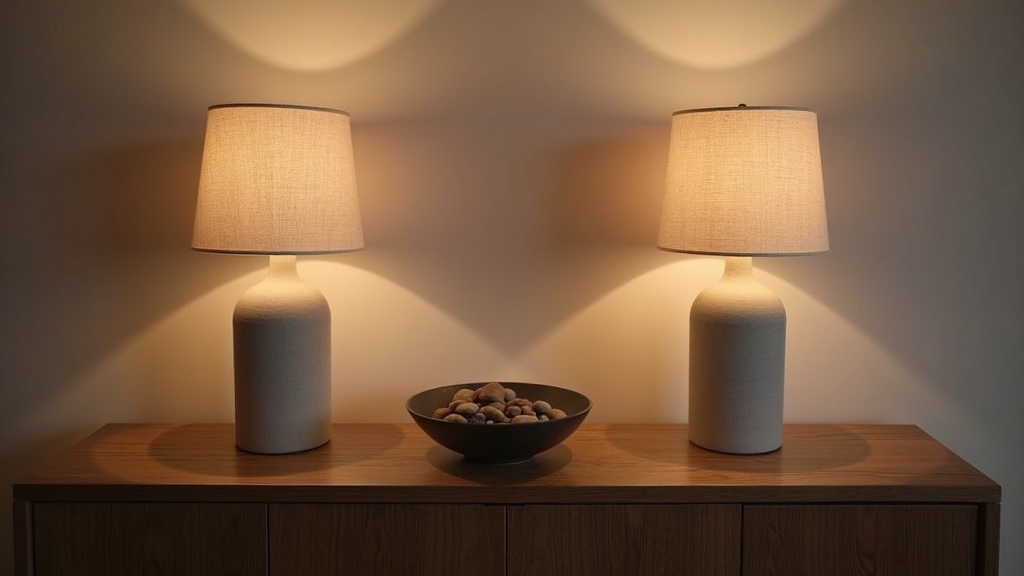
The Lagom Principle: How Much Is Just Enough
Lagom is a Swedish word with no direct translation. It means not too much, not too little. Exactly the right amount. It is the best styling principle that exists for any surface.
Applied to a shelf: if you added one more object and the arrangement feels right, you probably have one too many. The moment a shelf feels complete is one step before you think it is.
Remove one item. Stand back. If the shelf feels lighter and the lamp feels more present, you found it.
Your practical starting point
Start with the lamp. Place it first. Then add one object. Look at it for a day. If it still feels right after 24 hours, it belongs. If you notice yourself wanting to add more, add one small item and stop.
- Lamp first, always
- Odd numbers (1 or 3 companions maximum on a small shelf)
- Vary height, keep colour close to neutral
- Leave at least 30% of the shelf surface empty
- Check at night with the lamp on: that is the version of the shelf that matters most
Light placed right does more for a room than any renovation. One lampshade, chosen well and positioned with intention, is enough to make a surface feel considered. That is the whole point.


