
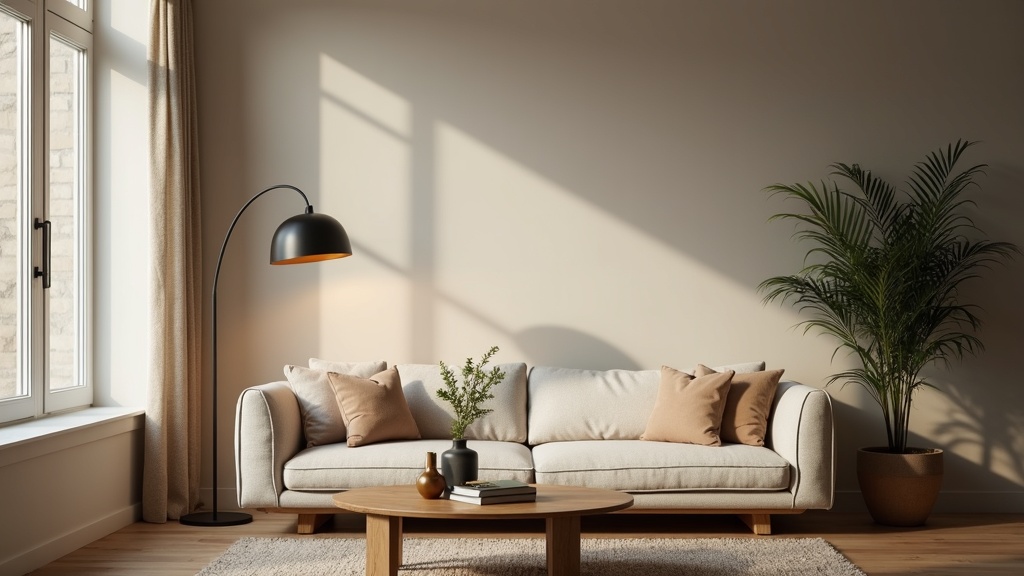
Most rooms fail at the lighting stage. Not because the fixtures are ugly, but because no one thought about them until the furniture was already in place. Lighting for transitional design rooms is a different kind of problem: you need pieces that feel at home between two worlds, neither rigidly traditional nor aggressively modern.
Get it right and the room simply feels good. You stop noticing the lights. You just notice that you like being there.
Key points at a glance
- Transitional rooms need layered light: ambient, task, and accent working together, not one overhead fixture doing all the work.
- Finish choices matter more than fixture style. Brushed brass and matte black are the most forgiving combinations in transitional spaces.
- Scale is the most common mistake. A fixture that is too small reads as an afterthought, even if it is beautiful.
- Color temperature shapes mood: 2700K, 3000K is the range that makes transitional interiors feel warm and resolved.
- LED bulbs are the right call, but CRI above 90 is non-negotiable for rooms with mixed materials and finishes.
- Four specific habits make transitional rooms feel unfinished. All four are avoidable.
Why transitional lighting rewards a calm approach
What Makes a Room Transitional (and Why Lighting Is the Hard Part)
A transitional room sits between traditional and contemporary without fully committing to either. Clean lines, but with warmth. Simple forms, but with material richness. It sounds easy. It is not.
Lighting is hard in these rooms because most fixtures are designed with a clear aesthetic identity. A crystal chandelier says one thing. An industrial cage pendant says another. Transitional lighting ideas for home interiors need fixtures that say something quieter.
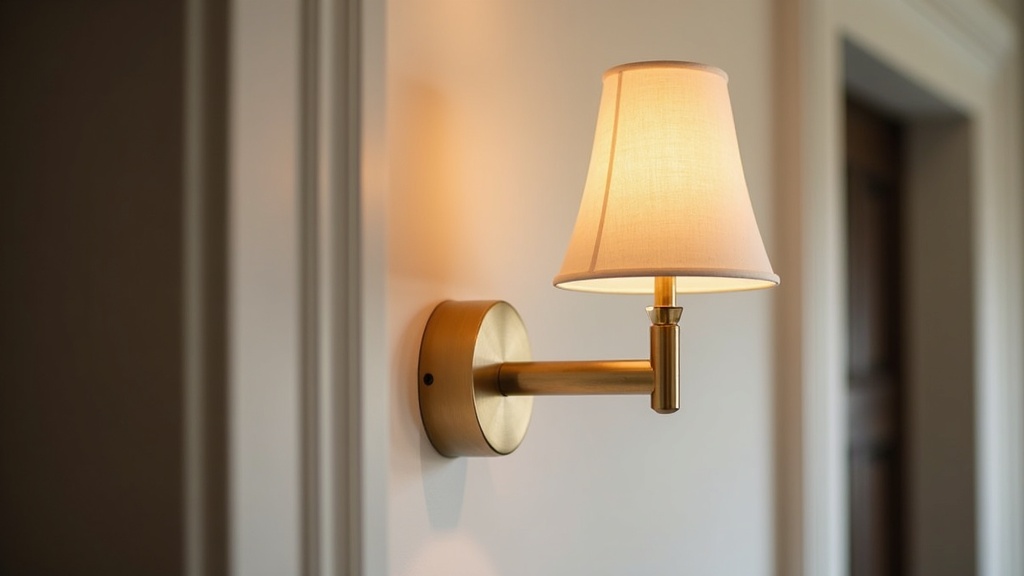
Look for: restrained silhouettes, quality materials, and finishes that read as neither retro nor ultramodern. A drum shade pendant in linen. A shaded chandelier with a brushed brass arm. A simple column floor lamp in matte black. These pieces work because they do not shout.
The Logic of Layering: Ambient, Accent, and Task in One Room
One fixture overhead is not a lighting plan. It is a starting point, and a weak one. Layered lighting in transitional interiors means three things working at once: ambient light for overall softness, task light for where you actually do things, and accent light for what you want people to notice.
Ambient light
This is your ceiling fixture, whether a chandelier, flush mount, or semi-flush. It sets the room's base level. Keep it dimmable.
Task light
Reading lamps beside a sofa, pendants over a kitchen island, an under-cabinet strip in the kitchen. Placed where hands work, not where walls look good.
Accent light
A picture light over artwork, a small table lamp on a console, a directional spotlight on a bookshelf. These are the lights you turn on at 7pm and never regret.
Lagom applies here. Not too many sources, not too few. Four to six points of light in a medium living room is usually enough to feel resolved without feeling staged.
Finishes That Work: Brass, Brushed Nickel, Matte Black, and When to Mix
Brass and black transitional lighting is the combination that most designers reach for first, and for good reason. Warm brass carries traditional weight. Matte black reads as clean and contemporary. Together, they split the difference without effort.
Brushed nickel sits closer to the cool side. It works especially well in rooms with grey, white, or blue tones. Avoid polished chrome unless the room is very deliberately modern.
- Stick to two finishes per room. Three starts to feel restless.
- Let one finish dominate and one accent. Never split 50/50.
- Repeat the accent finish in small hardware elsewhere, door handles, cabinet pulls, picture frames. It makes the choice look intentional.
Did you know?
Unlacquered brass develops a natural patina over time, deepening from bright gold to a warmer, slightly aged tone. Many designers deliberately choose it over coated brass specifically for this quality: the finish becomes more beautiful with use, not less.
Room by Room: Choosing the Right Fixture Without Overthinking It
Dining room
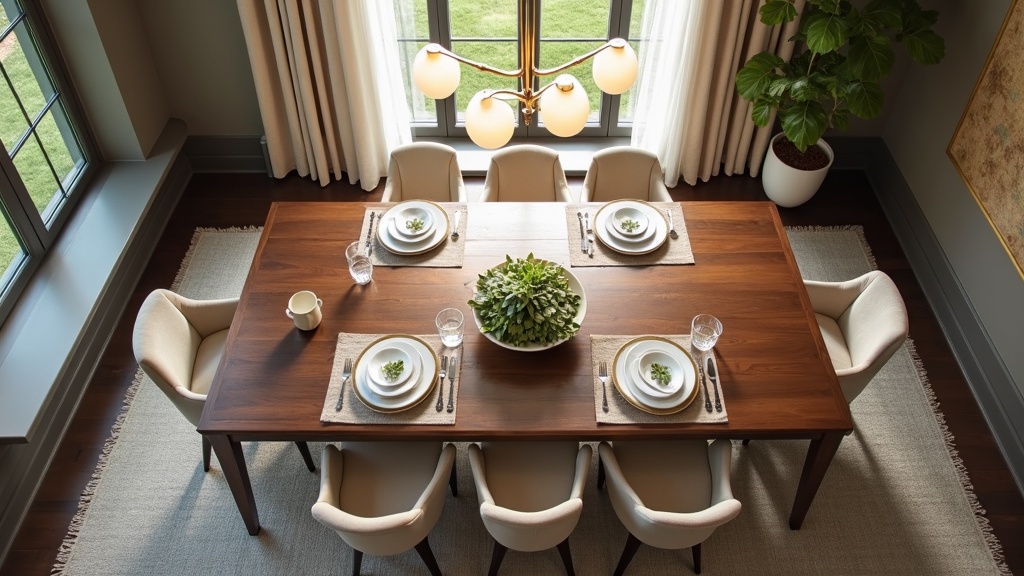
Transitional chandeliers for dining rooms are the single most visible lighting choice in a home. A shaded chandelier, five to eight arms with fabric shades, in brushed brass or matte black, works in almost any transitional dining space. Hang it so the bottom of the fixture sits 30 to 34 inches above the table surface.
Kitchen
Kitchen lighting for transitional design has two jobs: task clarity and visual warmth. Pendants over the island should feel like a design choice, not an afterthought. A simple metal shade in matte black or aged brass, hung in pairs, reads cleanly over most countertop materials. Under-cabinet lighting is not optional. It is where a kitchen actually functions.
Living room
A semi-flush or drum pendant for ambient light, two floor lamps flanking the sofa or in opposite corners, and at least one table lamp. That is enough. Resist adding more just to fill silence.
Bedroom
Wall sconces instead of bedside table lamps free up surface space and look more deliberate. A simple linen shade or a small swing-arm sconce in brass works well. Keep the overhead light very soft or skip it entirely in favour of a dimmable ceiling fixture used only when needed.
Scale and Proportion: How to Avoid a Fixture That Fights the Room
This is the mistake most people make once, live with for five years, and quietly regret. A fixture that is too small makes a room feel unfinished. A fixture that is too large makes it feel busy.
A simple rule for ceiling fixtures: add the room's length and width in feet. That number in inches is a reasonable diameter for a chandelier or pendant. A 12 by 14 foot room points you toward a 26-inch fixture. Not a rule to follow blindly, but a useful anchor.
For pendants over islands or tables, the fixture width should be roughly one-half to two-thirds the width of the surface below it.
| Finish | Room tone it suits | Best paired with |
|---|---|---|
| Brushed Brass | Warm, earthy, cosy | Matte black, natural wood, linen |
| Matte Black | Clean, grounded, modern edge | Brass, white walls, concrete or marble |
| Brushed Nickel | Cool, neutral, versatile | Grey tones, soft blues, white oak |
| Aged Bronze | Rich, layered, slightly traditional | Deep wall colours, leather, dark wood |
| Polished Nickel | Bright, formal, precise | Use sparingly as an accent only |
Warm White or Cool White: The One Decision Most People Get Wrong
Color temperature is measured in Kelvin. Most transitional rooms belong in the 2700K to 3000K range. That is warm white: the light that makes skin look good, wood look rich, and a room feel like somewhere you want to stay.
Cool white (4000K and above) has its place in home offices and utility spaces. In a dining room or living room, it makes everything feel slightly clinical. It is the lighting equivalent of a room that looks right in a photo but feels wrong in person.
If you have a room that already feels slightly cold, go to 2700K and dim it down. The room will feel different within an evening.
Did you know?
The human eye perceives warm light (around 2700K) as more relaxing because it mimics the spectrum of natural candlelight and late afternoon sun, the light our nervous systems have associated with rest and safety for thousands of years. This is why dining by candlelight feels different even when the food is identical.
LED Transitional Lighting: What to Look For Beyond the Bulb
LED is now the only sensible choice for transitional spaces. The question is which LED. Three numbers matter more than brand or price:
- CRI 90 or above. Color Rendering Index measures how accurately a light source reveals the colors of objects. Below 90, brass looks flat, wood looks grey, and fabric looks dull. Above 90, the room looks like it was meant to.
- 2700K or 3000K. As above. Check the box, not just the marketing.
- Dimmable. Confirm the bulb is dimmable and check that your dimmer switch is LED-compatible. Many older dimmers cause flickering or buzzing with LED bulbs.
The best transitional ceiling lights often come with integrated LED modules rather than replaceable bulbs. These are more efficient and last longer, but check the manufacturer's warranty and whether the module can be serviced before committing.

Four Mistakes That Make a Transitional Room Feel Unfinished
These are specific, common, and fixable.
- One overhead fixture, no layers. A single ceiling light, no matter how good, makes a room feel like a waiting room after dark. Add at least one floor lamp and one table lamp.
- Mismatched color temperatures. A 3000K ceiling fixture combined with 4000K under-cabinet strips creates a visual argument in the room. Match the Kelvin range across all sources in the same space.
- Fixtures too small for the room. A pendant that looks beautiful in a showroom can disappear in a 14-foot ceiling. Always check dimensions against your actual room.
- No dimmer. A room without dimming has only one mood. That is not enough. Install a compatible dimmer on every ambient circuit. It costs almost nothing and changes everything.
Good lighting does not announce itself. It settles into the room and changes how it feels. That is the standard worth aiming for: not a room full of interesting fixtures, but a room where the light simply belongs.


