
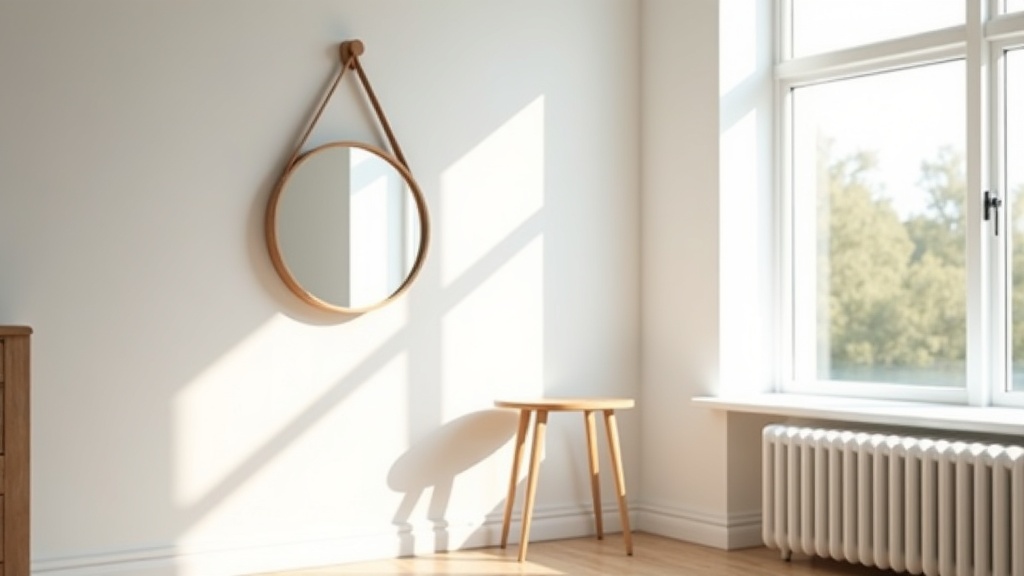
A dark room rarely needs more furniture. It needs better light, placed with intention. The right mirror, paired with the right light source, can transform how a space feels without touching a single wall.
This is not about tricks. It is about understanding how light moves, and giving it somewhere to go.
Key points at a glance
- A mirror opposite or adjacent to a window reflects natural light deep into a room.
- Bulb temperature matters: 2700K to 3000K gives warm, livable brightness, not glare.
- Mirror placement only works if the mirror faces a light source, not a dark corner or a wall.
- Layering ambient, task, and accent lighting multiplies the effect of any mirror.
- Frame finish and glass quality affect how much light a mirror actually bounces back.
- Small, consistent changes compound: one well-placed mirror can outperform a full renovation.
What a good mirror-and-light pairing gives you
Why Light Needs a Partner: The Case for Combining Mirrors and Lighting
Light on its own does one job. It illuminates what is directly in front of it. A mirror gives that light a second life, sending it across the room, into corners, and back up toward the ceiling.
Good lighting does not announce itself. It settles into the room and changes how it feels. A mirror helps it settle further, softer, and more evenly.
The Swedish concept of lagom applies here perfectly. Not too bright, not too dim. Just enough, done well. A single well-placed mirror and one warm light source can do more than six spotlights and nothing to reflect them.
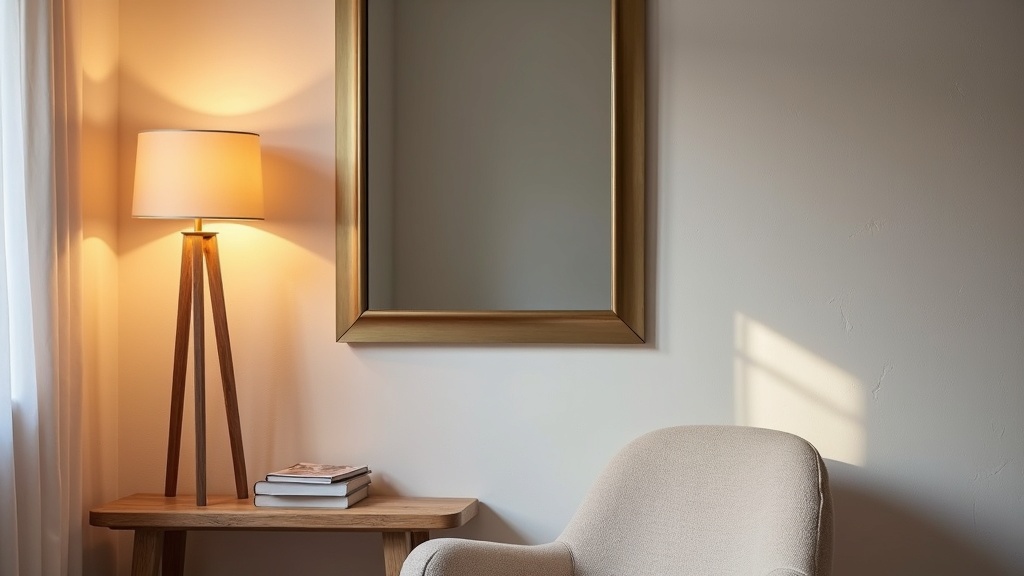
How Mirrors Actually Work With Light (and When They Don't)
A mirror does not generate light. It redirects whatever light already exists in the space. Place it facing a window, and it borrows that natural light indoors, pushing daylight further into the room.
Place it facing a blank wall, and it reflects nothing useful. The mirror is only as effective as what it faces.
When mirrors fail to brighten a room
- The mirror faces another mirror, creating a loop with no exit.
- It is hung too high, reflecting ceiling rather than light sources.
- The glass has a heavy tint, a strong patina, or an antique finish that absorbs more than it reflects.
- The room has no light source worth bouncing, natural or artificial.
Did you know?
A standard clear mirror reflects approximately 80 to 90 percent of light that hits it. Bronze or smoked mirror glass can drop that figure to around 50 percent, which is why antique finishes often feel beautiful but do little for brightness.
The Best Spots to Place a Mirror for Maximum Brightness
Opposite a window is the most effective position. The mirror captures the full view of the sky and bounces daylight directly back into the room. This is the classic mirror opposite window trick, and it works.
Adjacent to a window is the second-best option. The mirror catches the side spread of natural light and pushes it sideways into darker areas. It also makes the window appear wider than it is.
Other placements worth trying
- Beside a floor lamp or table lamp, at the same height as the bulb.
- At the end of a hallway to borrow light from a room further down.
- Behind candles or decorative lighting for evening warmth.
- Low on a wall in a basement room to catch whatever light enters from ground-level windows.
Choosing the Right Light Source to Pair With a Mirror
The bulb temperature shapes everything. 2700K to 3000K produces warm white light, the kind that feels human and livable. It reflects off a mirror with the same warmth it has at the source.
Cooler bulbs above 4000K push toward clinical brightness. They reflect sharply. They work in some kitchens or studios, but they rarely feel good in a living space.
| Light source | Colour temp | Best mirror pairing | Room feel |
|---|---|---|---|
| Warm LED bulb | 2700K | Clear or warm-tinted glass | Cosy, residential, evening |
| Soft white LED | 3000K | Clear flat glass, large format | Bright but livable, daytime |
| Natural daylight | 5000, 6500K | Clear glass, placed opposite window | Energising, good for north-facing rooms |
| Candlelight or filament | 1800, 2200K | Antique or bronze mirror | Atmospheric, intimate, evening only |
| Cool white LED | 4000K+ | Clear glass in functional spaces | Task-focused, avoid in bedrooms |
Room-by-Room Guidance: Living Room, Bedroom, and Beyond
Living room
Place a large mirror on the wall directly opposite your main window. Keep it at eye level, not above the sofa. Pair with a floor lamp at 2700K positioned just off to one side so the bulb appears in the reflection.
Bedroom
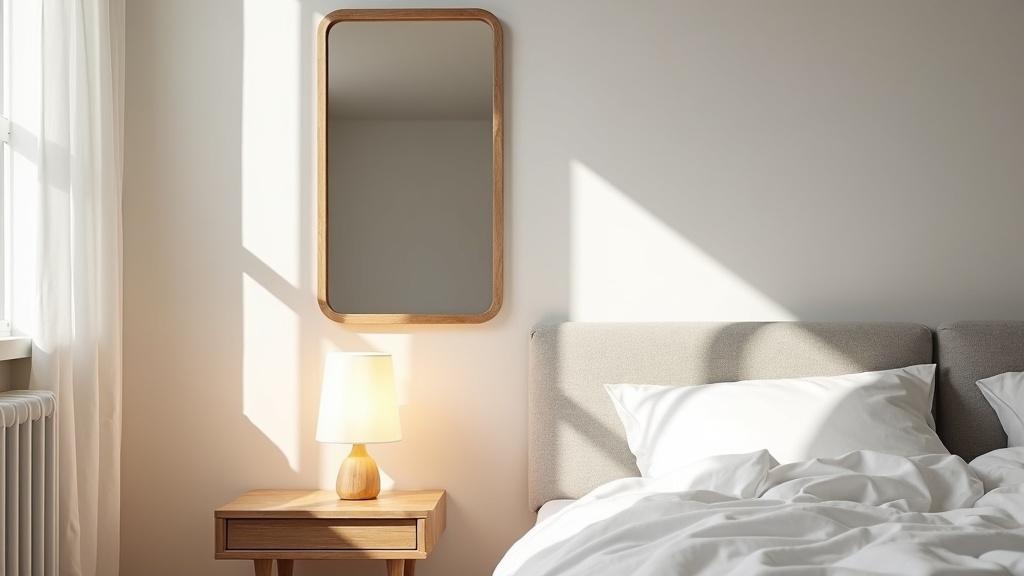
Avoid placing a mirror directly facing the bed if you find it disruptive at night. Instead, hang it on a side wall at window height. A bedside lamp with a warm bulb and a linen shade sits perfectly beside it.
Hallway and entrance
Hallways are often the darkest spots in a home. A tall mirror at the end of the corridor, with a small wall-mounted lamp beside it, borrows light from adjacent rooms and makes the passage feel open rather than closed.
Bathroom
Frame the mirror with vertical light strips on both sides rather than a single overhead light. This eliminates shadows on the face and reflects evenly across the whole room. Stick to 3000K here for a clean, flattering result.
Did you know?
Research from the Lighting Research Center at Rensselaer Polytechnic Institute found that layered lighting, combining ambient, task, and accent sources, is perceived as significantly more pleasant and comfortable than a single overhead source, even when the total light output is identical.
Common Mistakes That Kill the Effect
- Hanging the mirror too high. It reflects the ceiling, not the light. Center it between 155 and 165 cm from the floor as a general rule.
- Using a very ornate or dark frame. A heavy frame absorbs the visual lightness a mirror brings. Thin frames in oak, brass, or matte black keep the glass the focus.
- Using only overhead lighting. A single ceiling light creates flat, shadowless illumination. It has nothing interesting to reflect. Floor lamps and wall lights give depth.
- Forgetting to clean the mirror. A dusty or streaked surface scatters light rather than reflecting it cleanly. One wipe with a microfibre cloth makes a measurable difference.

What to Look for When Buying Mirrors for Light Reflection
Glass quality first. Low-iron glass, sometimes called ultra-clear or starphire glass, has minimal green tint and reflects colours more accurately. Standard mirror glass has a slight green cast that can cool a warm room.
Size matters more than shape. A larger surface area reflects more light, full stop. A 90 cm round mirror outperforms a 40 cm square in almost every situation.
Frame considerations
- Thin or frameless: maximum reflection, works in any style.
- Oak or light wood: warm, organic, suits Scandinavian and natural interiors.
- Brushed brass: adds warmth to the reflected light, pairs well with 2700K bulbs.
- Dark or wide frame: beautiful, but reduces the effective reflective area.
Small Changes, Real Impact: A Simple Starting Checklist
Start here. These adjustments take less than an afternoon and cost almost nothing if you already have a mirror at home.
- Identify the main light source in each room, natural or artificial.
- Check whether any existing mirror faces that source. If not, move it.
- Replace bulbs above 4000K in living areas with 2700K warm white LEDs.
- Add one floor lamp or table lamp to any room that relies only on overhead lighting.
- Clean every mirror in the house. Do it now, it takes three minutes.
- In a persistently dark room, consider one large mirror placed directly opposite the window before spending anything else.
Light placed right does more for a room than any renovation. A mirror and a warm lamp, thoughtfully placed, reshape how a space feels without changing a single permanent element. That is lagom in practice: not too much, not too little, just enough done well.


