
Most rooms labeled eclectic feel like they're trying too hard. Every object is interesting. Nothing rests the eye. You walk in and feel slightly tired before you've even sat down.
The modern eclectic interior design ideas that actually work share one quality: restraint. They borrow from many eras and materials without apologizing for it, and the result feels personal rather than chaotic. That balance is learnable.
Key points at a glance
- A neutral base is what makes layering feel calm, not chaotic
- Mixing furniture eras works when scale and proportion stay consistent
- Texture does more quiet work than pattern in an eclectic room
- Lighting placement shapes the mood more than any single piece of furniture
- Small spaces benefit from eclectic styling because one strong piece is enough
- The rule of odd numbers and deliberate groupings keep surfaces from feeling random
What this approach gives you
What Makes a Space Modern Eclectic (Not Just Cluttered)
The difference between eclectic and cluttered is intention. Every piece in a well-curated eclectic room has a reason to be there. It might be a memory, a texture, a contrast that makes the neighboring object look better.
Modern eclectic interior design pulls from different periods and cultures but applies a consistent visual language: a shared tone, a repeated material, a limited palette. Without that thread, a room just collects things.
Think of it as lagom: not too much, not too little. Enough variety to feel alive. Enough restraint to feel calm.
Start With a Neutral Anchor, Then Layer With Intention
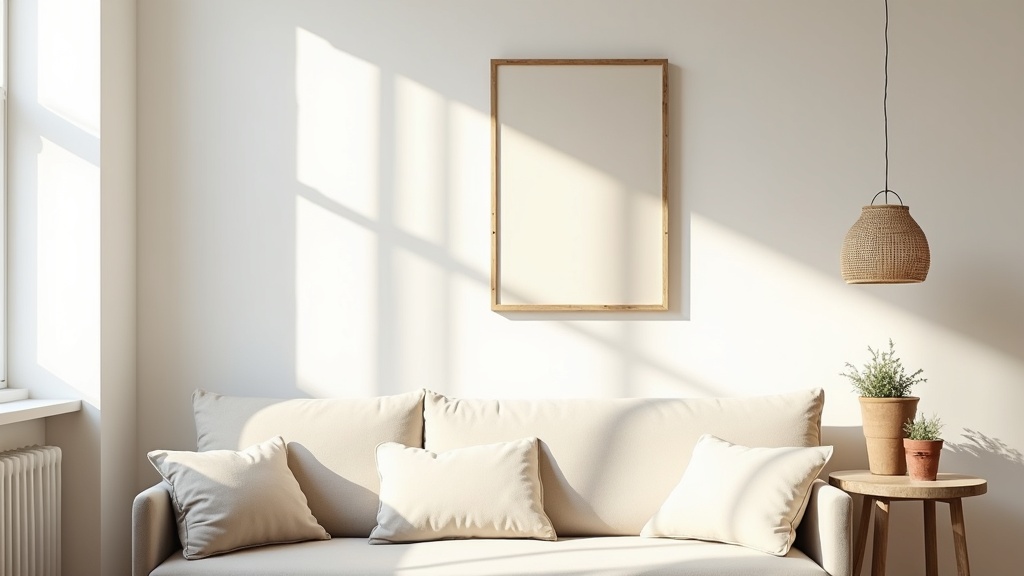
Eclectic decor with a neutral base is almost always the calmer version. Start with white, warm greige, or deep linen on your largest surfaces: walls, sofa, main rug. These become the silence between the notes.
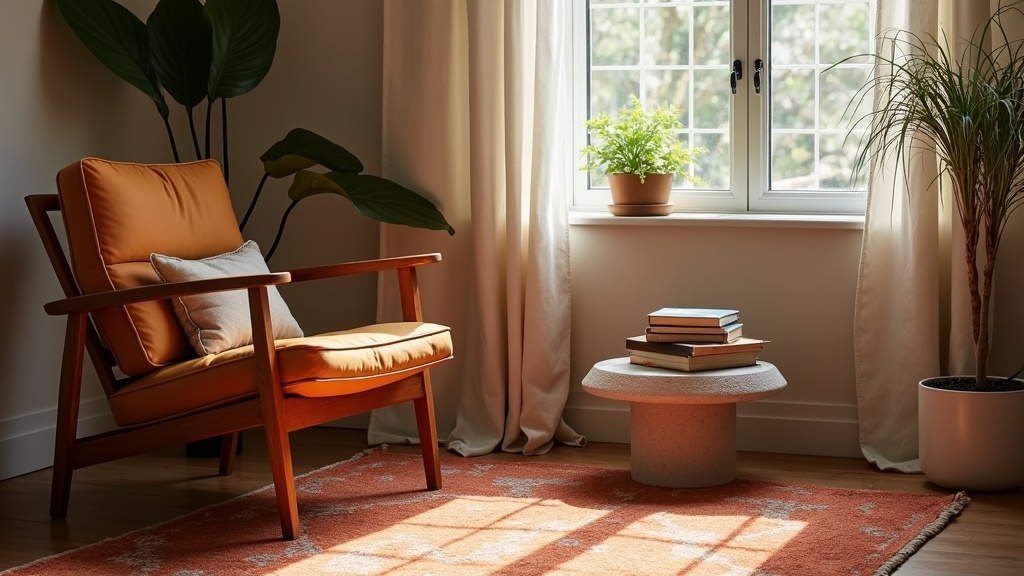
Then layer. A single piece of richly grained walnut. A cushion in aged terracotta. One ceramic object with a glaze that catches light. Each addition should earn its place by adding something the room didn't yet have.
How to choose your anchor color
- Warm white (SW Alabaster, Farrow & Ball Wimborne White): flatters wood tones, ages well
- Warm greige (Dulux Malt Chocolate 1, Benjamin Moore Pale Oak): grounds bolder vintage pieces
- Deep linen or putty: pairs beautifully with brass, rattan, and dark stained wood
Did you know?
Studies in environmental psychology show that rooms with a dominant neutral palette are consistently rated as more relaxing, even when they contain more objects, because the eye has a visual resting point to return to between moments of interest.
How to Mix Furniture From Different Eras Without Losing Coherence
The secret to mixing furniture styles is not matching, but rhyming. Two pieces from completely different decades can sit happily together if they share a leg profile, a finish, or a weight.
A 1950s Danish teak sideboard and a contemporary linen sofa work together because both are low, horizontal, and quiet in their proportions. The era is irrelevant. The geometry converses.
| Furniture Era | Pairs Well With | Common Ground |
|---|---|---|
| Mid-century (1950s, 60s) | Contemporary Scandinavian | Low profiles, warm wood tones |
| Industrial (1990s, 2000s) | Organic modern, handcrafted ceramics | Raw finishes, matte surfaces |
| Vintage bohemian | Minimalist modern frames | Contrast of quiet structure + rich texture |
| French country antiques | Neutral linen, simple ceramic lamps | Warmth, patina, soft curves |
| Japanese wabi-sabi | Any era with natural materials | Imperfection, restraint, natural tone |
Texture Over Pattern: The Quieter Path to Eclectic Depth
Pattern competes. Texture cooperates. A room can hold a linen sofa, a nubby boucle throw, a smooth marble tray, and a rough jute rug without any of them arguing. Vary the surface, keep the tone.
Vintage eclectic decorating style often relies too heavily on pattern. The quieter version asks: what does this feel like to touch? A handwoven Berber rug and a concrete pendant lamp share no period, no origin, no pattern. But they belong together because both are unpolished, honest, and unhurried.
Light as a Curatorial Tool: How Lamps and Shades Shape the Mix
Good lighting doesn't announce itself. It settles into the room and changes how it feels. In an eclectic room, light is what unifies pieces that would otherwise drift apart.
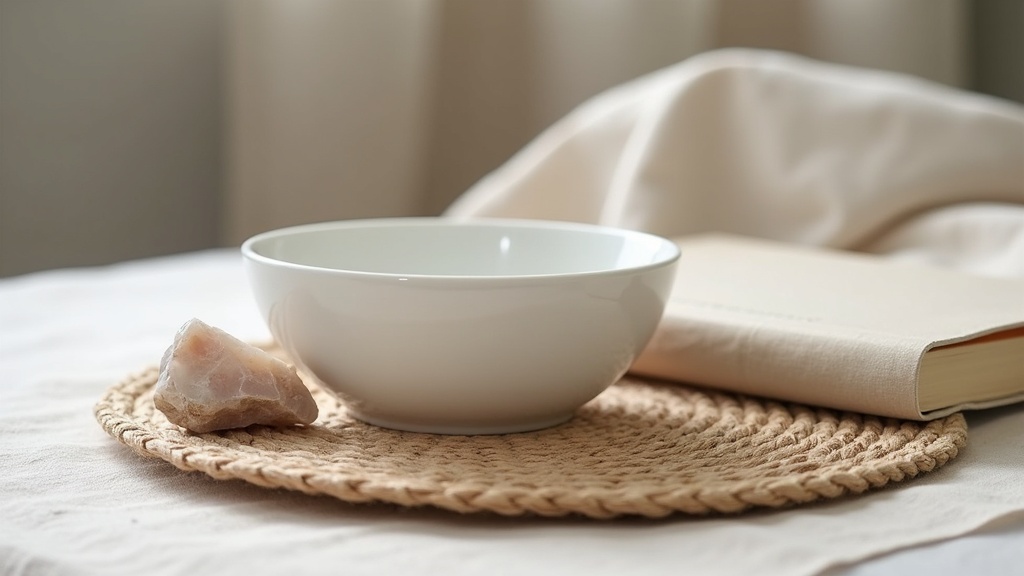
A single warm pendant centered over a dining table pulls a vintage chair, a modern table, and a handmade ceramic bowl into the same moment. They're all lit the same way. They belong to each other.
Practical lamp placement for eclectic rooms
- Use multiple light sources at different heights rather than one ceiling fixture: floor lamp, table lamp, pendant
- Aim for 2700K to 3000K bulbs throughout: warm, consistent, flattering to wood, fabric, and ceramics equally
- Let at least one lamp cast a shadow. Shadows give depth to texture and make the room feel inhabited, not staged
Did you know?
The Scandinavian concept of mys (the Danish and Swedish version of hygge's quieter cousin) is specifically tied to lamplight at eye level or below. Overhead lighting alone is considered cold and socially uncomfortable in Nordic interior culture.
Small Space, Big Personality: Eclectic Ideas for Apartments and Rentals
Eclectic home decor for small spaces actually has an advantage: you only need one or two strong pieces. A single vintage rattan chair in an otherwise minimal studio says more than a room full of matching furniture.
In a rental, work with what you can't change. If the floors are light oak laminate, lean into it with warm-toned pieces. If the walls are white, treat them as your neutral base and be deliberate with the one or two things you hang on them.
Small space eclectic rules
- One anchor piece with personality, everything else quieter
- Mirrors with interesting frames: they add visual depth and a material layer simultaneously
- Stack books horizontally by color tone: they become a texture block, not a library
- Keep the floor as clear as possible. Clutter reads twice as large in a small room
The Rule of Odd Numbers and Other Practical Curation Habits
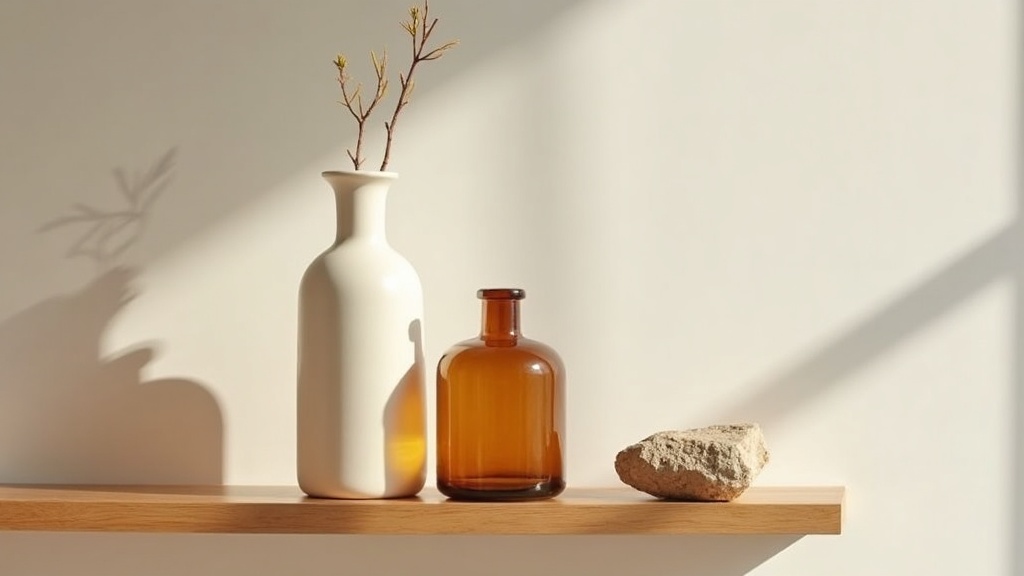
Group objects in threes or fives. Two objects look like a pair waiting to be separated. Four looks like a set. Three or five creates visual tension that resolves itself naturally.
Vary the height within a grouping: tall, medium, low. Vary the material: smooth next to rough, matte next to slightly reflective. But keep the palette. Three objects in three different tones don't form a grouping. They form noise.
Where to Shop for Modern Eclectic Pieces That Last
The best modern eclectic furniture finds are rarely from a single retailer. The point is the mix. That said, some sources are consistently reliable for pieces that hold up and improve with age.
- Local estate sales and antique markets: the most honest source of vintage pieces with actual patina
- Chairish, Vinterior, 1stDibs: curated vintage online, with condition notes
- HAY, Muuto, Ferm Living: contemporary Scandinavian pieces that pair with almost any era
- Small ceramic studios and craft markets: for objects that carry a human hand in them
- Ikea as a quiet base: the Kallax, the Kivik, the Billy. Use them as the silence. Build the character around them
The best pieces are the ones you stop noticing, because they simply belong. Buy for that feeling, not for the story you'd tell about them at a dinner party.
Your starting checklist
Before buying anything new, try this first:
- Stand in your room and identify the one thing making it feel busy. Remove it for a week. See what changes
- Choose your neutral base color if you haven't. Paint a large swatch and live with it for three days in different light
- Pick one era or origin you want to anchor your eclectic mix around. Mid-century. Wabi-sabi. Rustic French. Start there
- Replace one overhead bulb with a warm 2700K equivalent this week. Light placed right does more for a room than any renovation
- Create one grouping of three objects on a surface using what you already own. Height variation, material variation, one tonal range
An eclectic room design that feels cohesive is built in small decisions, not big purchases. Start with what you have. Edit before you add. The room will tell you what it needs next.


