
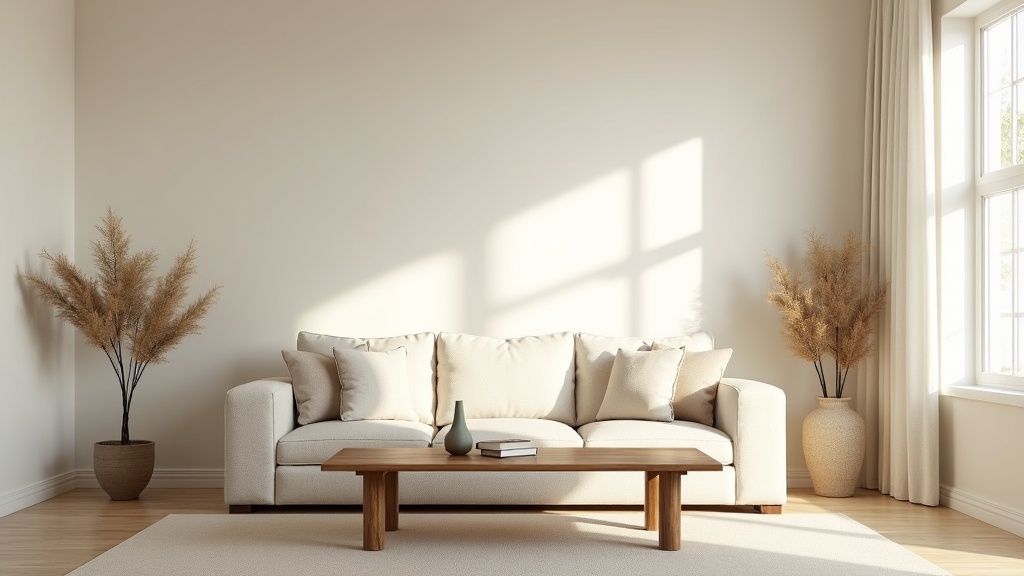
Some rooms feel right the moment you step in. Not because they are flashy or carefully staged, but because nothing is competing for your attention. That feeling has a name, and it sits between two worlds: traditional and modern.
Transitional design style for homes is exactly that middle ground. It does not belong to a single era or aesthetic camp. It belongs to the way people actually want to live.
Key points at a glance
- Transitional style blends classic silhouettes with clean, contemporary lines, no single era dominates.
- Neutral palettes anchored by one or two warm or cool accents are the foundation of the look.
- The 3-5-7 rule helps distribute color and texture without tipping into chaos or monotony.
- Layering materials (linen, wood, stone, metal) creates depth without clutter.
- This style ages well because it never chases a trend.
- Small changes, like swapping hardware or adding a textured throw, can move a room toward transitional.
Why transitional design works
What transitional design style actually means (and why it resonates)
Transitional interior design sits between classic and contemporary, but it does not split the difference awkwardly. It borrows the warmth and structure of traditional design, then strips away the ornamentation. From modern design, it takes clean lines and restraint, but softens them with texture and familiarity.
The result is a space that feels settled. Not cold. Not fussy. Just right.
This is why classic and contemporary interior design in its transitional form has become one of the most searched and practiced styles in residential interiors. It does not demand that you choose a side.
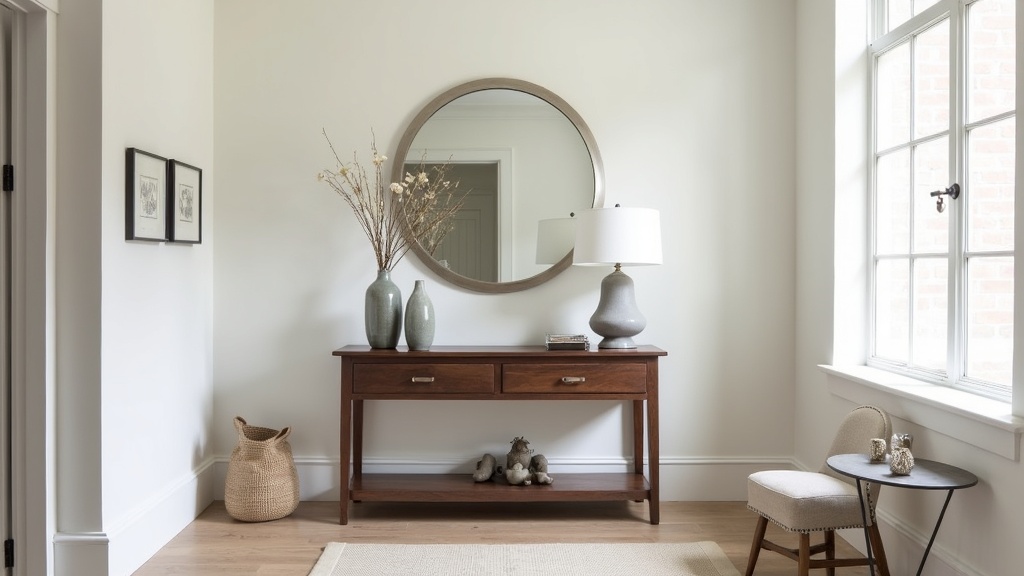
The core characteristics: what to look for in a transitional space
You recognize transitional design by what it does not have as much as by what it does. No gilded flourishes. No stark concrete walls. No single decade stamped on every corner.
Key transitional interior design characteristics
- Neutral base palette with deliberate warm or cool accents.
- Mixed materials: wood alongside metal, linen beside leather.
- Furniture with soft lines, not sharp modernist angles, not ornate carved legs.
- Limited pattern use: one geometric or subtle organic print, not several competing.
- Layers of light, ambient, task, and accent, rather than a single overhead source.
- Negative space respected, because what is left empty matters as much as what is placed.
Good lighting does not announce itself. It settles into the room and changes how it feels. In a transitional home, this is not optional. It is the whole mood.
Is transitional style outdated? The honest answer
No. And the reason is structural, not trend-based.
Styles built around a single moment (maximalism, industrial, hyper-minimalism) age because they are anchored to that moment. Timeless home design style works differently. It does not chase a decade. It references permanence.
Transitional design has been consistently relevant since the 1980s because it is built on proportion, material quality, and restraint. Those things do not expire.
Did you know?
According to Houzz's annual design surveys, neutral palettes paired with natural wood tones have ranked among the top residential interior choices for over a decade, a pattern directly aligned with transitional design principles.
Colors that work best in a transitional home
Transitional style colors are not dramatic. They are honest. Think warm whites, soft greiges, muted sage, dusty blue, and aged brass as an accent rather than a statement.
The palette works because it recedes. It lets the materials and the light do the talking.
| Color family | Role in the room | Example tones |
|---|---|---|
| Warm white | Base wall and ceiling color | Swiss Coffee, Navajo White |
| Greige | Anchor for large furniture | Accessible Beige, Agreeable Gray |
| Muted sage or soft olive | Secondary accent, textiles | Dried herb, Pale eucalyptus |
| Dusty navy or slate blue | One strong accent, one room | Hale Navy lightened, Stone Blue |
| Aged brass or matte black | Hardware and fixture finish | Antique brass, Matte iron |
Choose one warm neutral as your base. Add one deeper tone for contrast. Let hardware carry the third voice. That is enough.
Room by room: how transitional style looks in practice
Transitional style living room
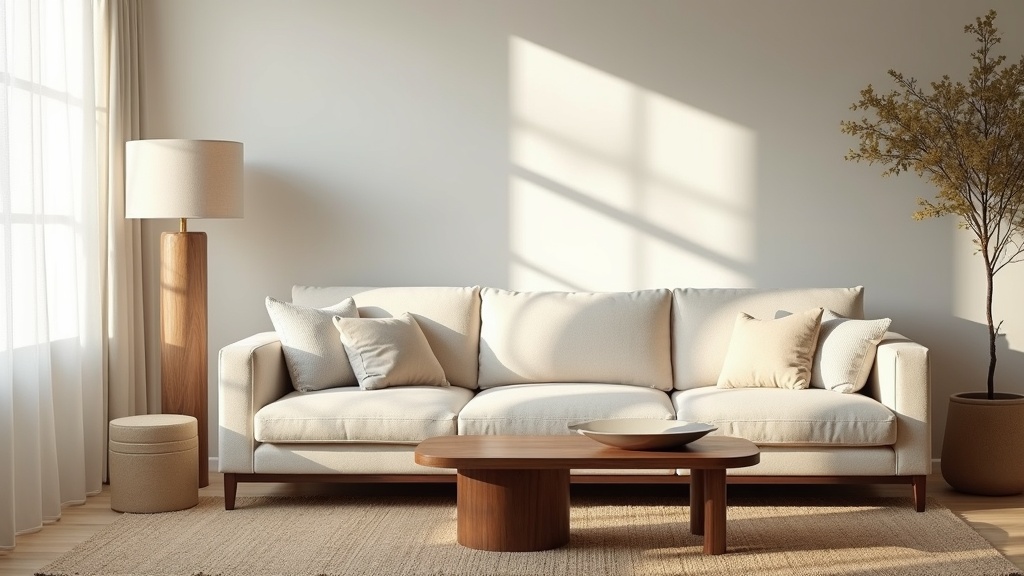
A transitional style living room centers on a sofa with clean lines and high-quality upholstery, linen or bouclé, never heavily tufted. A wooden coffee table with simple joinery. One textured rug that anchors without dominating.
Light comes from two or three sources, not one overhead fixture. A floor lamp beside the sofa, a table lamp on the side table. The room breathes.
Kitchen and dining
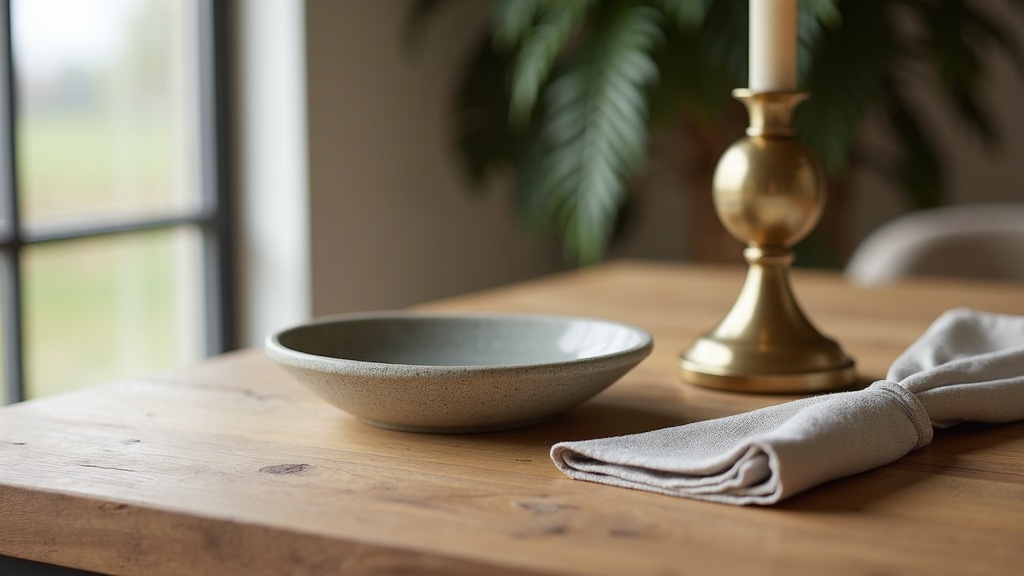
Shaker cabinetry in a warm white or soft greige. Unlacquered brass or brushed nickel hardware. A stone countertop with visible veining, not polished to a mirror. A dining table in solid oak or walnut with chairs that mix materials: upholstered seat, wooden frame.
Bedroom
Transitional home decor in the bedroom means layered bedding in natural fibers, linen or cotton percale, a simple upholstered headboard, and one piece of furniture with a slightly traditional profile (a nightstand with tapered legs, for instance). Nothing competes. Everything belongs.
The 3-5-7 rule and how it applies to transitional rooms
The 3-5-7 rule is a composition principle borrowed from visual art: arrange objects in odd numbers to create natural balance. In a transitional room, it maps directly to color distribution.
- 70% of the room in the dominant neutral (walls, large furniture, flooring).
- 20% in a secondary tone (textiles, smaller furniture pieces).
- 10% in an accent (hardware, art, a single cushion color).
This is lagom made spatial. Not too much, not too little. The eye finds rest without finding boredom.
Did you know?
Interior designers often call the 70-20-10 color rule "the one formula that survives every style." It was formalized in graphic design but has been applied to residential interiors since at least the 1970s, and it remains the most reliable starting point for color balance in any neutral-based scheme.
How to layer materials without overcrowding a space
The goal is contrast without competition. Each material should do a different job in the room.
- Wood: warmth and organic presence, usually the largest surface area.
- Metal: definition and edge, used sparingly in hardware and light fixtures.
- Stone or ceramic: weight and permanence, countertops, a tray, a vase.
- Linen or natural fiber: softness and approachability, cushions, curtains, rugs.
- Glass: lightness, used to open a surface, not to fill it.
Three to four materials per room is the comfortable ceiling. Past that, the eye starts working too hard.
Common mistakes that break the balance
The style looks calm. Getting there takes more deliberateness than it appears.
- Too many accent colors. One or two accents read as intentional. Three or more reads as indecision.
- Mixing too many wood tones. Two at most, and they should be clearly different (light ash alongside dark walnut), not close enough to look like a mistake.
- Overhead-only lighting. A single flush mount kills the mood of any room. Layer or it falls flat.
- Forced symmetry. Transitional design is balanced, not mirrored. Two identical lamps flanking a sofa works. Two identical everything reads as a showroom.
- Chasing perfect cohesion. The best pieces are the ones you stop noticing because they simply belong. A room where everything matches perfectly has no soul.
Where to start if you want a more transitional home
You do not need to start over. Most rooms are closer than they look.
Begin with one decision per room, in this order:
- Settle the wall color. Choose a warm neutral if you do not already have one.
- Audit your light sources. Add a lamp where there is none. Remove a harsh overhead if you can.
- Pick one textile to swap: a linen curtain instead of polyester, a jute rug instead of synthetic.
- Replace hardware if your cabinetry allows. Brushed brass or matte black over chrome changes a room's register immediately.
- Edit, not add. Remove one object from each surface. See what the room does without it.
We design for the way you actually live, not for a showroom. Modern transitional design style for homes is not a look you perform. It is a standard you return to, a room that feels right after a long day, quietly, without announcing why.


