
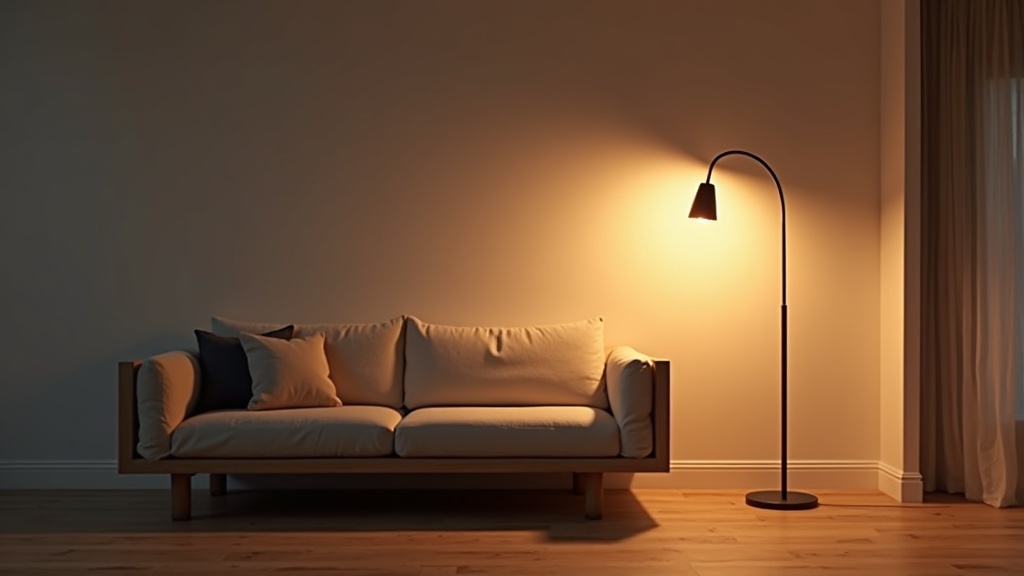
Most rooms don't have a lighting problem. They have a too many things problem. Add a floor lamp that draws the eye without demanding attention, and suddenly the room breathes.
A statement lamp in a minimalist space isn't a contradiction. It's the point. One considered piece does more than six decorative objects scattered around a shelf. This is where lagom lives: not too much, not too little, just enough done well.
Key points at a glance
- A floor lamp can anchor a minimalist room without cluttering it, if the silhouette is clean and the material is honest.
- Warm light (2700K, 3000K) shapes mood more than wattage ever will.
- Scale and placement matter as much as the lamp itself: one wrong position kills the effect.
- Arc and torchiere styles work especially well in rooms with no overhead lighting.
- Small spaces need lamps that go vertical, not wide: slim profiles, long stems, wall-hugging bases.
- Sometimes a lamp is not the answer. Knowing when to use sconces or table lamps instead saves a room.
What this guide gives you
Why a Floor Lamp Can Be the Most Intentional Piece in a Minimalist Room
Good lighting doesn't announce itself. It settles into the room and changes how it feels. A floor lamp is the one object that contributes both form and function without asking for a surface to stand on.
In a room without overhead lighting, a single well-placed floor lamp defines the entire atmosphere of the space. It decides where the eye goes. It sets the warmth of the evening. It makes a corner feel like somewhere you actually want to sit.
That's not decoration. That's architecture, done with light.
What Makes a Lamp a Statement Without Being Loud
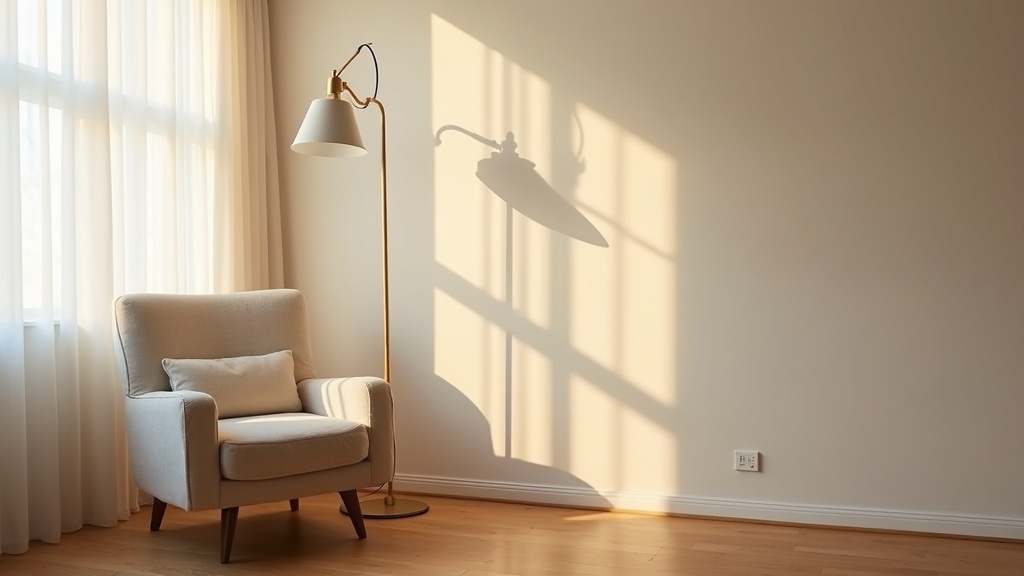
A statement lamp in a minimalist room earns its place through silhouette, material, and restraint. Not through size. Not through ornament.
The silhouette test
Cover the shade with your hand. Is the base and stem interesting on its own? If yes, it has the bones of a statement piece. A sculptural concrete base, an asymmetric stem, a clean geometric arc: these read as intentional without adding visual clutter.
Material honesty
Matte black steel. Brushed brass. Natural stone. Raw travertine. These materials don't try too hard. They age well and they don't compete with the room around them.
What to avoid
- Busy shades with fringe or heavy pattern
- Mixed metals on a single lamp (brass base, chrome joints, black shade)
- Bases that mimic furniture styles (rustic farmhouse, ornate traditional) in a minimalist context
- Anything with a visible brand logo on the shade or base
Did you know?
The Bauhaus school of design, founded in 1919, first formalized the principle that a functional object should derive beauty from its form alone, not applied decoration. Their lamp designs from the 1920s, like the Wagenfeld table lamp, still look contemporary today because they followed exactly this logic.
The Best Floor Lamp Styles for Minimalist Spaces (And What Each One Does for a Room)
Not all clean-lined lamps do the same thing. Each style has a specific role.
| Lamp Style | Best Use | What It Does for the Room | Watch Out For |
|---|---|---|---|
| Arc floor lamp | Over a sofa, coffee table, or reading chair | Creates a focal point, replaces overhead light without a fixture | Heavy marble bases: beautiful but not moveable |
| Torchiere | Dark corners, rooms with low ceilings | Bounces light off ceiling, makes the room feel taller and warmer | Avoid if ceilings are already high: light disappears |
| Tripod floor lamp | Open-plan living rooms, corners with floor space | Adds architectural interest, legs create negative space | Three legs need clearance: not for tight corridors |
| Column/stem lamp | Small rooms, bedrooms, beside shelving | Slim vertical profile takes almost no floor space | Shade size must match stem height or it looks unfinished |
| Sculptural base lamp | Rooms with little other decor | Acts as both lighting and art object: two jobs, one piece | Keep everything else in the room very simple |
How to Choose the Right Scale: A Note on the 5-7 Light Rule
A room should have between five and seven light sources at any one time to feel balanced and layered. That sounds like a lot. It isn't. A floor lamp counts as one. Candles count. A lit display shelf counts.
The lamp itself should sit between 58 and 64 inches tall for most living room applications. Lower and it feels like a table lamp on a stick. Taller and the shade drifts into your eyeline when you're seated.
For arc lamps specifically: the arc should extend far enough that the shade sits directly above where you're sitting, not behind your shoulder. That's not aesthetic advice. It's how the light actually reaches the page, the cup, the face of the person across from you.
Placement Over Product: Where You Put It Matters as Much as What You Buy
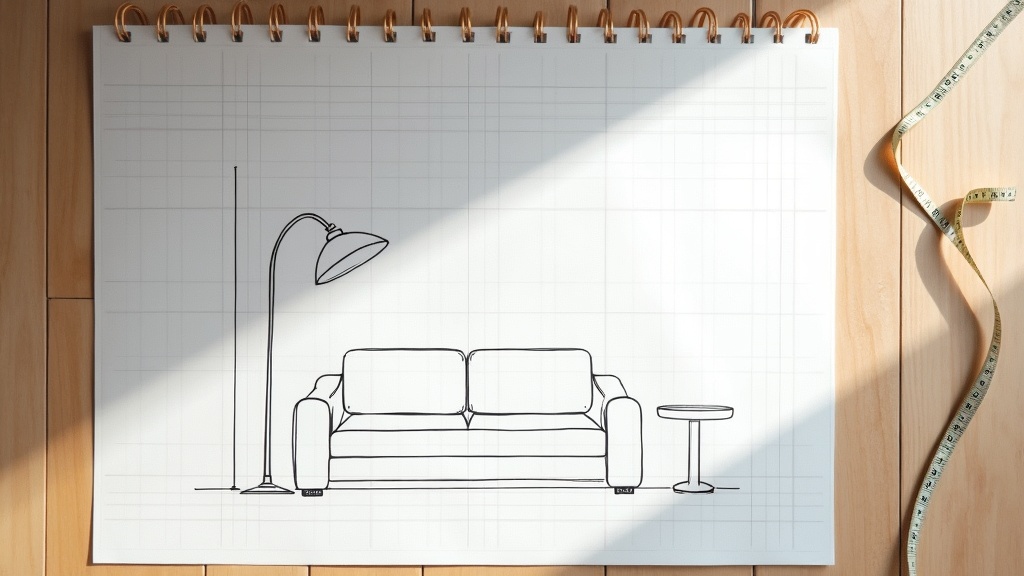
The most common mistake isn't buying the wrong lamp. It's placing the right lamp in the wrong spot.
Three placement rules worth keeping
- Never place a floor lamp behind a sofa flush against the wall. The light goes nowhere useful and the lamp looks like it was forgotten there.
- Use corners to anchor, not to hide. A corner placement works when the lamp arcs or angles out into the room, not when it points straight up into the wall junction.
- Let the cord tell you something. If you're hiding the cord under a rug or behind three pieces of furniture, the lamp is in the wrong place.
Light placed right does more for a room than any renovation. Position it so the light falls where you actually sit, read, or gather. Then stop adjusting.
The Best Floor Lamps for Small Spaces Specifically
Small rooms punish wide bases. A tripod lamp with legs that spread 18 inches is a problem in a studio apartment. What works instead:
- Straight-stem column lamps with a compact disc base under 8 inches in diameter
- Wall-hugging arc lamps with a counterweighted base that sits flat against the wall
- Clip-on or clamp floor lamps that attach to shelves or furniture and eliminate the base entirely
In a small space, vertical is your friend. A lamp that goes up draws the eye up, which makes the ceiling feel higher and the room feel larger. A lamp that spreads wide does the opposite.
Did you know?
Research from Cornell University's Human Factors and Ergonomics Lab found that lower, warmer light sources reduced perceived stress levels in enclosed spaces compared to overhead fluorescent lighting, even when the total lumen output was identical. Where the light comes from matters as much as how much there is.
What Lamps Make a Room Feel Cozy: Light Temperature and Why It Outranks Wattage
Wattage tells you how much energy a bulb uses. Kelvin (K) tells you how a room feels. This is the number that actually matters for residential lighting.
The practical guide
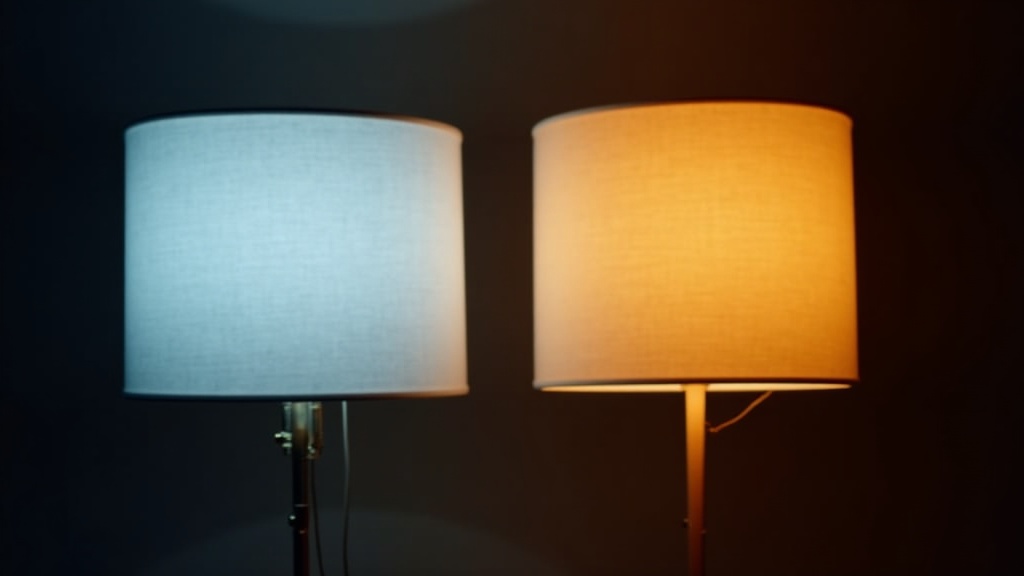
- 2200K, 2700K: Candlelight warmth. Deep amber. Use for living rooms, bedrooms, anywhere you want to feel settled.
- 3000K: Warm white. The standard for most residential spaces. Clean without being cold.
- 4000K and above: Cool, clinical. Fine for a home office. Not for a room where you want to relax.
A torchiere floor lamp with a 2700K LED bouncing off a white ceiling will make almost any room feel warmer and more complete. That single change, bulb temperature, costs under five euros and transforms more than most furniture purchases.
When a Floor Lamp Is Not the Right Answer (And What to Use Instead)
Sometimes the room doesn't need a floor lamp. Recognizing this saves both money and visual space.
Skip the floor lamp if:
- The room already has adequate warm overhead lighting and you're adding a lamp purely for decoration
- You have less than 18 inches of clear floor space near the intended position
- You need task lighting at desk height: a swing-arm wall sconce does this better with no floor footprint
- You're in a rental and can't route cords safely: a battery-powered wall sconce or rechargeable table lamp is cleaner
The best pieces are the ones you stop noticing because they simply belong. A floor lamp placed out of obligation, or bought to fill a corner, will always feel like exactly that: filler.
Your next steps
Before buying anything: stand in your room in the evening with your existing lights off. Use your phone torch to test where light from a floor lamp height (hold it at roughly 60 inches) changes how the room reads. That two-minute test tells you more than any product review.
Then: decide on your Kelvin first, your silhouette second, your material third. In that order. The room will thank you.


